

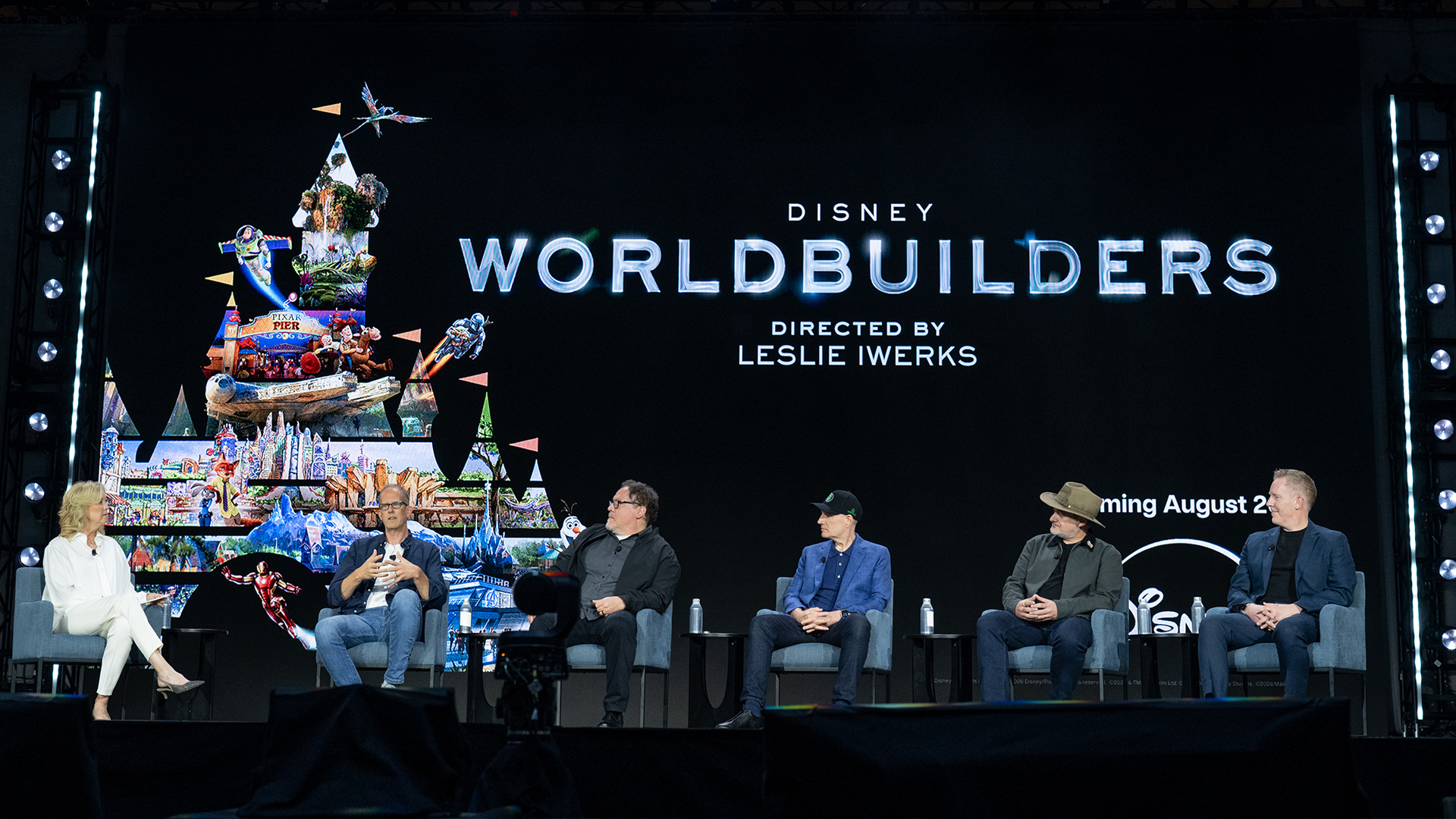
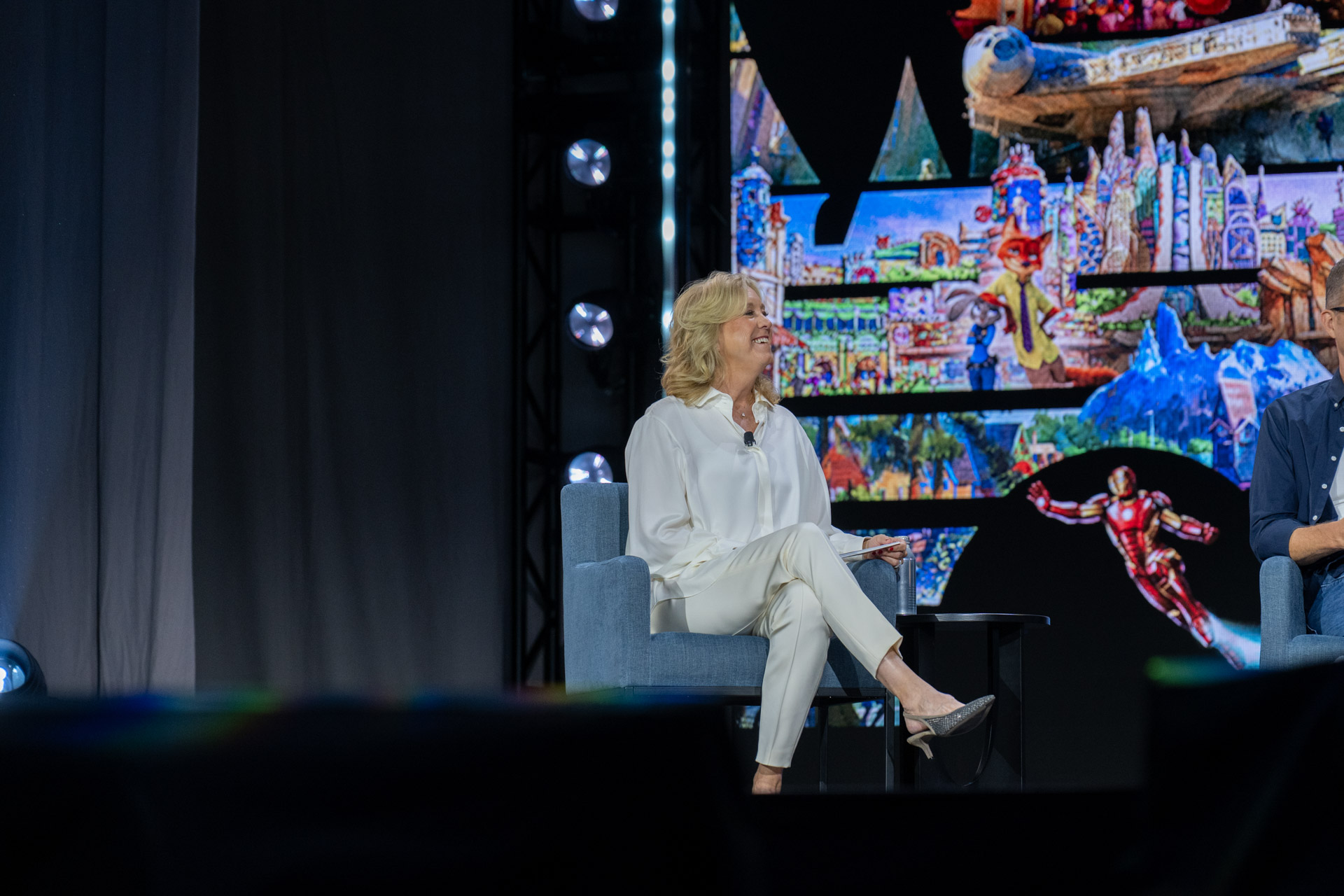
The first time Docter walked through a land themed to Pixar’s stories and characters was actually quite mystifying. As he admitted, “For us at Pixar, it’s all in the computer. You’ve seen it only two-dimensionally on the screen, so then to walk into that space… I think A Bug’s Life—Bug’s Land [at Disney California Adventure park] was the first one, and just being in the space of the movie overwhelming.” Feige concurs, adding “The [first] job we had at Marvel was taking 2D images from the comics and putting them on the screen. And for years, the next job—the dream—was bringing it into a theme park; into ‘real life’... and that dream became a reality the very first time at Hong Kong Disneyland with Stark Expo.”
As for Bush, “There’s no set that we go shoot something on. This is all first in people’s heads, then it goes to drawings on a piece of paper, and eventually it becomes this real-life place... I’m a pretty emotional person, and [when] I walked into Zootopia [at Shanghai Disney Resort] for the first time—tears. Not good-looking tears. Ugly tears,” he joked.
He continued, “So, to step into Zootopia and feel that same love and care, to discover new things as you’re walking through, and then to have the fans that you made the movie for show up and enjoy the same things that you are at the same time… It’s kind of an unbelievable, surreal moment.”
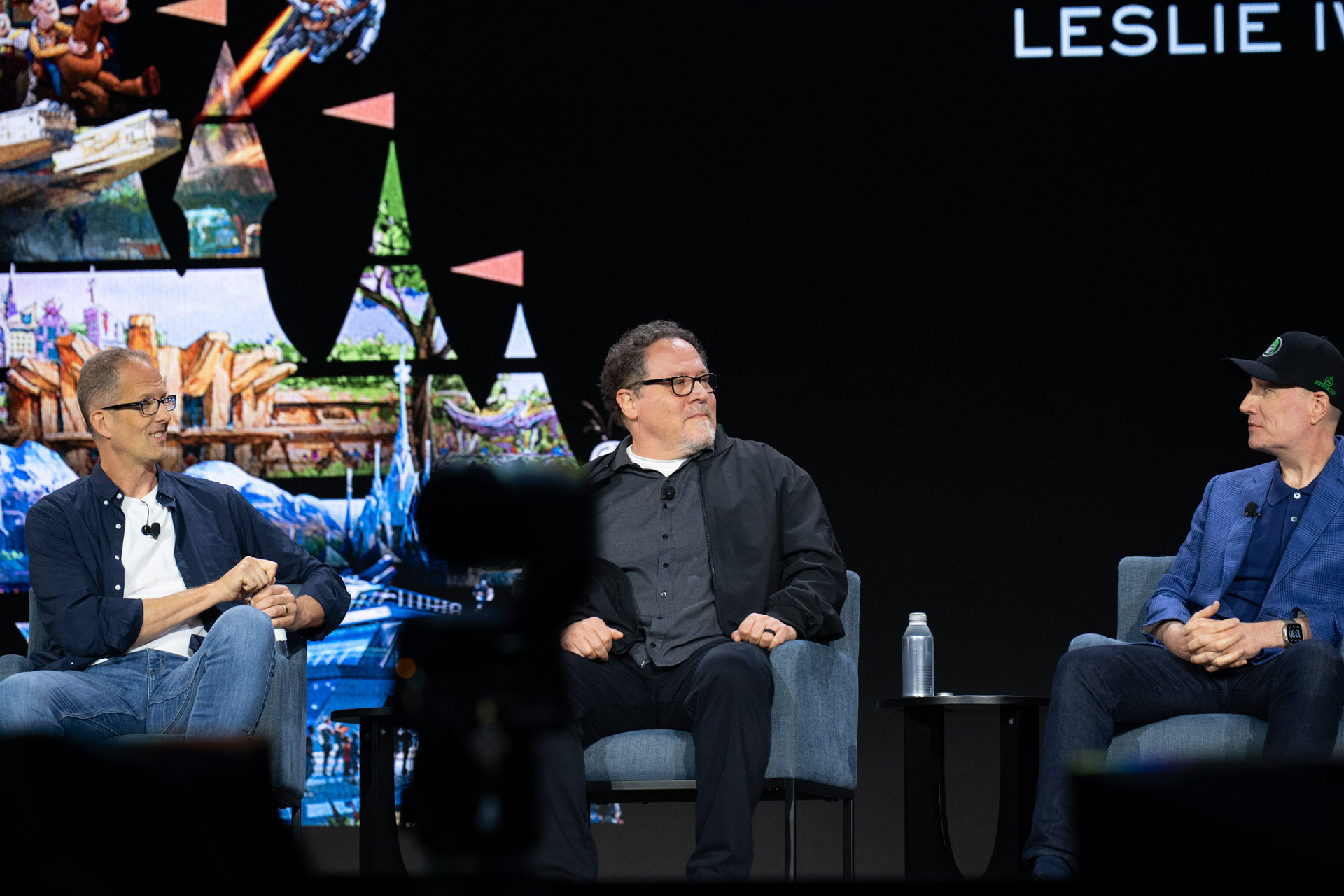
Favreau spoke about Walt Disney, noting that he “always presented the past and the future. Main Street… Main Street, U.S.A. was inspired by [Walt’s hometown] Marceline, but then also Tomorrowland, which was this utopian future just out of reach. And the audience is the present. I think when we preserve the aesthetics that Walt Disney laid out is when it feels consistent, even though we’re evolving into the future. That’s when I feel like there's something that's authentically Disney.”
Referencing his fellow panelists, Favreau added, “We all like to talk and spend time together; we share that in reverence for all of this. We love coming here, and we love that we get to do it. And when we're speaking about it, I feel like everything is actually just a mirror to what came before.”
That throughline is important to Filoni as well—not just in terms of narrative, but in terms of the fans themselves... who now span several generations and who, within those generations, readily gravitate toward different stories. And Disney Parks can absolutely help tells those tales. As he explained, “There’s original trilogy fans, prequel fans, sequel trilogy fans, Clone Wars fans, expanded universe fans. They all have different interests. And I always look at like how we’re going to serve all these different interests. And most importantly, how do we bring them all together because they have this common love of Star Wars. And I think the park is a great place to do that.”
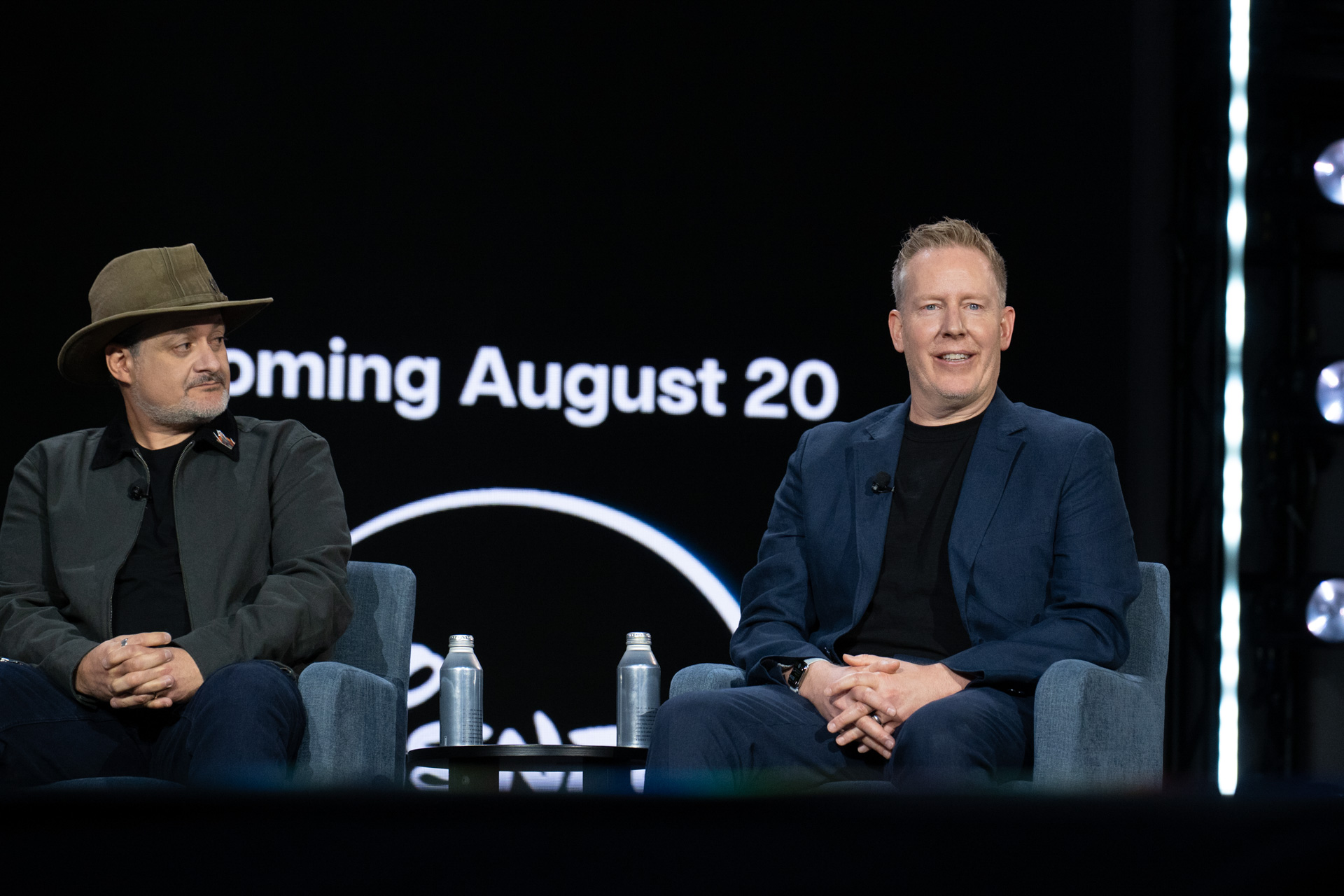
When Iwerks asked what each panelist about new storytelling frontiers that excite them, Filoni began by recalling how “kids have so many ways to interact with stories now, vastly more than I did. They're in touch with these stories all the time. I couldn't watch [the original] Star Wars again until it was put on VHS... I think that's one reason why we're also connected to John Williams music, beyond just that it's phenomenal; we would play the records and the records would tell the story, right? Now, though, you can go on any number of devices and see these stories play out. So the question for us as storytellers is how do we arrange our stories and characters so that the benefit is there for everyone to interact, to discover, to find characters, maybe in new ways to cross things over. Stories can take place in multiple ways. We have an entire Star Wars [land] where a story can take places. You can go to that galaxy, but how does it affect the galaxy that I'm putting on screen? And so. There are limitless opportunities.”
Bush agrees, adding, “It’s something that we constantly look at, now with people being able to watch our movies all the time and feeling very present—there's this want to go back to these worlds; go back to the world of Zootopia, go back the world to Frozen, go back into the world of Moana. These are places we love. Everyone that worked on any of those movies loves being back in the world with those characters. At the same time, it's so critical to continue to push into new places, to try new things. Honestly, it's just inherently risky... [but] you know when you're not taking enough of a chance as you should. And it's really critical, and it's scary. Our movies take four to six years to make. About four years of that is just in the dark; you have no idea how people are going to respond to that. You have to have faith that it will work out. You have to lean on people whose imaginations that you believe in. And you have [dare to say], ‘I don't know if this is a thing—but we're really passionate about it and we hope that everyone out there will be too.”
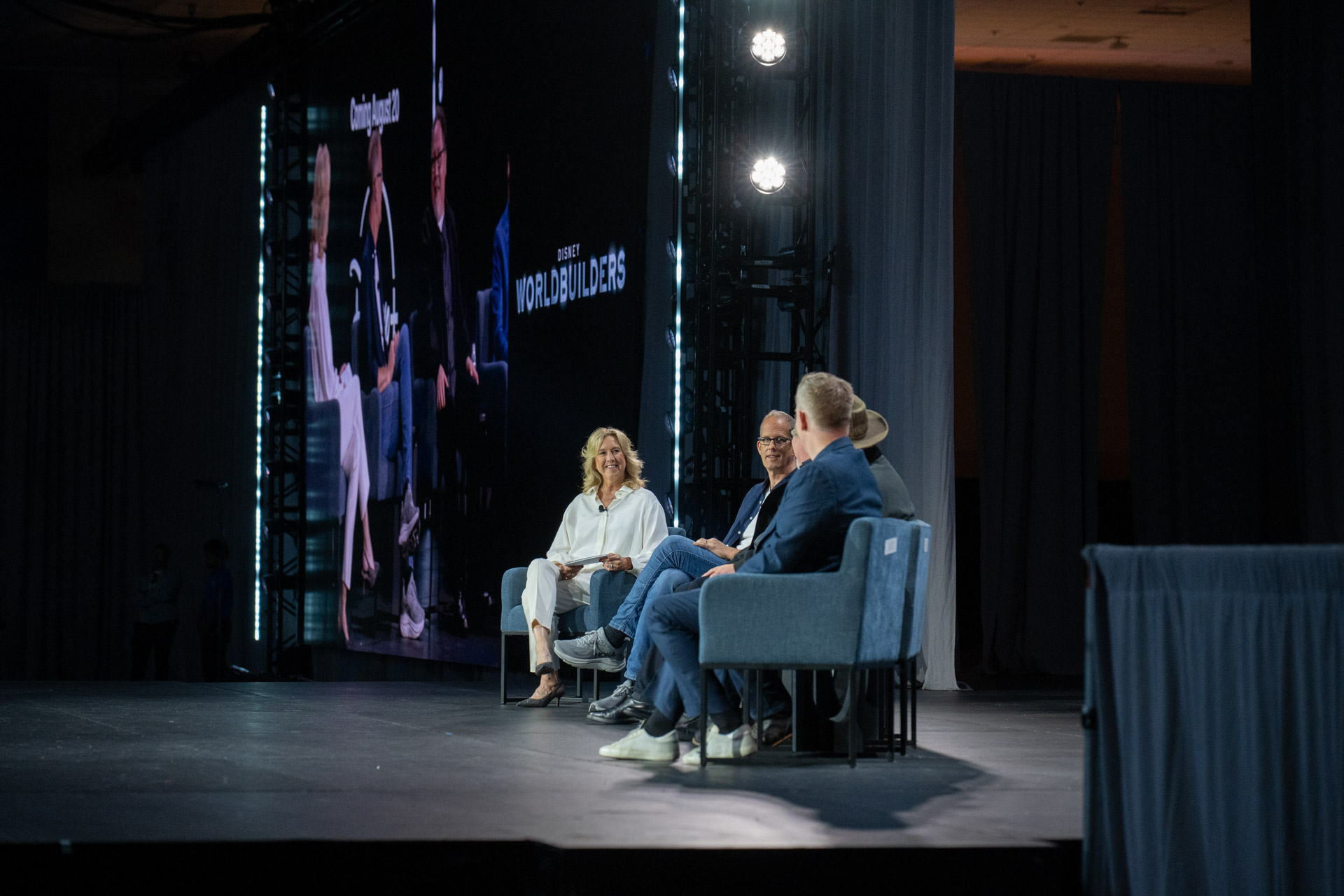
“What’s amazing about having 85, almost 90 years of comic history is there's so many stories yet to tell,” explained Feige. “We announced a very young new cast for X-Men the other day—and that excites me greatly... There is saga upon saga within those comics that haven't been told yet, and that's just great. Stories that inspired me to want to make these kinds of movies haven't been told yet, and that I'm quite excited about doing that.”
Said Favreau, “I'm excited about the prospect of a multimodal, multimedia experience unifying everything that's happening with Disney... I think it's a vision for what could be, and how we can connect through technology in a way that the audience is comfortable with—with stories that the audience feels an emotional connection to. And you're [already] seeing little flashes of technological possibility, but it takes a unifying vision for how to make it an experience that feels good. Because ultimately, it's not about the technology, it's about what the audience wants and what the audiences feels... And I think there's an elegance that's going come into it as we all learn more by experimenting and trying things. But just as Walt did back in the days of WED Enterprises [later Walt Disney Imagineering], you have to go by the feeling and a back and forth. Part of what I really love about D23 is we get to present ideas and we get feedback—and that informs the path that we take.”
Docter agrees, adding, “We’re at an exciting time at Pixar where we have a lot of new storytellers who are bringing a completely different point of view—so they're creating worlds and characters in the same way we always have, just from a different perspective, which is really cool. It's also, technologically, a very interesting time. For 30 years, for me, films remained kind of the same way—and now we have all these new tools, new opportunities to use technology in new ways. I think the challenge, of course, and the desire is that they always remain deeply human... Like Walt Disney, we're using the latest technology, but we're trying to communicate what it is to walk around and operate in the world. So that's the important thing.”
Don’t miss Disney Worldbuilders, featuring those quoted above—and more!—now streaming on Disney+.