
By Zach Johnson
Stitch has found himself in a sitch.
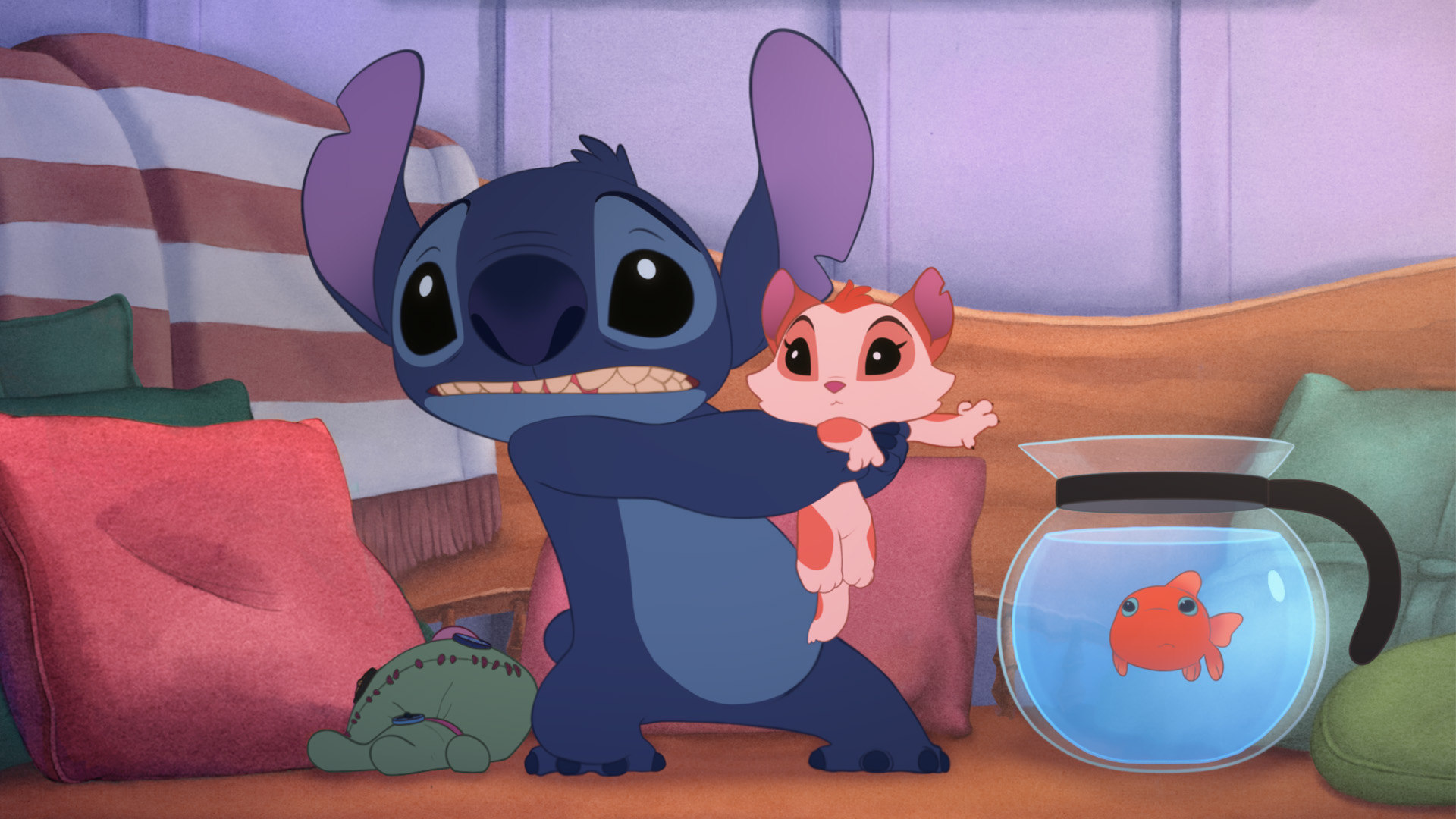
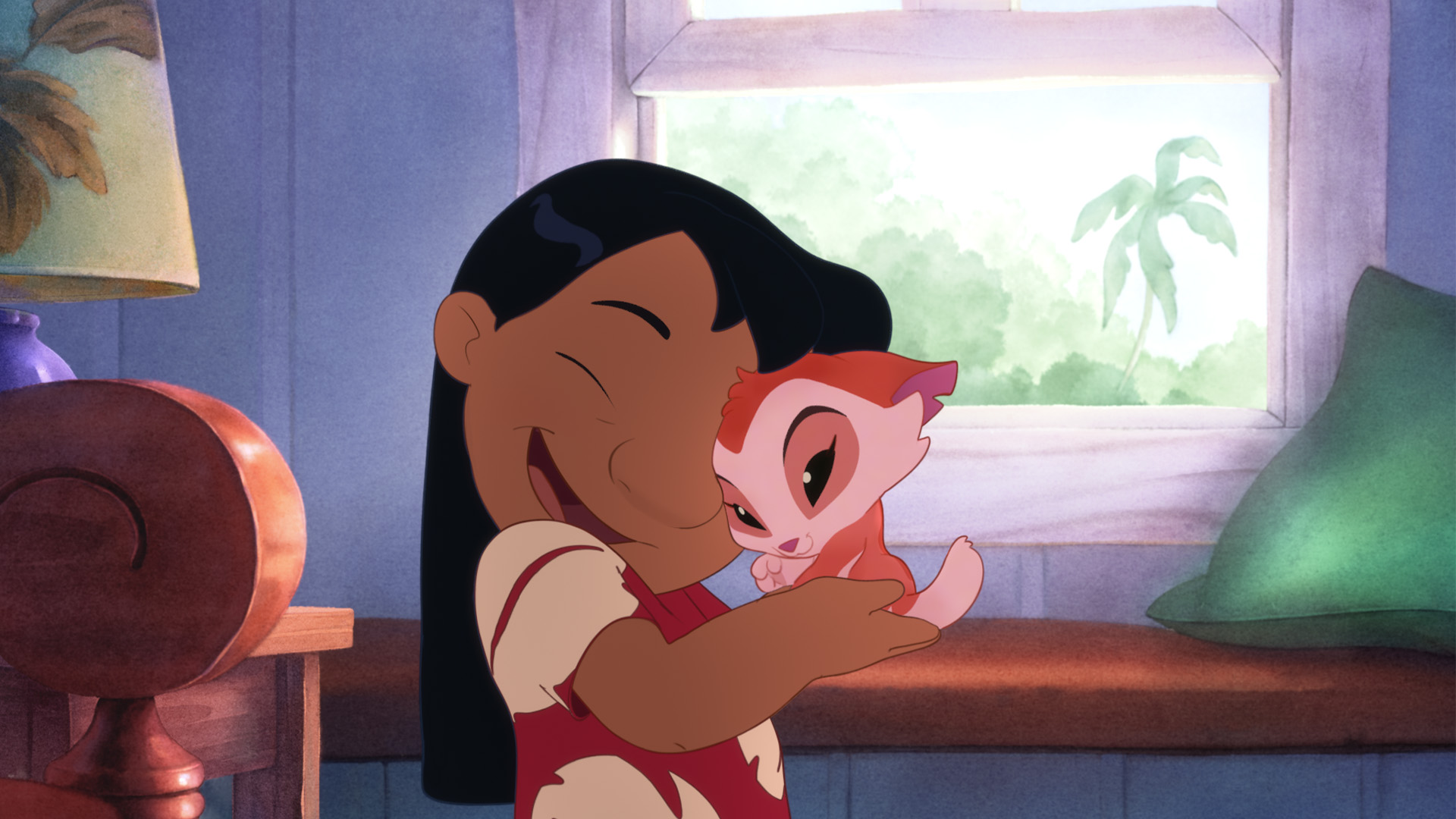
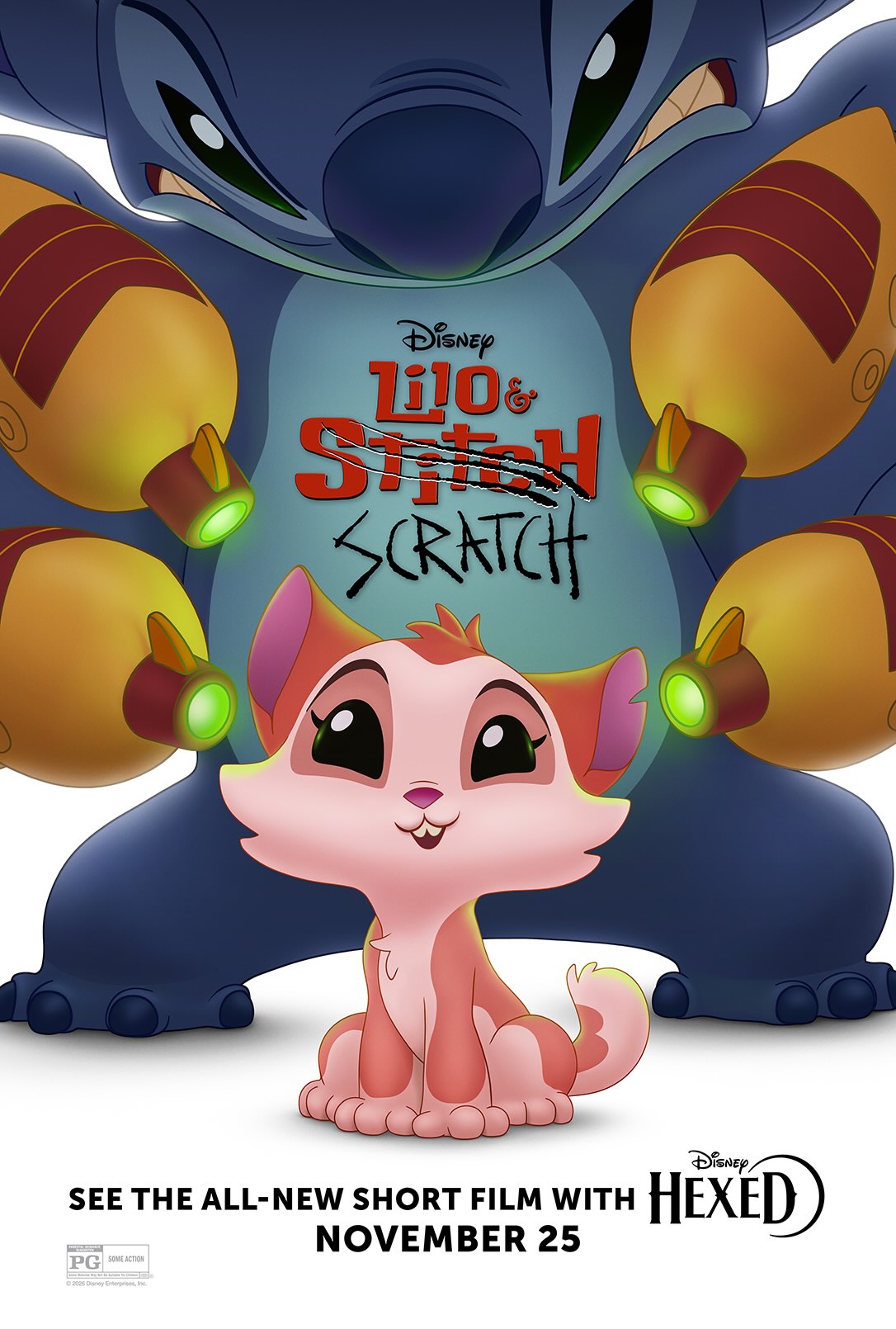
Opening in front of Disney’s Hexed this Thanksgiving, Lilo & Scratch marks the first theatrical short from Walt Disney Animation Studios in five years. In it, the blue alien’s world is turned upside down when Lilo (voiced by Maia Kealoha, reprising her role from the 2025 live-action film Lilo & Stitch) introduces Scratch, a mischievous and mysterious cat, as the newest member of their ’ohana. Before Lilo leaves the house “for approximately six hours” to run some errands, she puts Stitch (voiced by Chris Sanders, reprising his role from the 2002 animated feature Lilo & Stitch) in charge of caring for the cunning creature.
Although relatively new, Stitch is one of Disney’s most beloved characters in its 103-year history. After blasting onto the scene in the 2002 feature film, Stitch appeared in three movies for the in-home/television market and several television series. In 2025, the live-action Lilo & Stitch became one of the summer’s biggest hits and the fourth biggest film of the year. Stitch is one of the most popular characters in consumer products, with the alien experiment 626 spanning clothing, collectibles, games, and toys, among other categories.
Given the character’s persistent popularity — including within the walls of Disney Animation’s offices in Burbank, CA, and Vancouver, BC — Jared Bush, the studio’s chief creative officer, decided it was time for the studio to make a comedy-forward project centered around Stitch. So, he tasked eventual writers and directors Fawn Veerasunthorn and Malcon Pierce with brainstorming ideas that would also showcase the fun of animation, and — as a bonus — could be a playground for developing a new technique.
“We had about 18 different ideas. We knew Stitch was going to be the star, and one of our 18 ideas had a cat in it,” Veerasunthorn recalled. “The premise was, ‘What if Stitch has to adopt a pet?’ We pared it down and pitched Jared two ideas. As soon as we said the word ‘cat,’ he was like, ‘That one!’ We weren’t sure if we even needed to pitch him the other one.”
Combining Artistry and Technology
After getting the greenlight from Bush, the filmmakers got to work.
Lilo & Scratch remains authentic to the style of the original film, combining both hand-drawn animation and CG animation. To achieve this, a team of technical wizards worked in conjunction with the animators and creative leadership to invent a brand-new pipeline. This breakthrough opened up a whole new world of possibilities for the animators to work in their chosen medium and still retain the visual aesthetic that fans know and love.
“It was exciting to merge these two worlds from Disney animation —Disney Renaissance 2D hand-drawn animation with our CG pipeline,” VFX supervisor Jeremy Sikorski said. “We got a taste of what this could be on our other short-form projects, like Paperman and Once Upon a Studio, so this felt like an opportunity to push things even further and see where we could take the aesthetics fans have loved for years.”
One scene that illustrates how the two animation styles were combined features a hand-drawn truck driver being pulled out of a truck by a CG Scratch. The whole truck, along with the layout and scene planning, was done in CG, which gave filmmakers additional flexibility.
The backgrounds received similar care. Production designer Kevin Yang and the creative team visited the Disney Animation Research Library to study the original film’s watercolor backgrounds in person and determine which ones could potentially be used again. About 25 percent of the backgrounds in the short are reused from the original film. In addition, more than a dozen new background paintings were created by Tia Kratter, Larry Wu, and others. Combined with digital backgrounds and set extension, the mix of old and new hand-painted watercolors helped the filmmakers remain faithful to the look of the 2002 feature.
“We wanted to give our artists an ability to choose their preferred medium to create a brand-new background for the short,” Veerasunthorn said. “Some of them were digitally painted in Photoshop to look like watercolor, while others were hand-painted on paper.”
Cultivating Chaos
Additionally, Alex Kupershmidt — supervising animator on Stitch in the original film — was brought back to contribute on Lilo & Scratch, serving as the character animation lead. “We wanted to work with the Alex on this, and we wanted to get [Lilo & Stitch character designer] Byron Howard in there, just to get his thoughts and his help with punching up the comedy,” Pierce said. “Getting to play in this world together was just such a highlight.”
That sense of collaboration extended across the studio. According to Pierce, so many people across many disciplines wanted to work on the project that he and Veerasunthorn wanted to let everybody participate, whether it be with a pencil, a pixel, or a paintbrush.
“Everybody was so passionate about the project and the film that it was really just like giving everyone permission to go nuts,” Pierce said. “Fawn and I were there to encourage them to push things farther than they assumed was allowed. I couldn’t tell you how many conversations started with, ‘I’m not sure if we will actually be able to do this…’ And we’d say, ‘I think you could go further.’ Even when Jared would take a look at what we were doing, he’d say, ‘You guys can go to town.’ That freedom allowed us to unlock an edge to the characters, which Fawn and I talked a lot about. We wanted to bring the anarchy back into Stitch, which was great. The team knew the assignment, and they were excited to deliver.”
Making Memorable Music
Haim Mazar and Grace Fisher composed the original score for Lilo & Scratch — and for Mazar, the chance to join the project felt like a natural step in his relationship with Pierce.
“I was lucky enough to work with Malcon on Versa, and I learned a lot about the way he likes to do things,” Mazar said. “As soon as I heard he was involved in this short, like many other people on this project, I was like, ‘Oh, my God! How can I get involved with this?’ I expressed interest in it, and I have a good relationship with the music team at Disney Animation. It felt like a natural progression of our relationship. And then getting to meet and work with Fawn, whom I’m a big fan of, and collaborating with Grace was unbelievable.”
Fisher, too, found the experience warm from the start.
“Everyone was so encouraging,” she said. “It’s Disney, so you expect that, but the most surprising thing was just how pleasant and positive everyone was in this atmosphere.”
Mazar and Fisher honored the spirit of the original film by working with a nine-piece Hawaiian ensemble and a 70-piece orchestra in Los Angeles. The score is structured in a way that may surprise fans, who will likely experience it as one continuous arrangement.
“Even though it feels like one long piece, it’s broken up,” Mazar said. “We ended up with six or seven different cues that play back to back and transition from one to the next. It was designed to play as wall-to-wall music, except for a few spots where there’s source music.”
Building off the established sound of the original film, while creating something entirely new, had its trade-offs. “As an artist, it’s very helpful having those boundaries, but it also creates some challenges. You have to find your own voice within these parameters,” Mazar said. “Both of us are such big fans of the original Alan Silvestri score, and the short was such a joy to work on, so this was one of the most fun challenges a composer could ask for.”
“They’re big shoes to fill,” Fisher added with a laugh. “Being a part of this, continuing the legacies of these characters, is a dream come true, both as a composer and as a total fan.”