


By Devorah Burgess, Walt Disney Archives
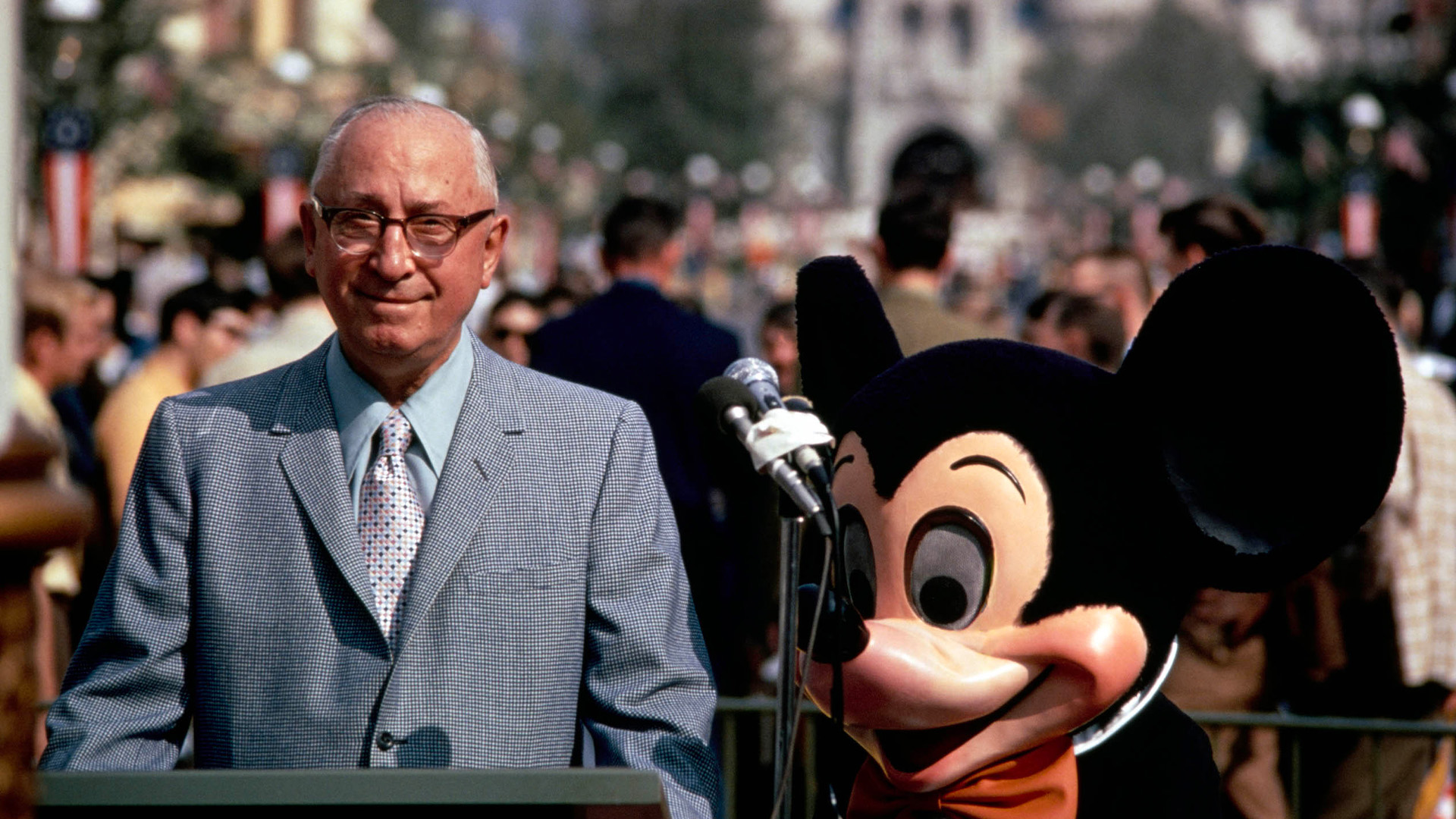
When Walt Disney World Resort welcomed its first guests in 1971, visitors were invited to experience something entirely new and more than a traditional theme park. Advertised as the “Vacation Kingdom of the World,” Walt Disney World Resort was designed as a destination where every part of a family’s vacation—from where they slept to how they traveled—could become part of the adventure.
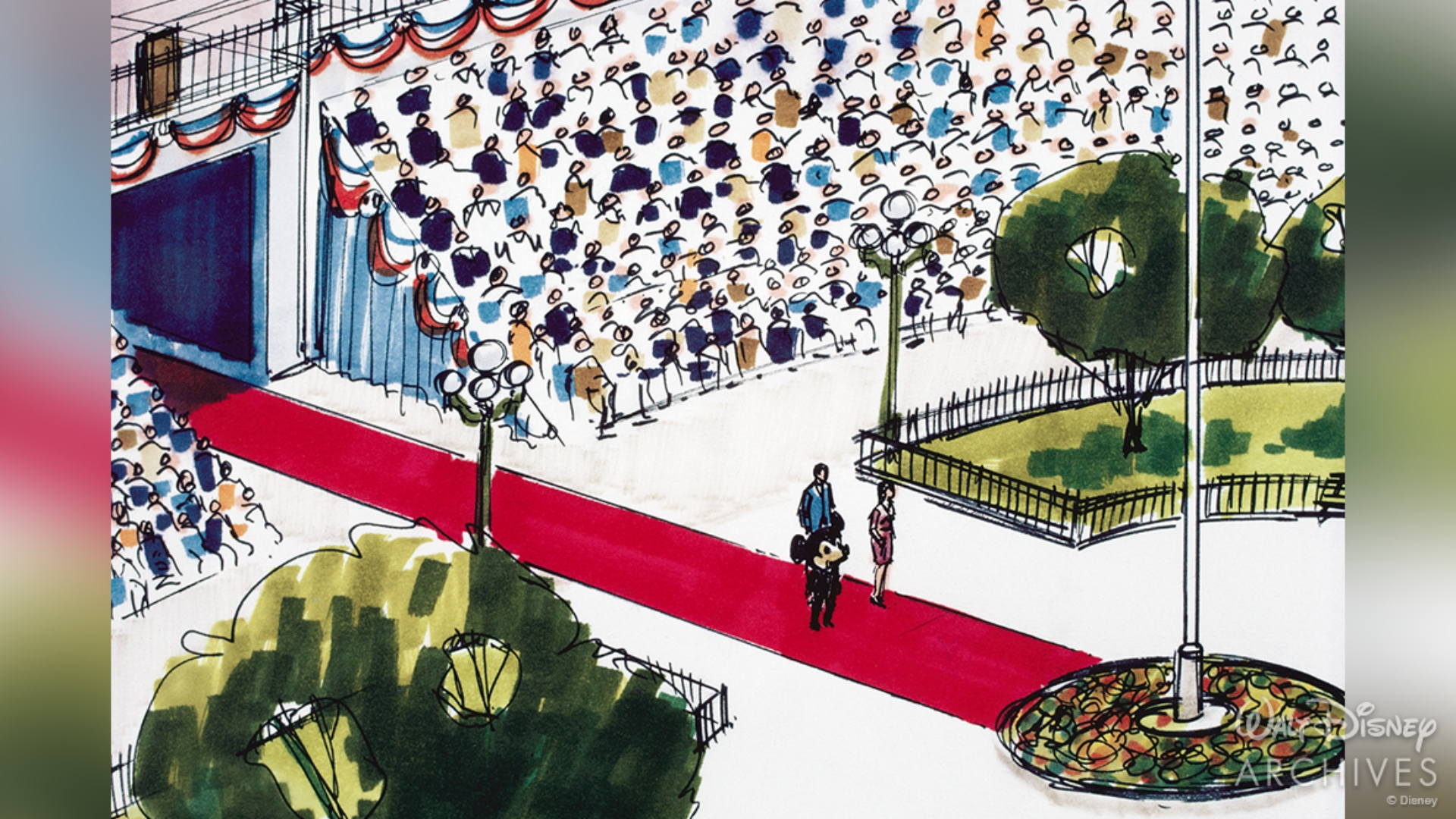
To celebrate the resort’s 55th anniversary, the Walt Disney Archives is showcasing rarely seen imagery from our Walt Disney World Resort collection. Each photograph used in this article dates to resort’s first year of operation, with many of these images digitized for the first time especially for this story.
For the first guests to arrive during those exciting opening months, a Walt Disney World vacation was an opportunity to experience the future of family travel. Looking back 55 years later, what might a day in the life of a Walt Disney World guest have looked like in 1971?
Good Morning from the Vacation Kingdom
The day begins not at the gates of the Magic Kingdom Park, but at one of Walt Disney World’s original accommodations.
Perhaps a family wakes up at Disney’s Contemporary Resort, surrounded by the bold architecture of its towering, 184-foot-tall A-frame structure on the shores of Bay Lake. From the beginning, the Contemporary was designed to embody Walt Disney’s optimistic vision of the future—a place where technology, innovation, art, and imagination could come together and serve as a visual backdrop to Tomorrowland.
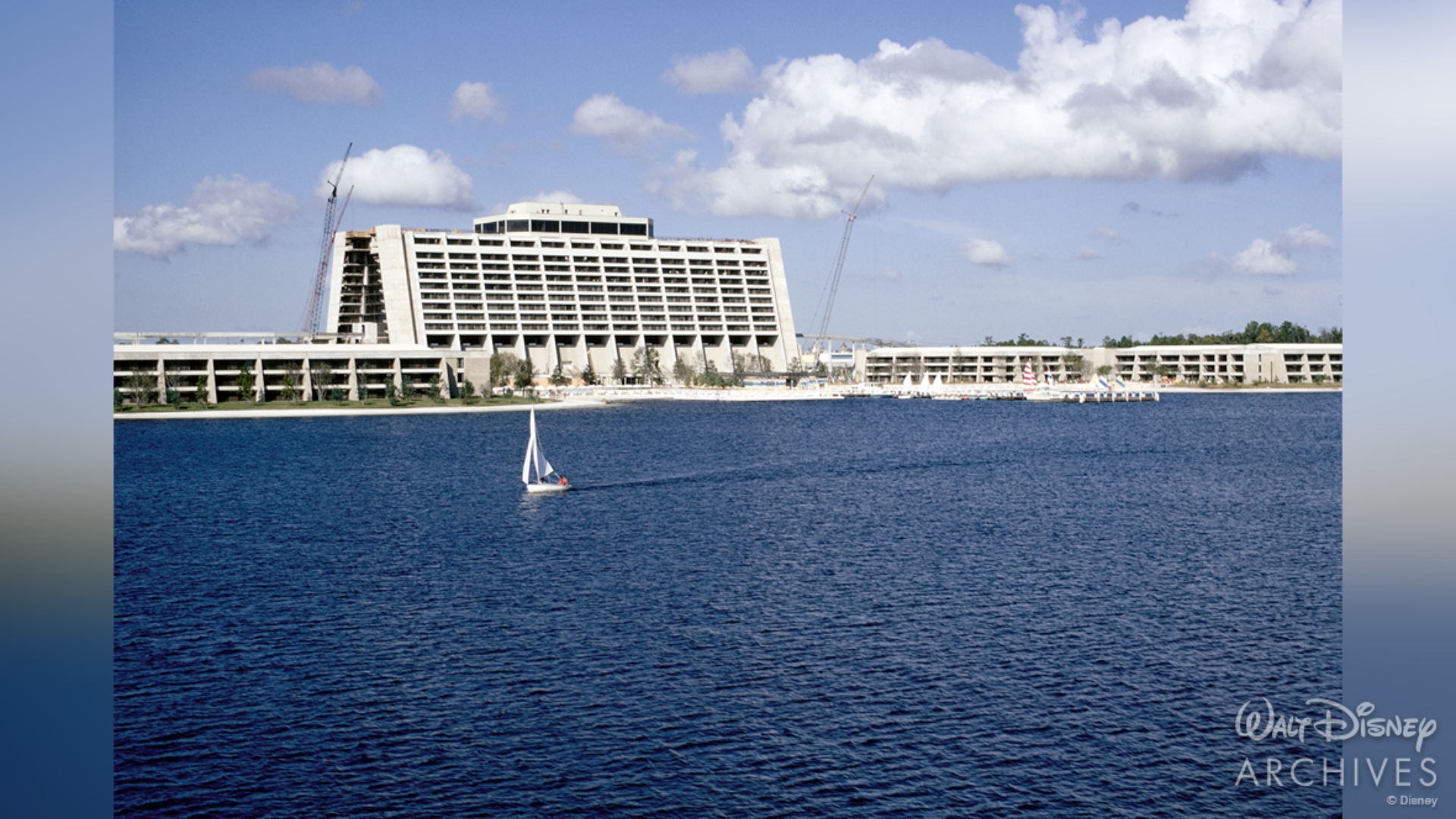
Even the building’s innovative construction and architecture represented a new way of thinking. Designed by Welton Becket & Associates of Los Angeles, in collaboration with U.S. Steel Co. and the Imagineers of WED Enterprises (now known as Walt Disney Imagineering), the Contemporary was constructed using an innovative steel unitized construction system. Approximately 1,500 guest rooms were assembled at a nearby warehouse before being transported to the resort site, where each room was lifted by crane and slotted into the massive A-frame superstructure, almost like drawers sliding into place. The result was unlike any hotel most guests had ever seen.
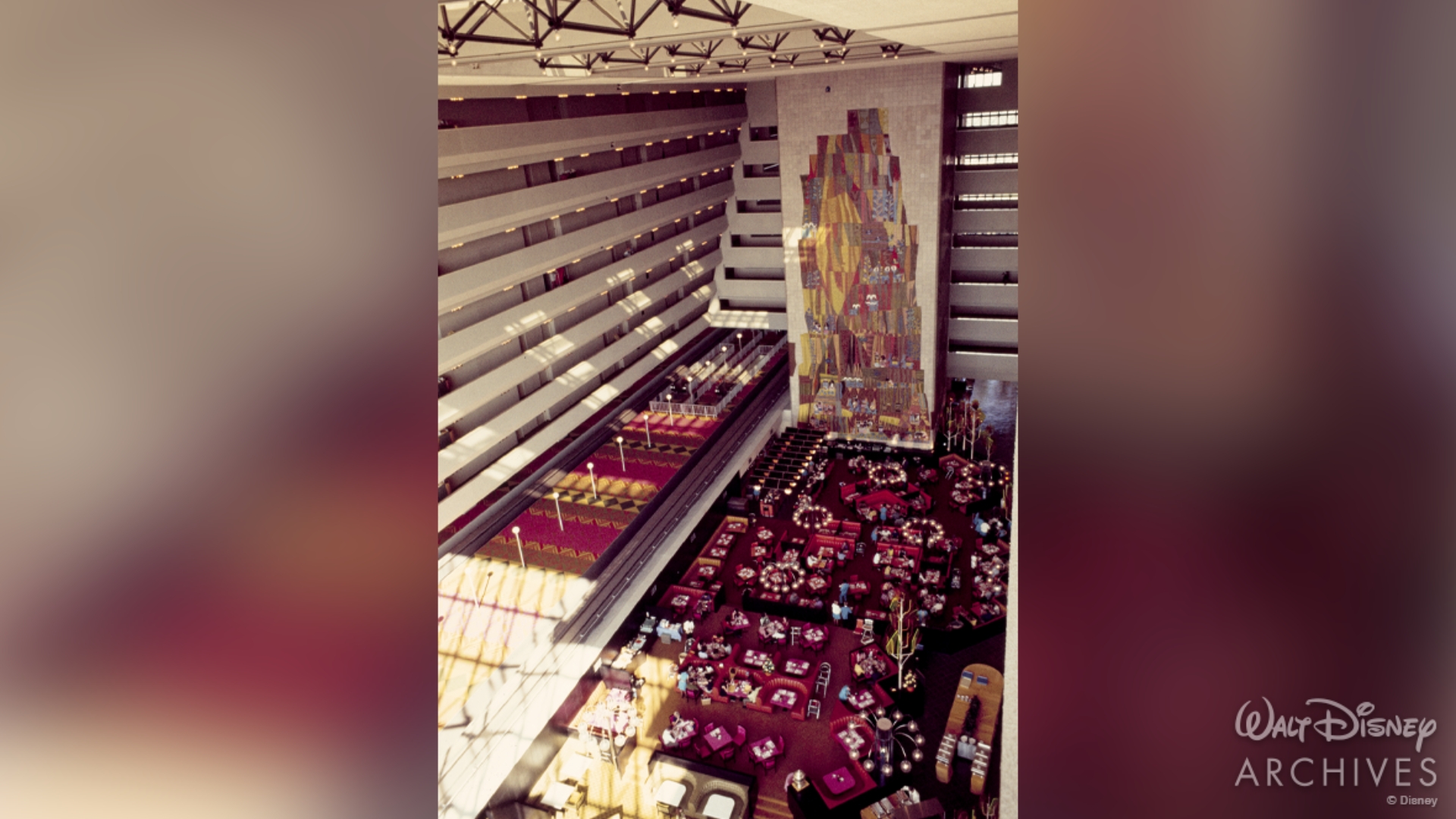
Heading downstairs, guests enter the enormous Grand Canyon Concourse, where the Walt Disney World Monorail glides through the heart of the resort. Towering above is a colorful, eight-story mural designed by Disney Legend Mary Blair. Inspired by the art and landscapes of the American Southwest (and since named “The Spirit of Peace Among Children”), the mural brings warmth and imagination to the Contemporary’s monumental architecture.
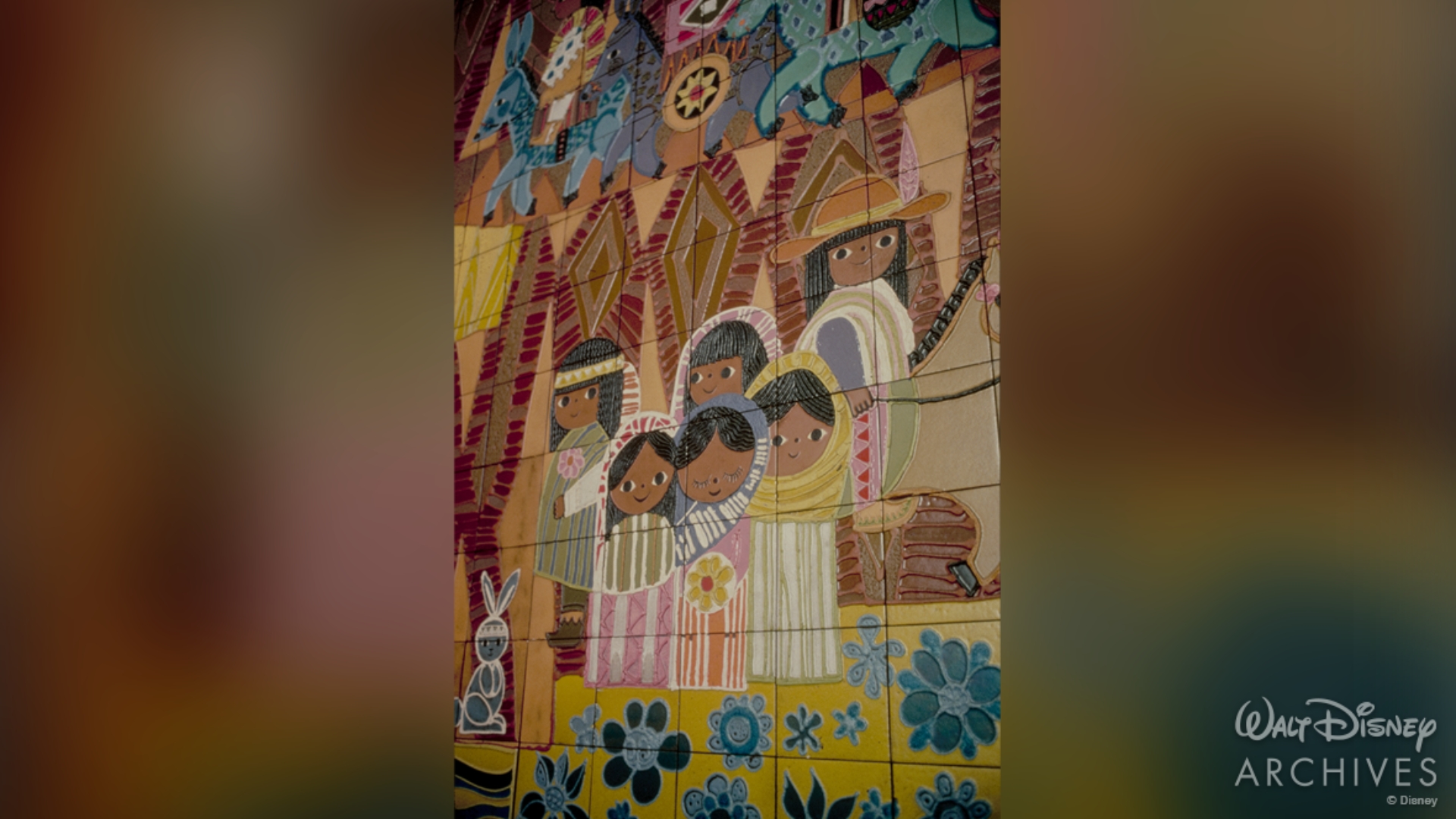
Mary drew inspiration for the mural from many sources, including prehistoric stone petroglyphs, Pueblo murals, and Navajo ceremonial art, such as sand paintings. The design motifs used as textures on the background cliffs are inspired by the terraced designs seen in baskets and weaving produced by Pueblo, Navajo, and Apache artisans.
Or perhaps the family’s adventure starts out somewhere much more tropical. Across the Seven Seas Lagoon at Disney’s Polynesian Village Resort, the morning begins among palm trees, tropical landscaping, and the sounds of an imagined South Pacific paradise. Torches, rustling palms, and island-inspired music help transport guests far from Central Florida.
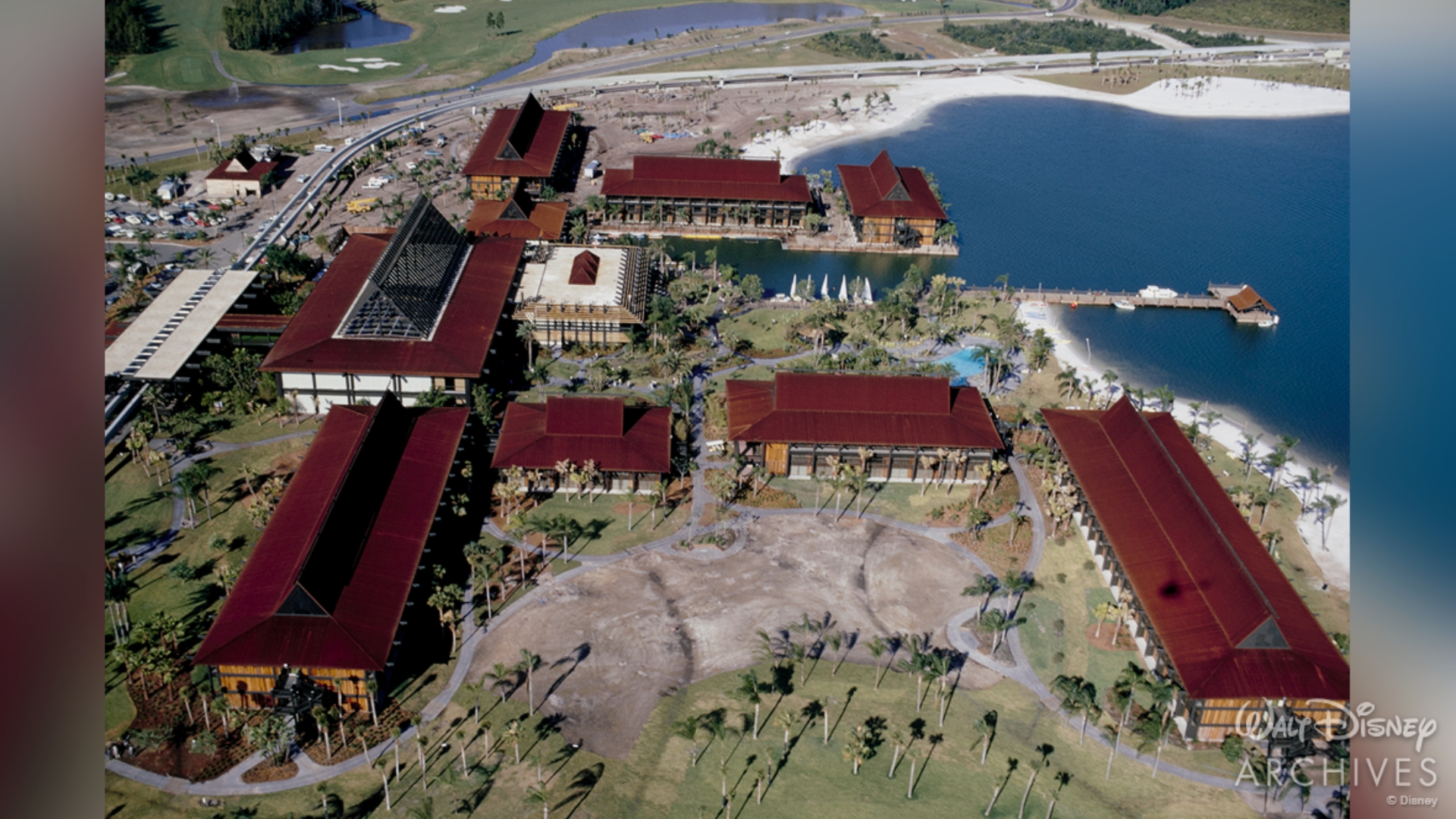
From its earliest planning stages, the Polynesian Village was envisioned as a thematic extension of Adventureland at the Magic Kingdom, just as the Contemporary reflected the spirit of Tomorrowland. Rather than creating a single towering hotel, designers developed the resort as a village, with guest rooms spread among eight Longhouses surrounding a Great Ceremonial House. The original Longhouses—Bali Hai, Bora Bora, Fiji, Hawai‘i, Maui, Samoa, Tahiti, and Tonga—were named for locations, nations, and films associated with the South Pacific.
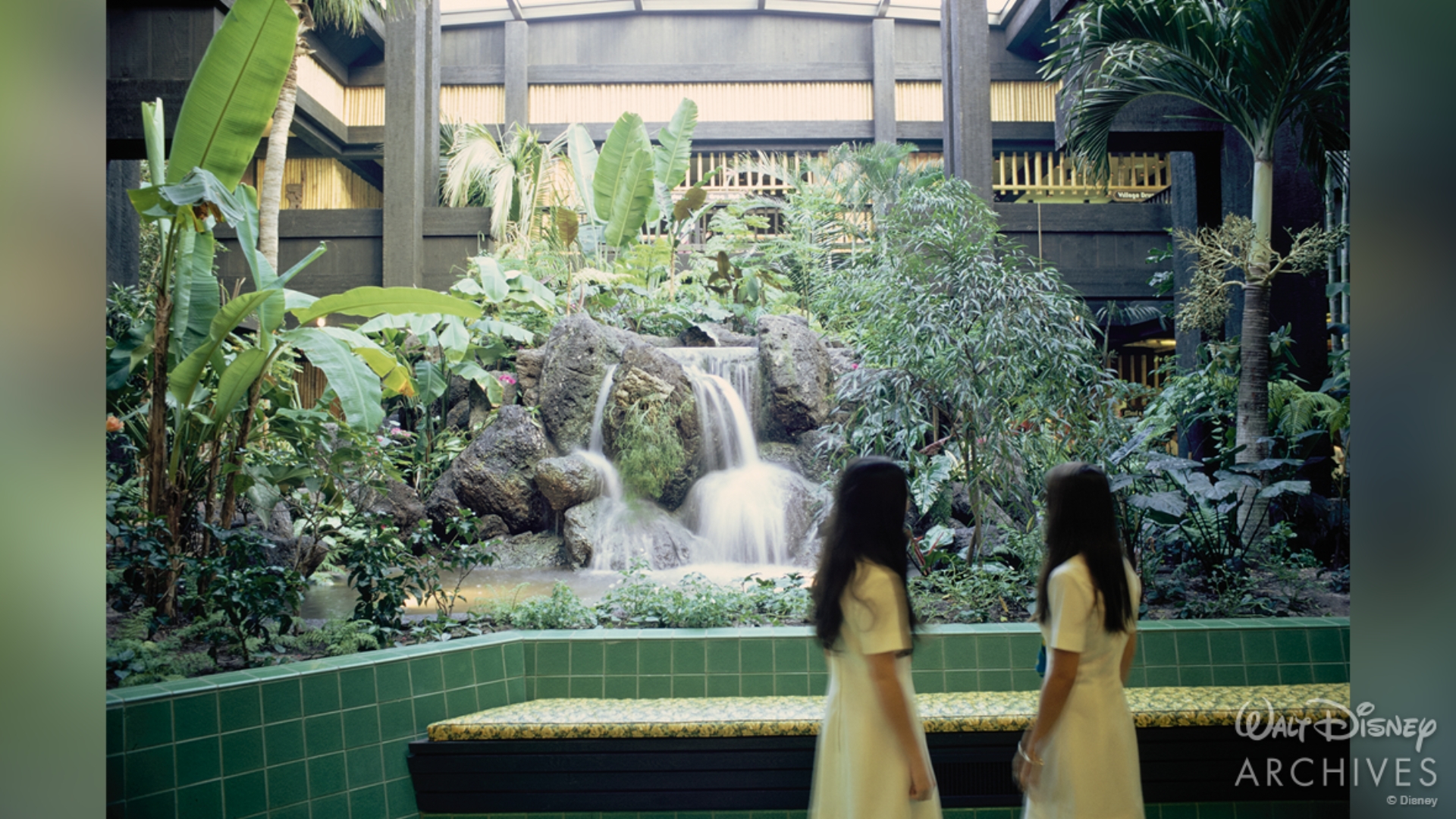
The resort opened with 492 rooms across its 39 acres on October 1, 1971, welcoming guests on the same day as the Magic Kingdom and the Contemporary Resort. Like the Contemporary, the Polynesian Village was also constructed using innovative unitized modular steel.
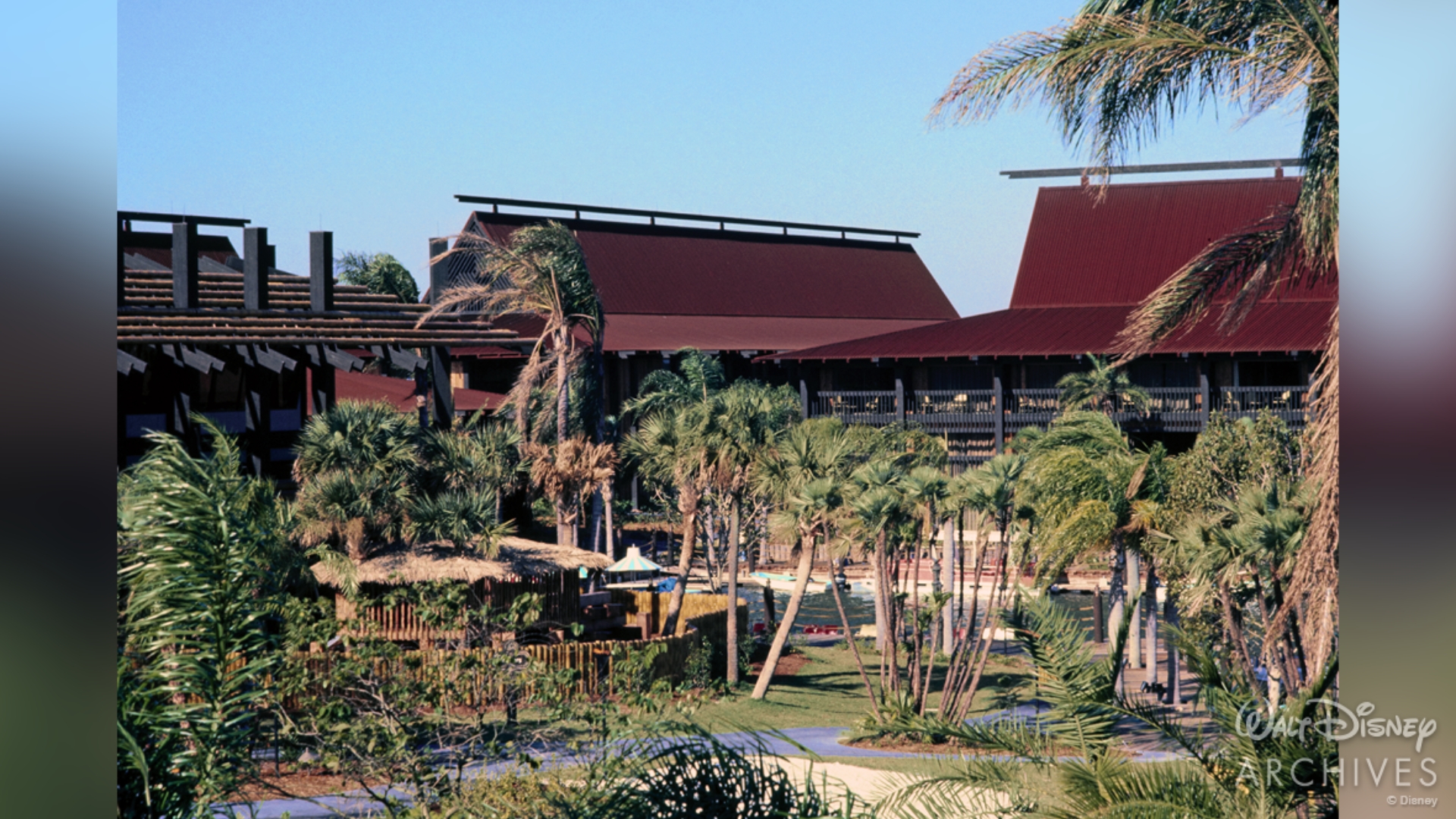
Yet the finished experience was designed to feel like an escape. Drawing on mid-century inspirations and Polynesian culture, the Resort combined region-inspired architecture, décor, cuisine, music, and artwork into a romanticized South Pacific vacation. A family might stroll through the lush grounds, enjoy breakfast, or simply take in the view of Seven Seas Lagoon before beginning their day.
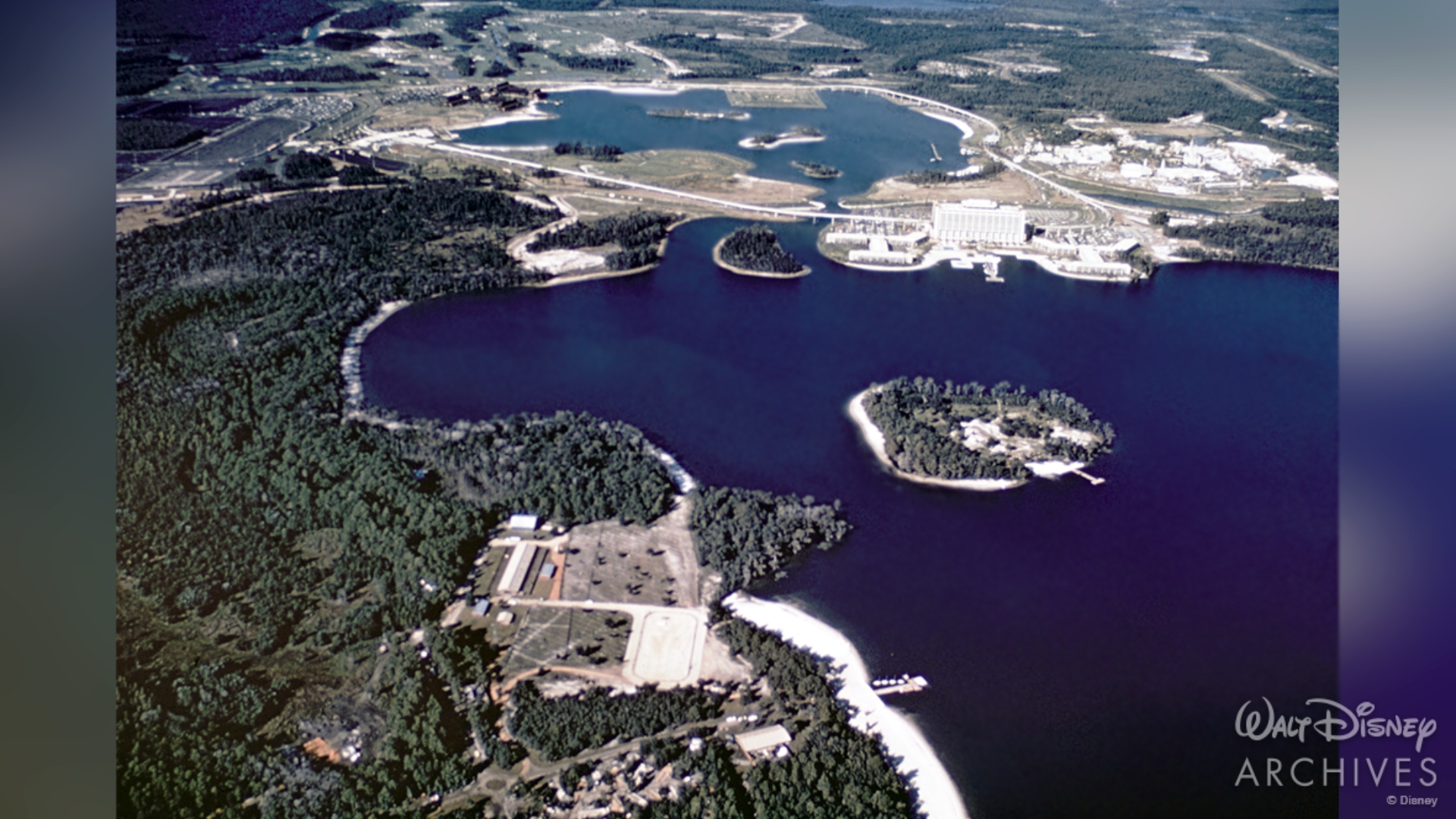
For guests who preferred the great outdoors, Disney’s Fort Wilderness Resort & Campground, which opened in November 1971, offered an entirely different kind of Disney vacation. Set across some 600 acres, the resort invited families to experience a real “True-Life Adventure” for just $11 a night, camping among the trees and enjoying the natural beauty of Central Florida while remaining part of the Vacation Kingdom.
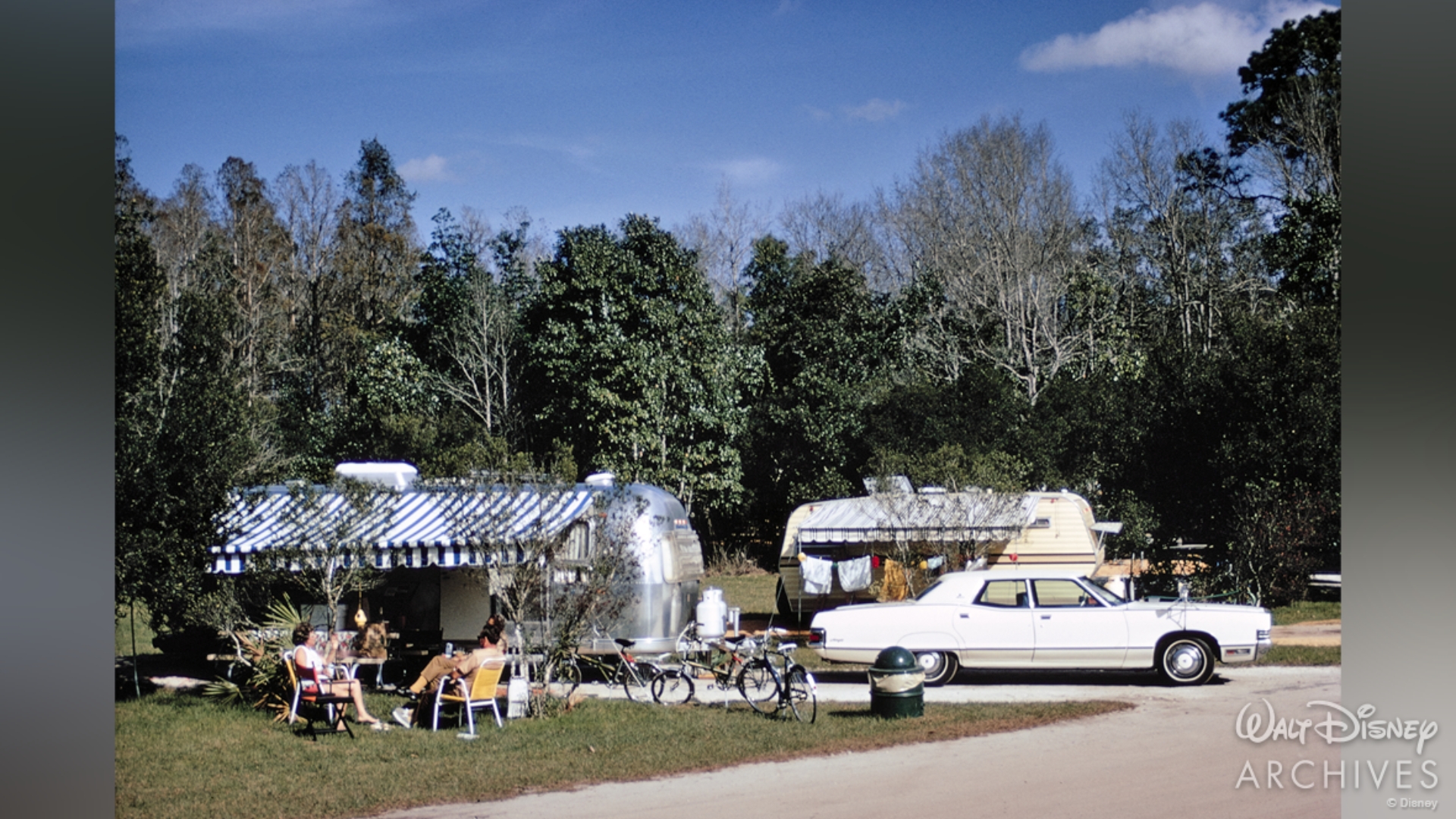
Designed to preserve its rustic, natural setting, Fort Wilderness featured campsites nestled among trees and foliage along specially designed roadway loops, providing privacy and a sense of seclusion. Guests could explore miles of nature walks, canoe, and horseback-riding trails winding through forests and cypress swamplands; encounter abundant wildlife and plant life; or try their luck at an old-fashioned fishing hole and nearby streams teeming with bass.
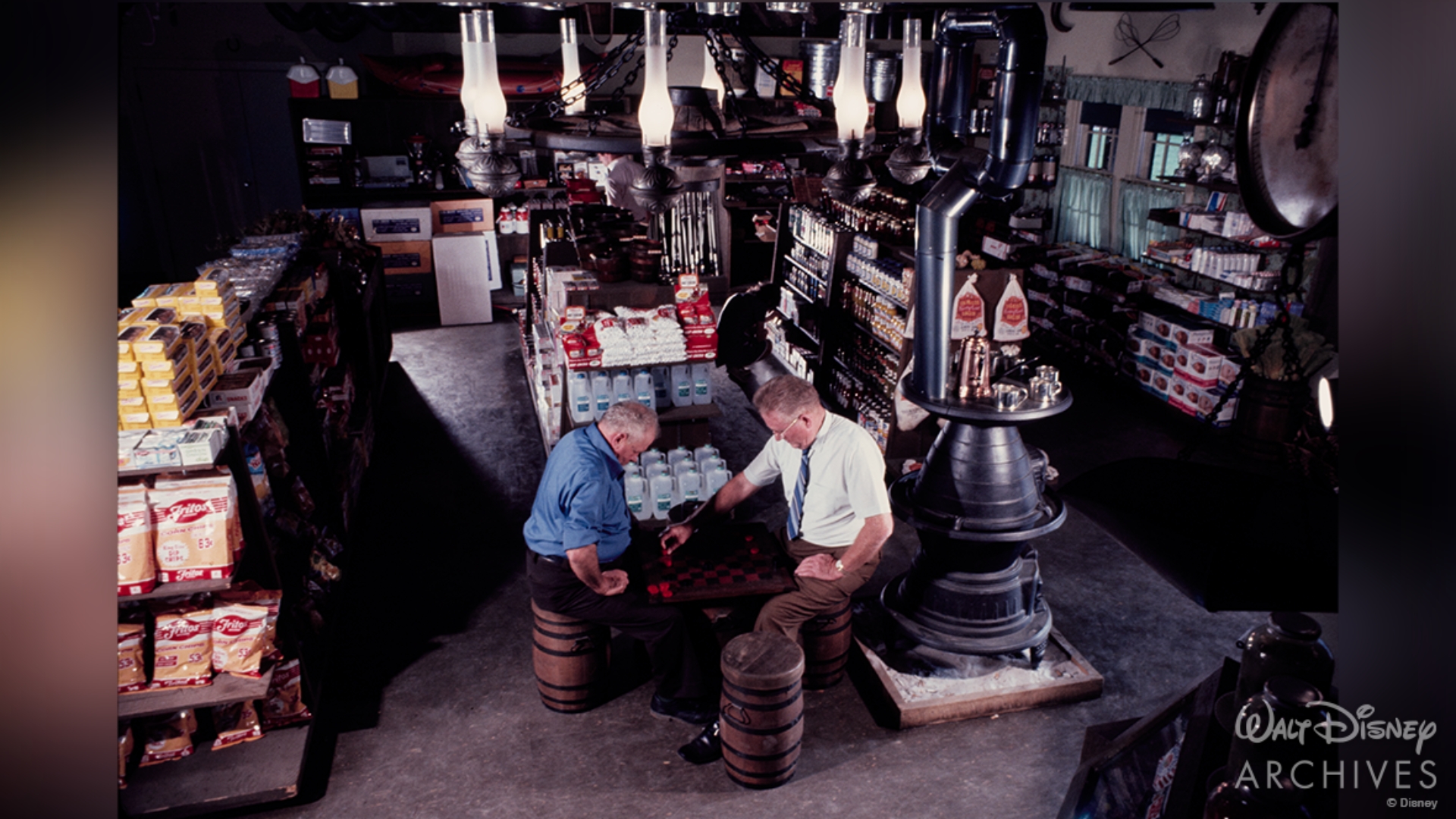
The Fort Wilderness Trading Post served as the resort’s general store, offering everything from film and camping supplies to deli and picnic items, while riding stables and other recreational activities further emphasized the resort’s connection to nature and the great outdoors.
Three accommodations representing three entirely different worlds... each a part of the same Disney vacation.
Getting There Is Part of the Adventure
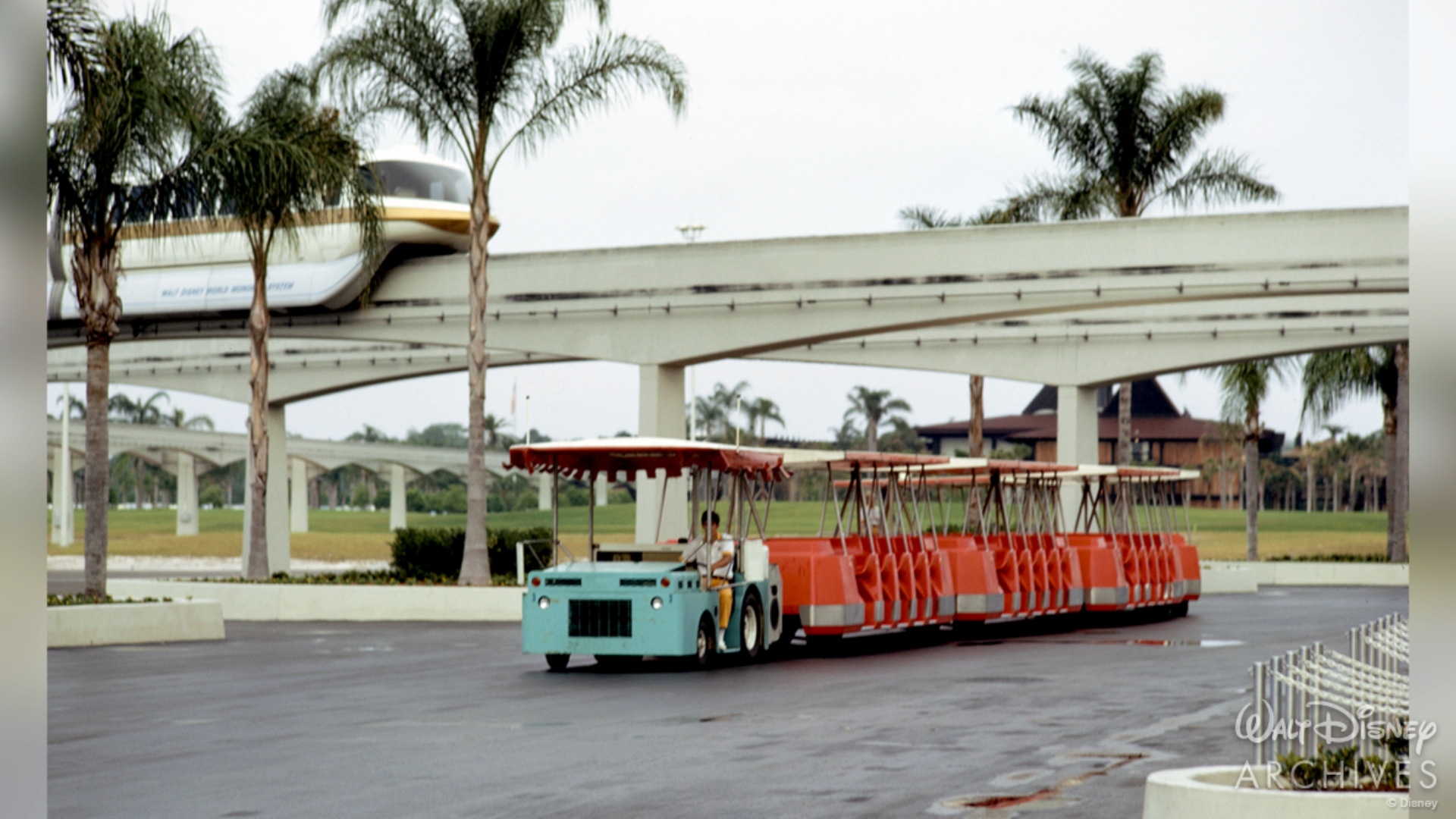
Even guests arriving by car share in a unique experience. After parking for $0.50, visitors travel to the Transportation and Ticket Center before continuing toward the Magic Kingdom by Monorail, tram, or Osceola class sidewheeler. Ferryboats would begin transporting guests to the Magic Kingdom in July 1972.
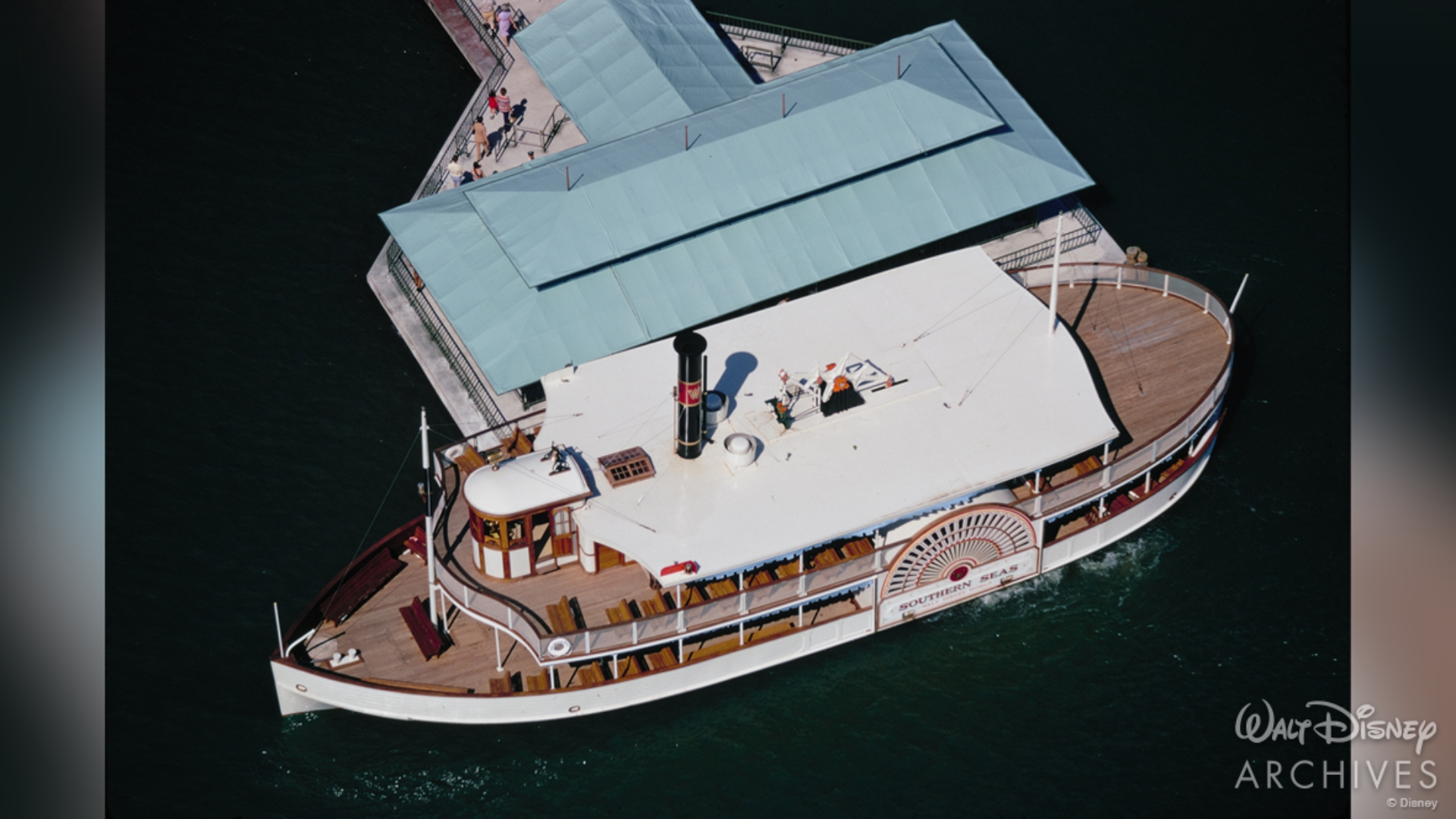
The journey across the Seven Seas Lagoon builds anticipation. Rather than parking outside the entrance and walking through a gate, guests enter the Magic Kingdom through a carefully designed experience that begins long before they reach Main Street, U.S.A., and once inside the park, a new adventure awaits.
A Day at the Magic Kingdom
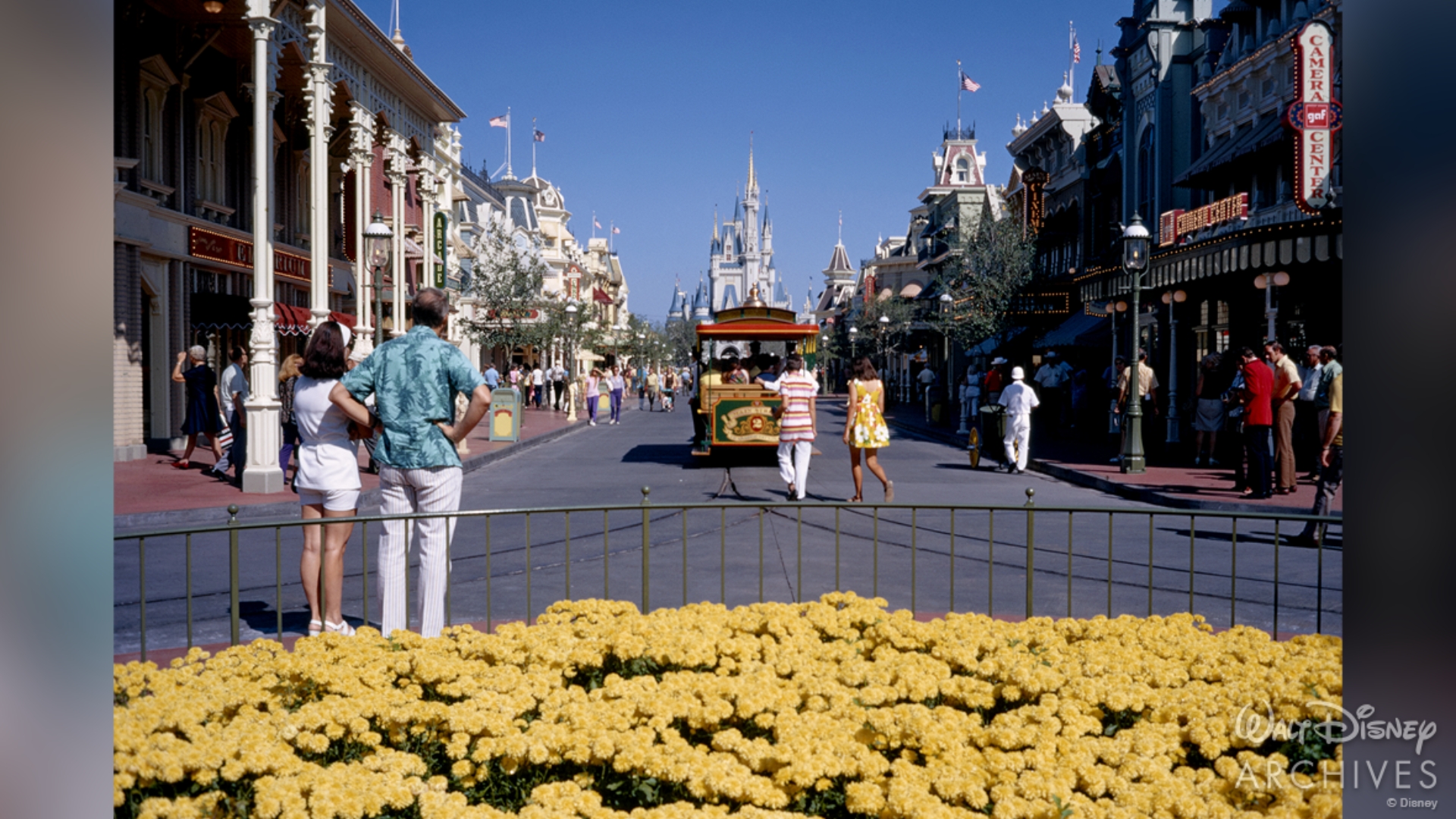
In 1971, the Magic Kingdom is brand new. Guests can explore six themed lands: Main Street, U.S.A.; Adventureland; Frontierland; Fantasyland; Tomorrowland; and a new area unique to the park: Liberty Square. Admission does not include unlimited access to every attraction; instead, guests can purchase ticket books containing tickets ranging from “A” through “E” and choose how they would like to spend their day. The coveted “E” coupons are reserved for some of the park’s most elaborate experiences.
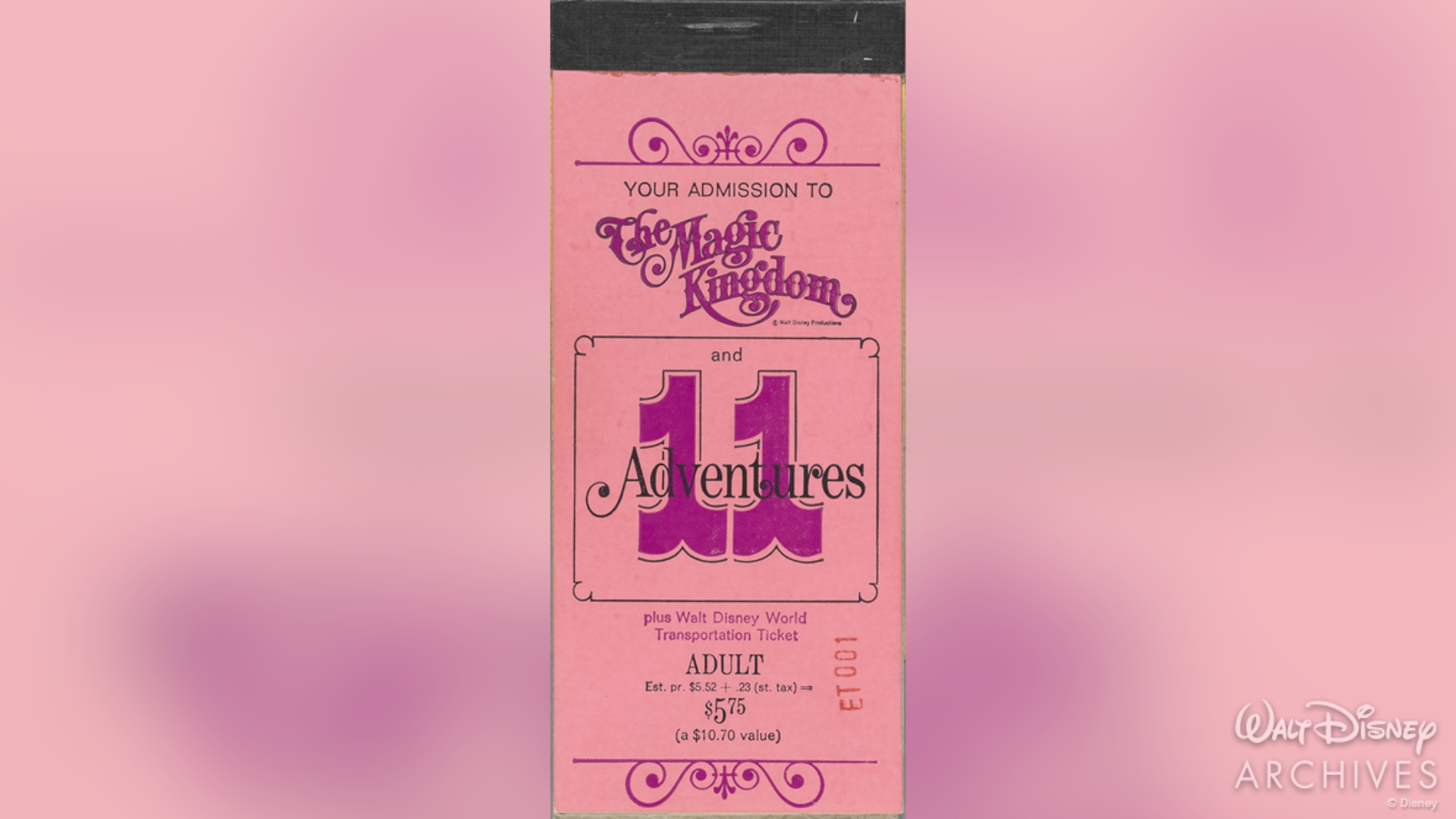
Families can travel through the jungles of Adventureland, journey into the future, or explore the worlds of beloved Disney stories. For many guests, the attractions are familiar in spirit to those at Disneyland in California—but the scale and setting of Walt Disney World makes the experience feel entirely unique. For guests staying multiple days, there is no rush to experience everything all at once. After all, the Vacation Kingdom offers much more beyond the park.
The Magic Continues Beyond the Kingdom
A Walt Disney World vacation was never meant to be entirely about the Magic Kingdom. As the day evolves, guests can return to their resort hotel for relaxation, recreation, dining, and entertainment.
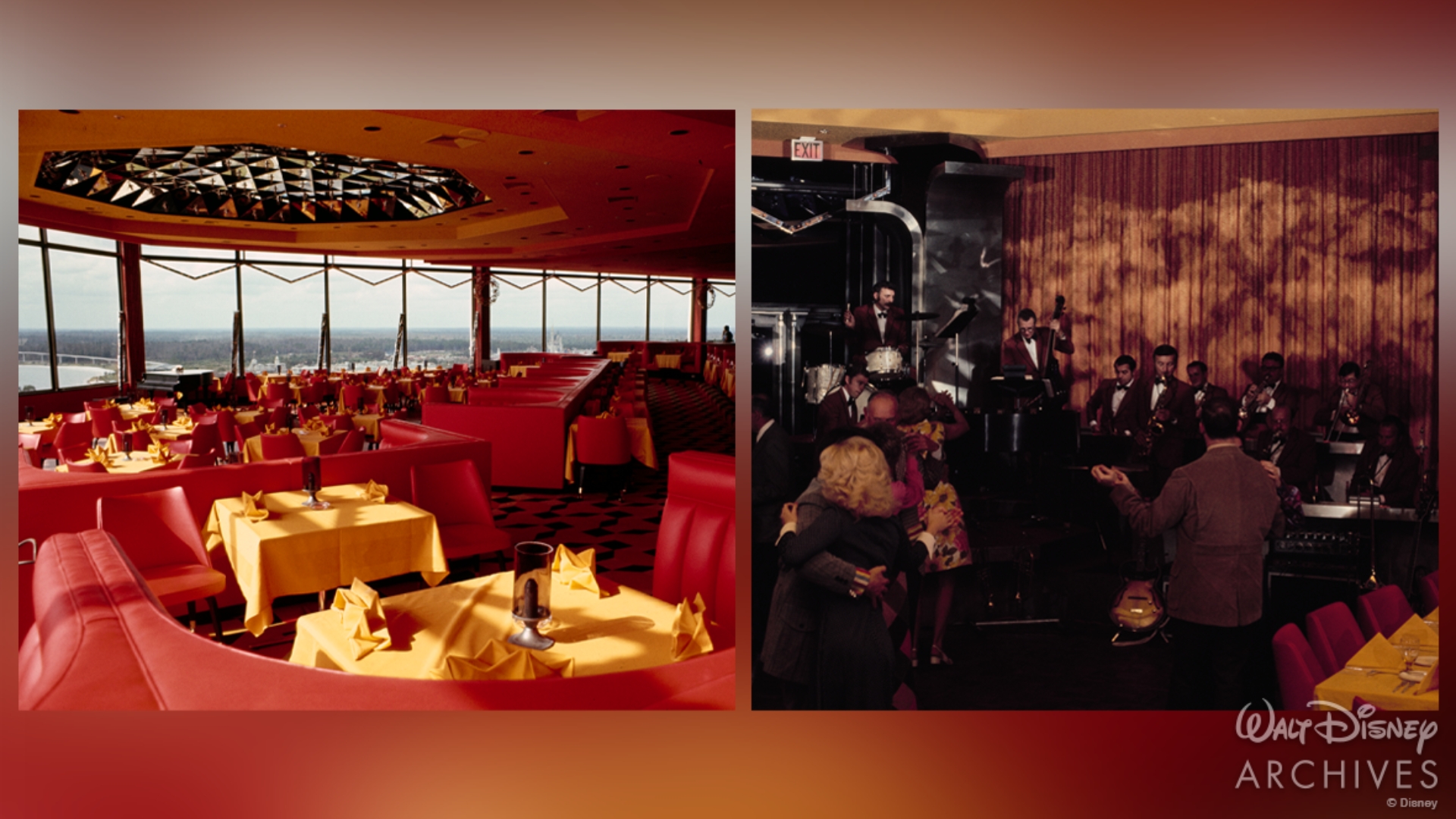
At the Contemporary Resort, families can relax beside Bay Lake, explore the shops and marina, or enjoy dinner at the resort’s many restaurants. For a special evening, guests can travel to the 15th floor for the Top of the World (later the California Grill), where sweeping views and celebrity entertainment add another dimension to the experience. The Contemporary also features the Gulf Coast Room (later Grand Republic Ballroom A), offering guests dining options that feel more like those of a complete vacation destination than a theme park hotel.
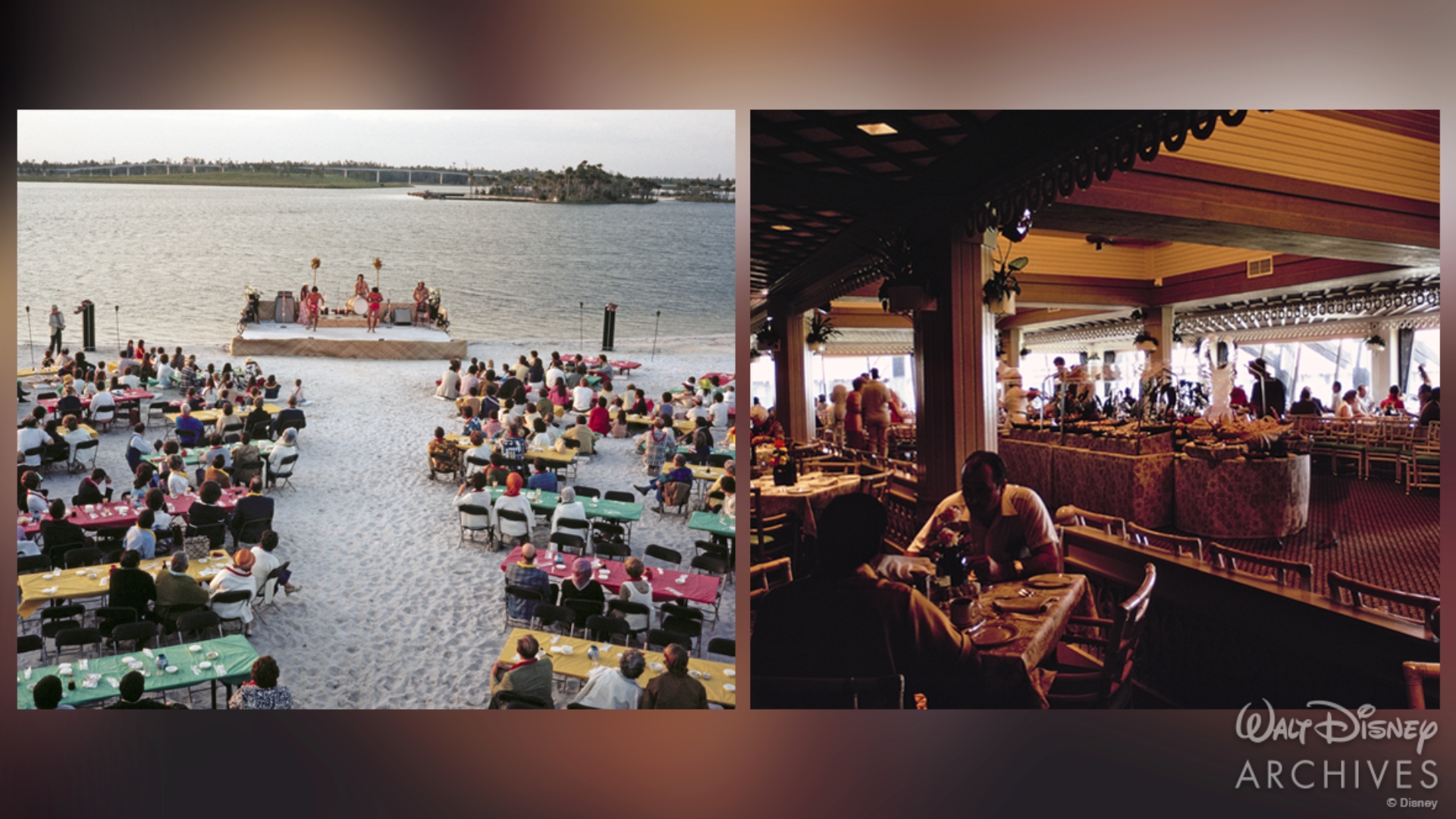
At the Polynesian Village, the day can continue along Seven Seas Lagoon or at the marina before dinner and entertainment. One of the resort’s most memorable experiences is its luau, originally staged nightly on white sand beaches amid the glow of flaming torches. The popularity of the luau will soon make it one of Walt Disney World’s signature resort experiences. In 1973, Luau Cove would be constructed for the show, replacing the original beachside setting.
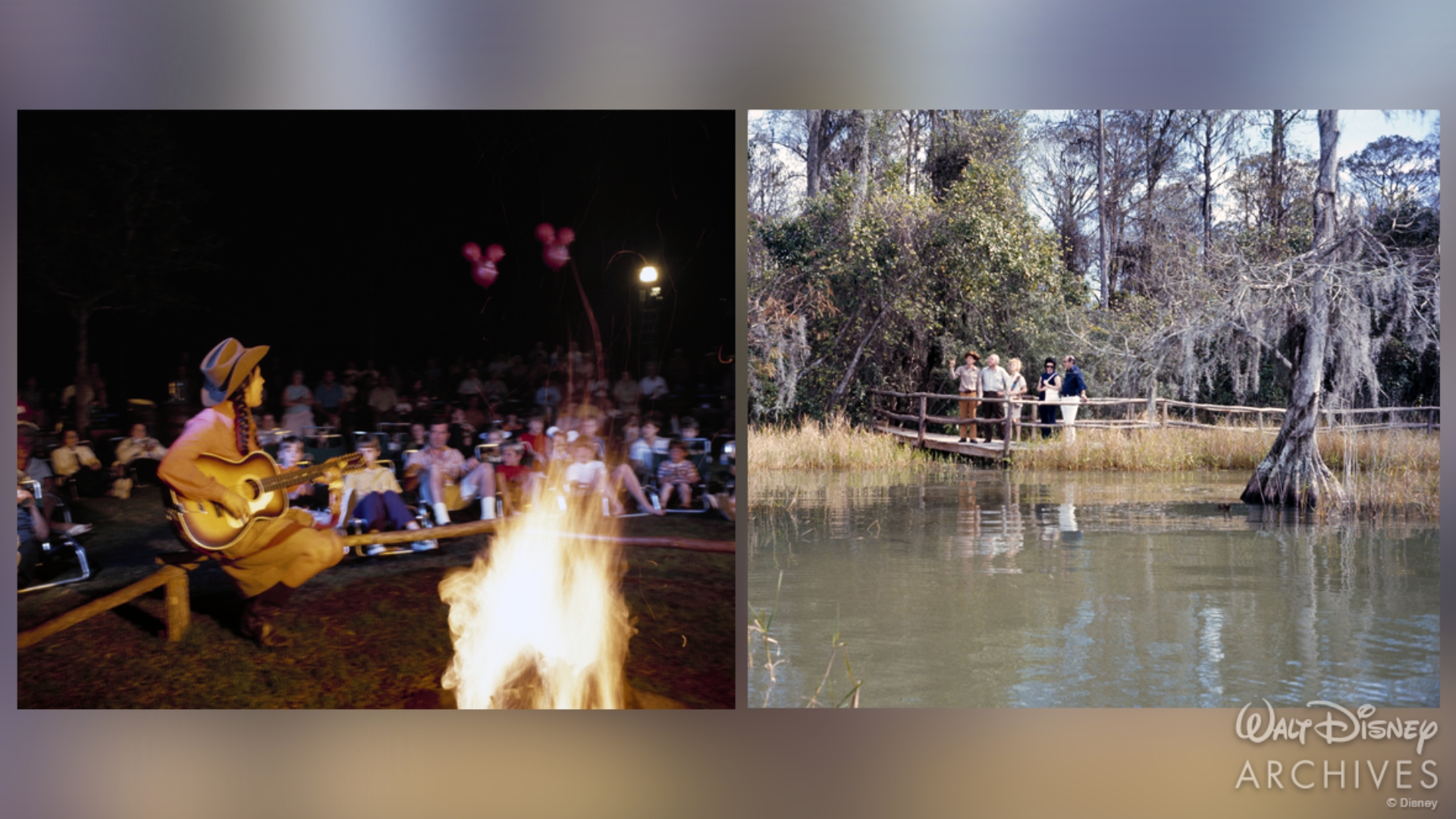
Over at Fort Wilderness, families can take part in activities like nature hikes, swimming lessons, fishing, water skiing, games, bicycling, and archery. At the nearby Tri-Circle-D Ranch, guests can watch a blacksmith practicing their trade, or play with goats, roosters, and other tame domestic animals at the children’s petting zoo. many available to take guests on winding trail rides through the campgrounds. After sundown, families have the option of hayrides, night canoe excursions, or a family campfire sing-along featuring. After a day at the Magic Kingdom, the slower pace offers a welcome contrast.
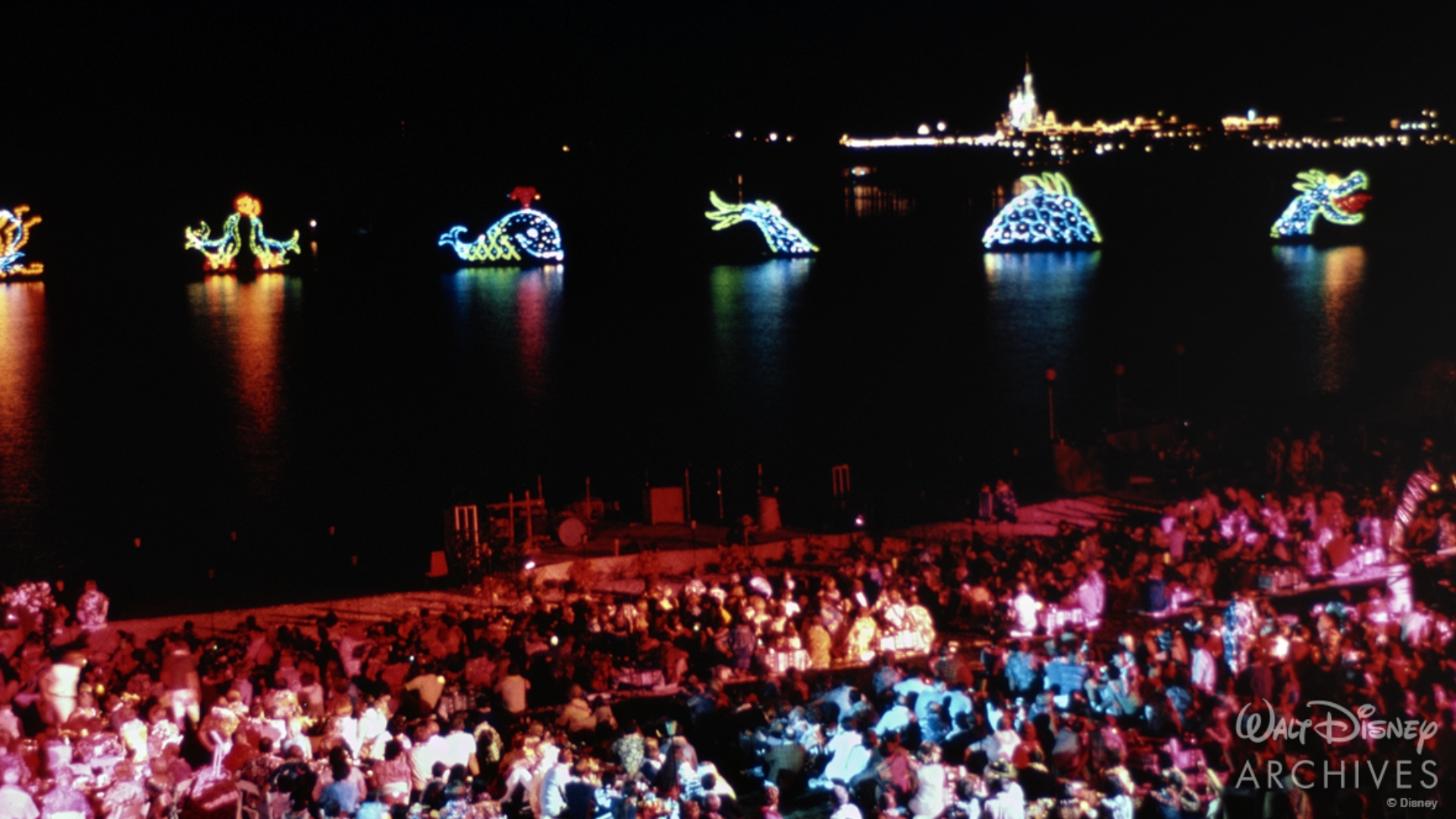
Nightfall brings another layer of magic to the Vacation Kingdom. Guests staying along Seven Seas Lagoon can watch lights dance across the water during the Electrical Water Pageant, which debuted during Walt Disney World’s grand dedication weekend. The nighttime entertainment transforms the lagoon into part of the show, reminding guests that the boundaries of Walt Disney World extend beyond the gates of the Magic Kingdom in imaginative and unexpected ways. Perhaps the most significant distinction between a multi-day vacation in 1971 and a simple day trip is the promise of tomorrow. When the Magic Kingdom closes for the evening, guests don’t have to leave the magic behind... they are already home.
55 Years of Staying in the Magic
Today in 2026, Walt Disney World is home to a remarkable collection of resort hotels, each offering its own story and style across some 25,000 acres. But the idea began with three very different accommodations and a bold new vision for the Disney vacation experience. The Contemporary invited guests to imagine the future; the Polynesian Village offered a tropical escape; and the Fort Wilderness campground brought families closer to nature. Together, they demonstrated that where you stayed could be as much a part of the storytelling experience as where you went. This was the magic established during the foundational years of the Vacation Kingdom.
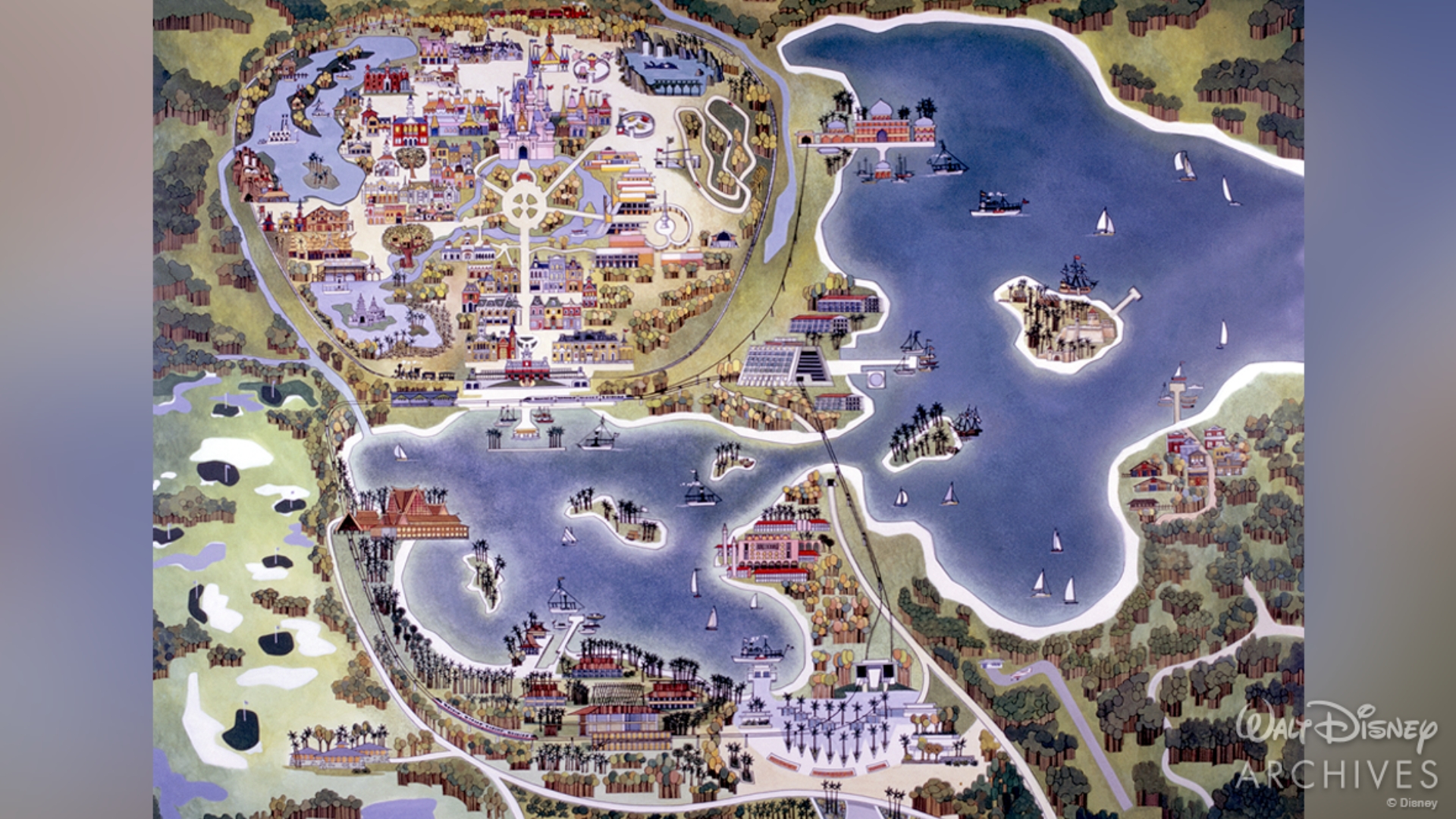
Fifty-five years later, Disney’s Contemporary Resort, Disney’s Polynesian Village Resort, and Disney’s Fort Wilderness Resort & Campground continue to welcome guests—not simply as places to stay, but as destinations where a Disney vacation can continue long after a day at the park has ended. Because from the very beginning, Walt Disney World was designed to be more than a place you visited.
It was a world you could play, stay, and live in.