
By Christina Pappous, Walt Disney Archives
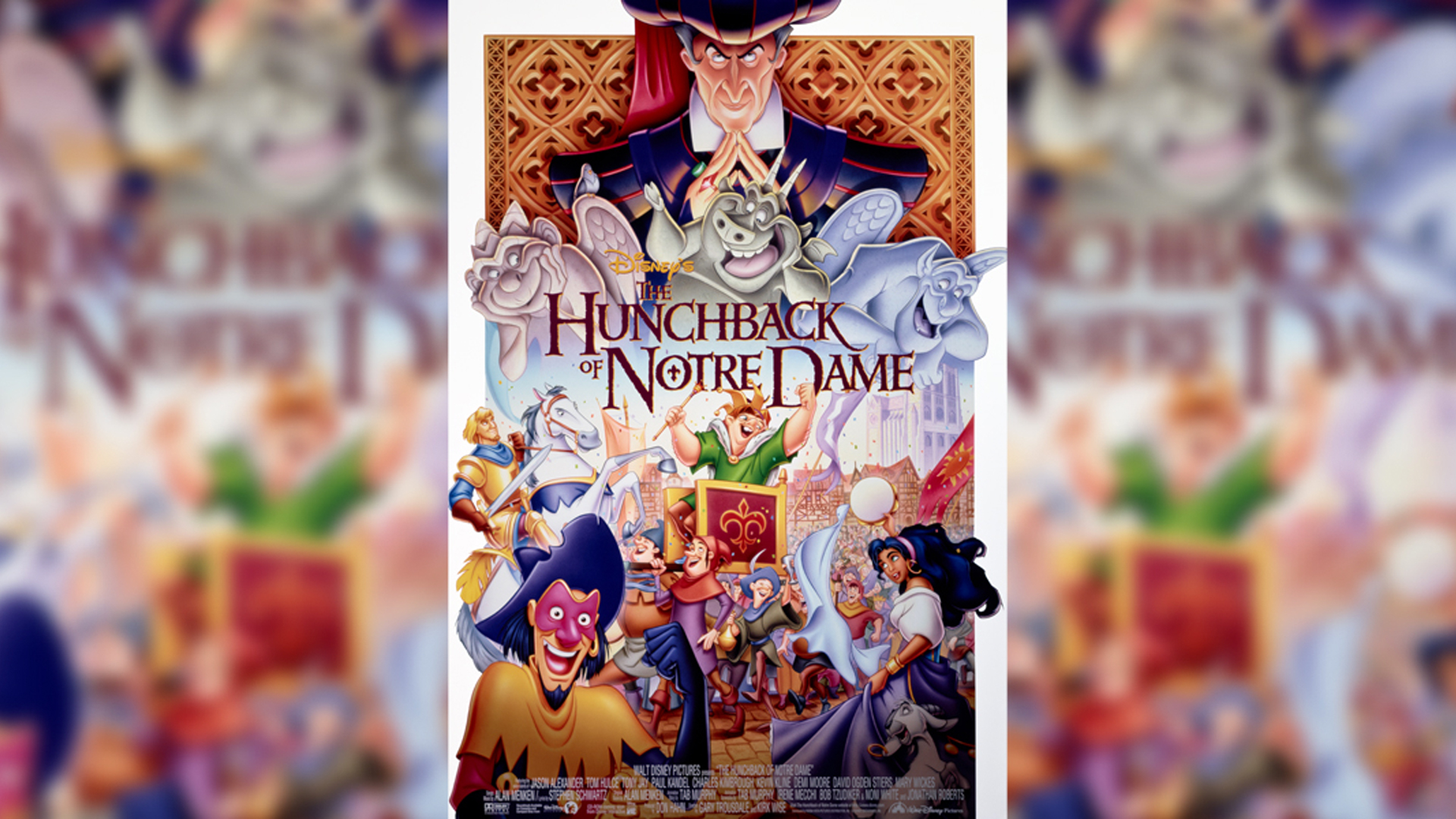
Did you know this month marks the 30th anniversary of The Hunchback of Notre Dame? Released June 21, 1996, the Disney animated feature vividly brought the timeless characters and story from Victor Hugo’s 1831 novel to a new generation of filmgoers. Prior adaptations of Hugo’s novel included the 1923 silent version starring “The Man of a Thousand Faces,” Lon Chaney, as well as Charles Laughton’s turn as the tragic Quasimodo in the 1939 film.
Production on the animated film began in early 1993, at the suggestion of David Stainton, then Creative Affairs vice president of Walt Disney Feature Animation. Members of the film’s production team made several trips to Paris, exploring the city and, of course, Notre Dame de Paris itself—touring its many passageways, hidden rooms, and soaring towers. Hunchback was also the inaugural production for Disney’s new Paris animation studio, making the film a collaboration between American and Parisian artists led by brothers Paul and Gaëtan Brizzi.
Inspired by their research visits and Hugo’s vivid descriptions of medieval Paris, the creative team sought a more grounded, but still visually dramatic, approach to the film’s art direction. In an interview with The Disney Channel Magazine, co-director Kirk Wise noted that “early on, we talked with art director David Goetz about how we were going to make this vision of medieval Paris stand apart from Beauty and the Beast […] we thought it needed a gritter feel. Dave took a lot of his cues from Hugo’s description of life in the streets, how there was heaven above and pretty much hell below in the streets of Paris.”
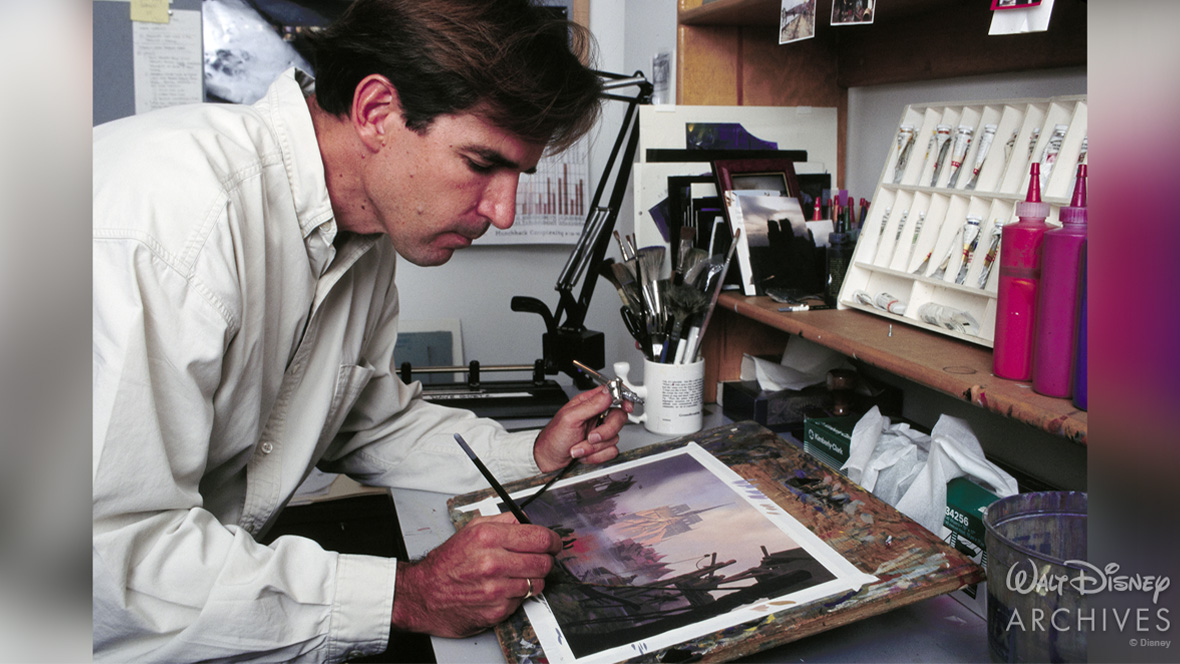
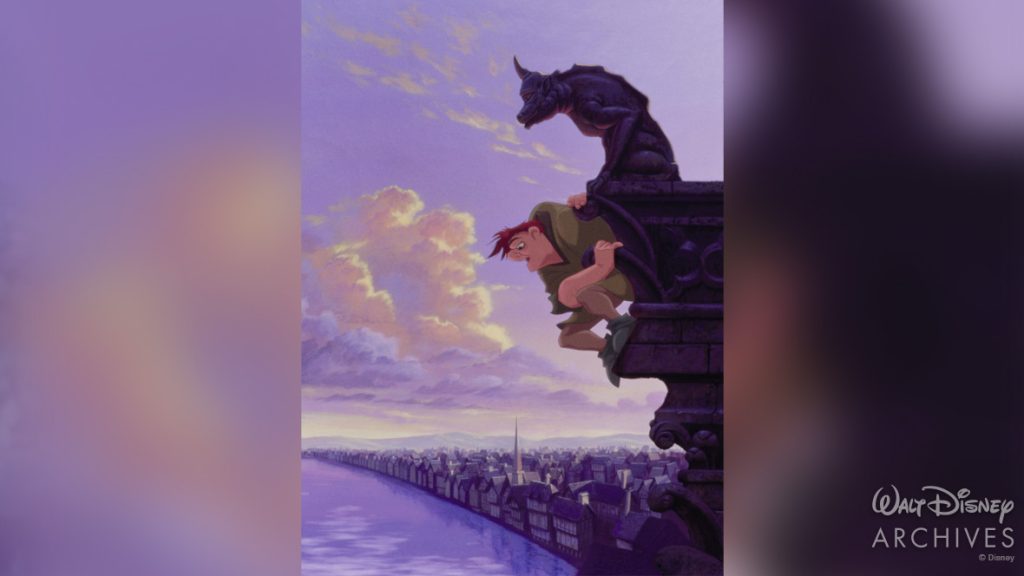
Goetz and his team looked to artists like N.C. Wyeth and Edward Hopper for inspiration while shaping the film’s visual identity. The art of Victor Hugo himself, found in the collections of the Bibliothèque nationale de France, also informed the look of the film; as Goetz described it, Hugo’s work had a “brooding, almost macabre graphic quality.” The film’s use of shadows and light ably expressed the struggle between light and dark that propels the story of Hunchback.
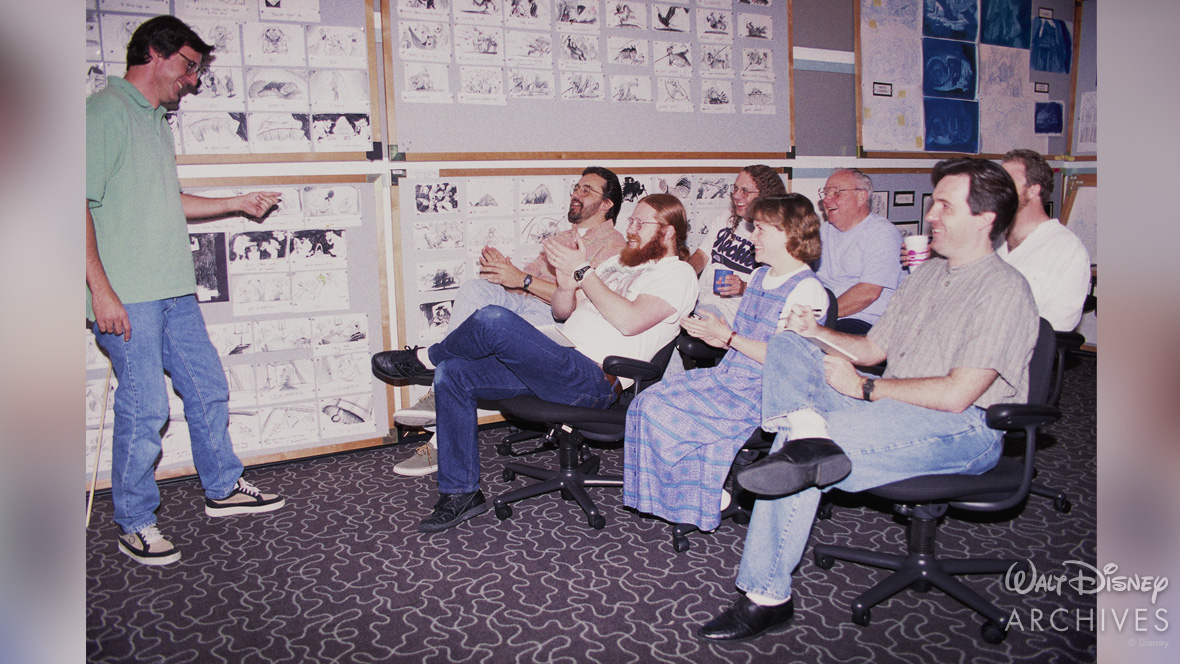
Adapting Hugo’s sprawling novel into an animated feature, while maintaining its complex, mature themes, proved to be an interesting challenge for directors Wise and Gary Trousdale and their team. But in producer (and future Disney Legend) Don Hahn’s estimation, the fundamental story was akin to a fairytale with a “beautiful princess, a prince and an evil stepfather who locks Quasimodo in a tower.” To streamline the novel’s multiple points of view and elaborate storyline, the filmmakers decided to make Quasimodo the protagonist of the story. In doing so, the film poignantly became, in the words of Hahn, the “story of an outsider—a frightening visage with a beautiful soul—one who wants to be accepted by the world around him but must tackle his own inner fears in order to do so.”
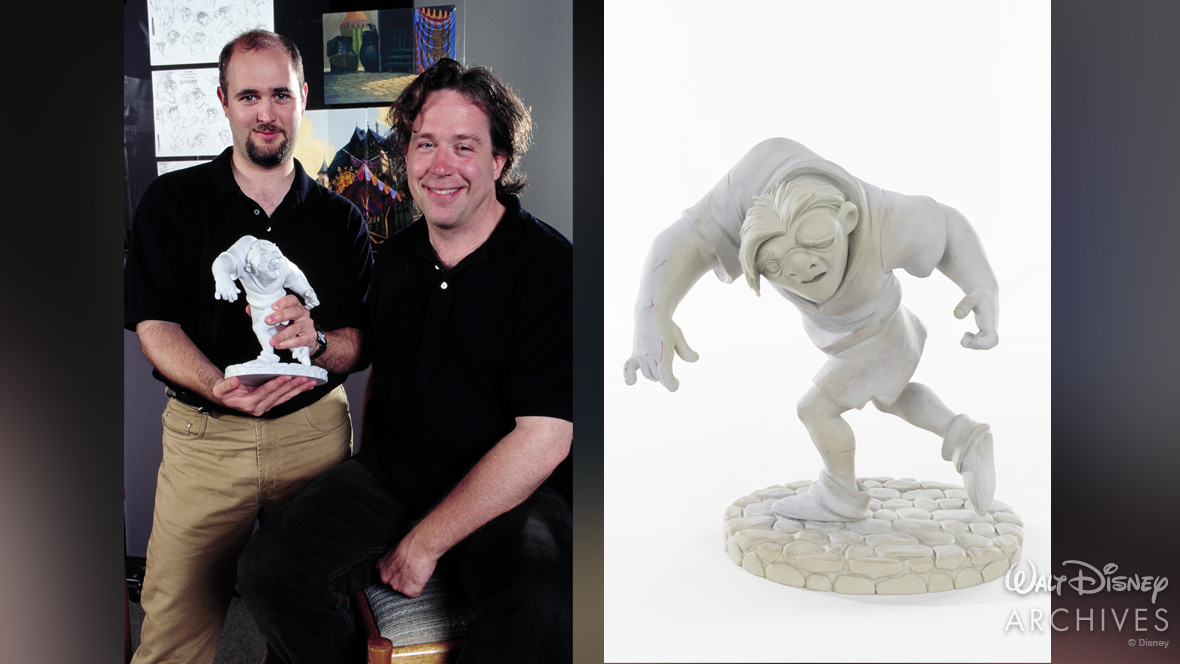
One of the most powerful ways the artists and animators behind Hunchback communicated this was through the character design of the gentle Quasimodo. The character’s design process was a unique challenge, as Trousdale and the creative team wanted to be sure that Quasimodo was not “malevolent, bitter, and vicious, but a put-upon guy who, beneath his surface appearance and his being emotionally stunted, has a loving heart of gold.” Supervising animator James Baxter utilized horizontal shapes to better distinguish Quasimodo from the towering, ominous vertical lines of his wicked guardian, Judge Claude Frollo, and the Gothic architecture of the cathedral. As Baxter put it, Quasimodo’s “being bent over was a metaphor for his wanting to hide. We wanted him wrapped in on himself, able to bend over and cower in his most oppressed moments.” However, it was key that Quasimodo’s design enabled him to be adept and agile enough to scale the bell towers of the cathedral with ease. The animator’s model of Quasimodo from the Walt Disney Archives beautifully demonstrates the complexities of the character’s physicality and personality.
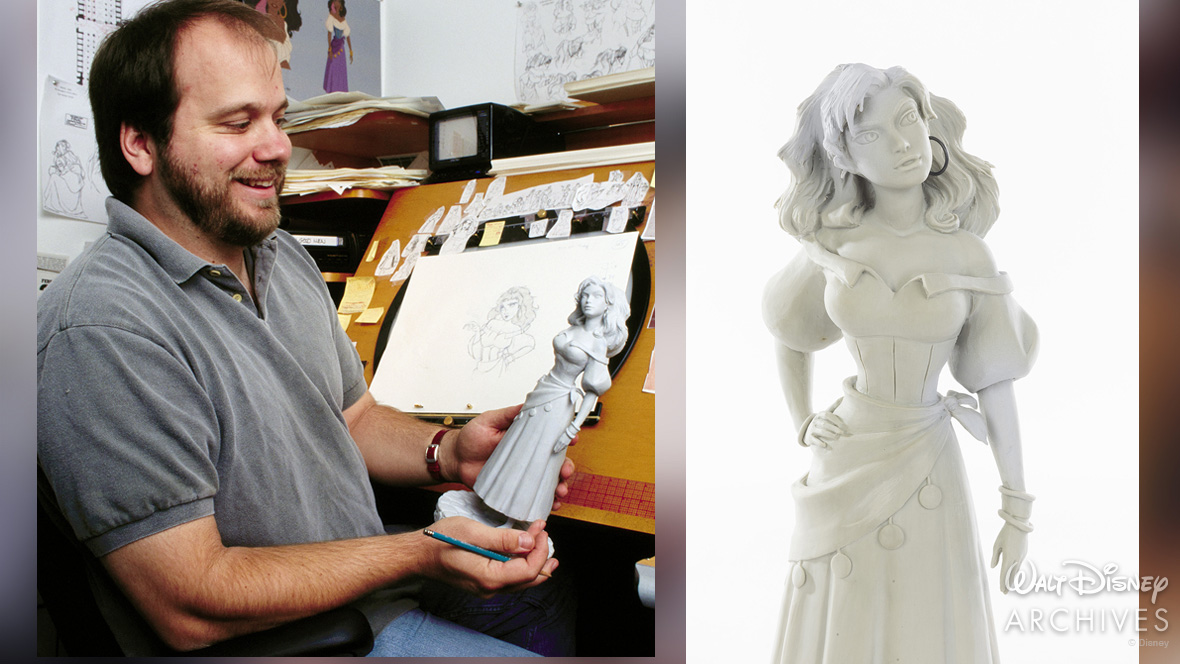
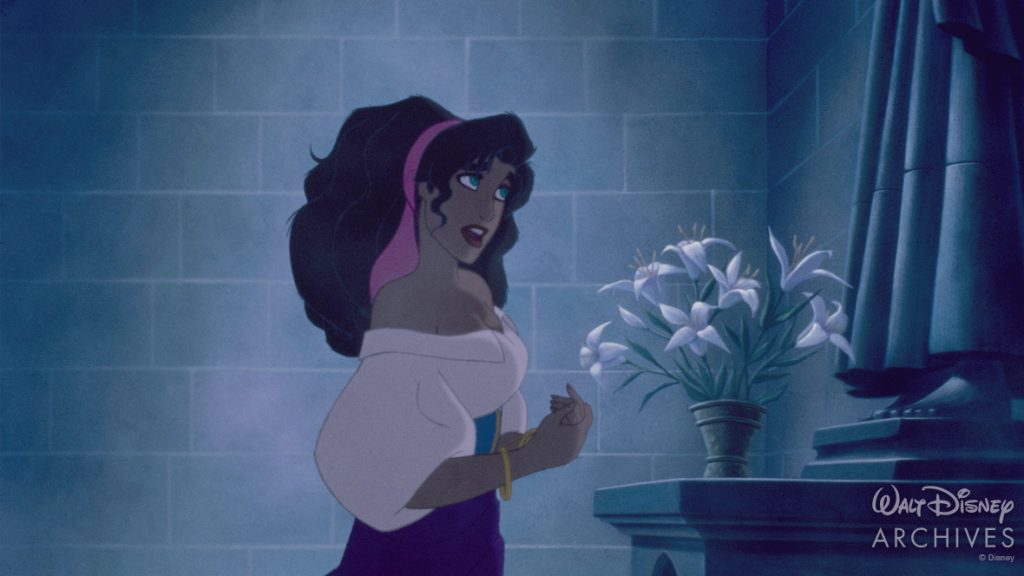
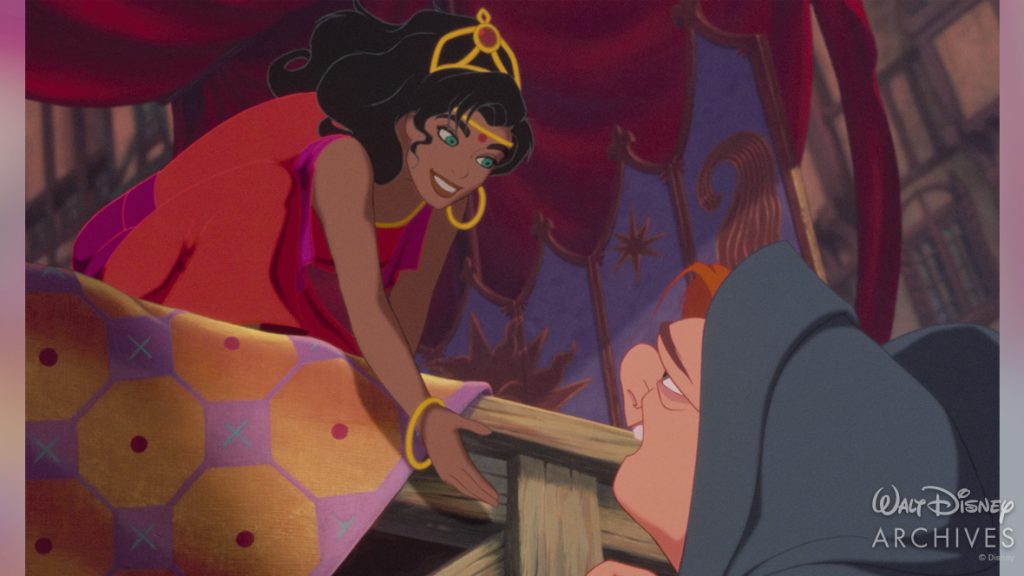
Of course, one of the most touching elements of the film is Quasimodo’s tender friendship with the kind and compassionate Esmeralda. Like Quasimodo, Esmeralda is an outsider. As Trousdale noted, “…she’s dealt with persecution her entire life and it’s toughened her. But beneath that tough exterior, there’s tenderness and compassion. What she wishes for more than anything else is the world is that all prejudice could be stripped away and people could look at each other as they really are.”
Supervising animator Tony Fucile and his team infused her character design with warmth, vivacity, and, most importantly, a balance between softness and strength. In the words of Trousdale, Esmeralda is “the first person to treat Quasimodo like a human being” and through the friendship he develops with her, he makes his first connection to the outside world beyond the walls of the cathedral, gains the courage to confront his fears, and ultimately finds his way “out there.”
Be sure to celebrate 30 years of Quasimodo’s incredible journey and watch The Hunchback of Notre Dame, streaming now on Disney+!