

By Alice Shu
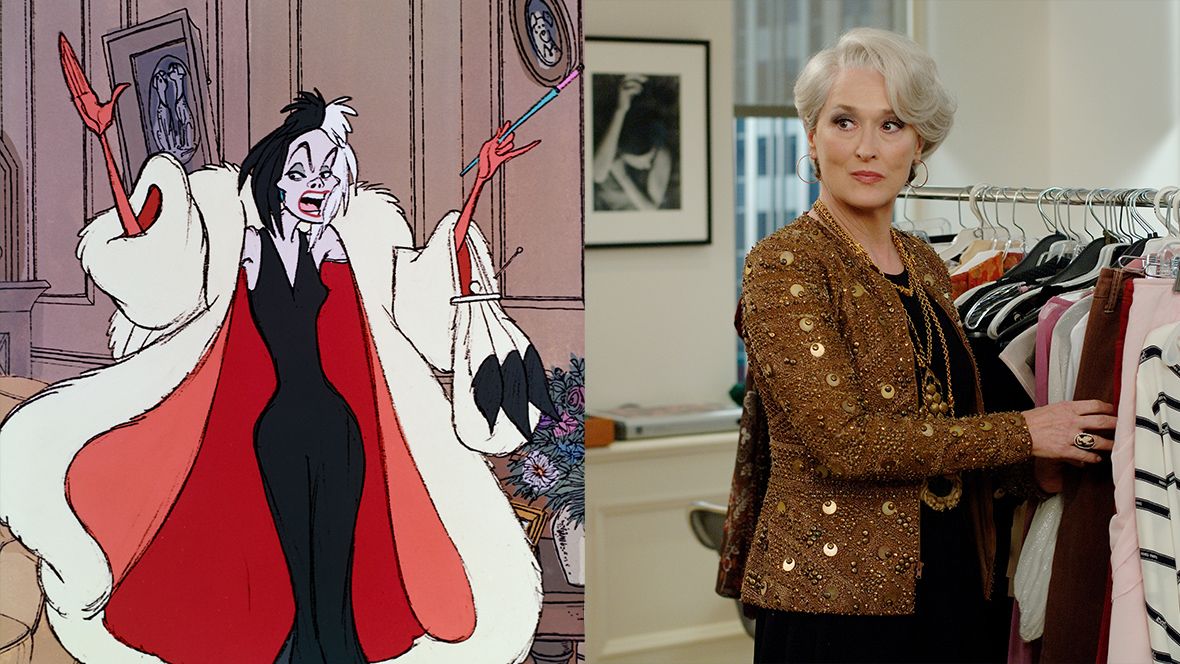
Speak of the devil! With a few of D23’s favorite fashionistas celebrating anniversaries this year, we took a legacy look-back into how they were brought to life—from sketch to seam to screen. Both Cruella de Vil from One Hundred and One Dalmatians (1961) and Miranda Priestly from The Devil Wears Prada (2006) are devilishly delightful divas of the highest order... so get ready to hit the runway with these groundbreaking production facts!
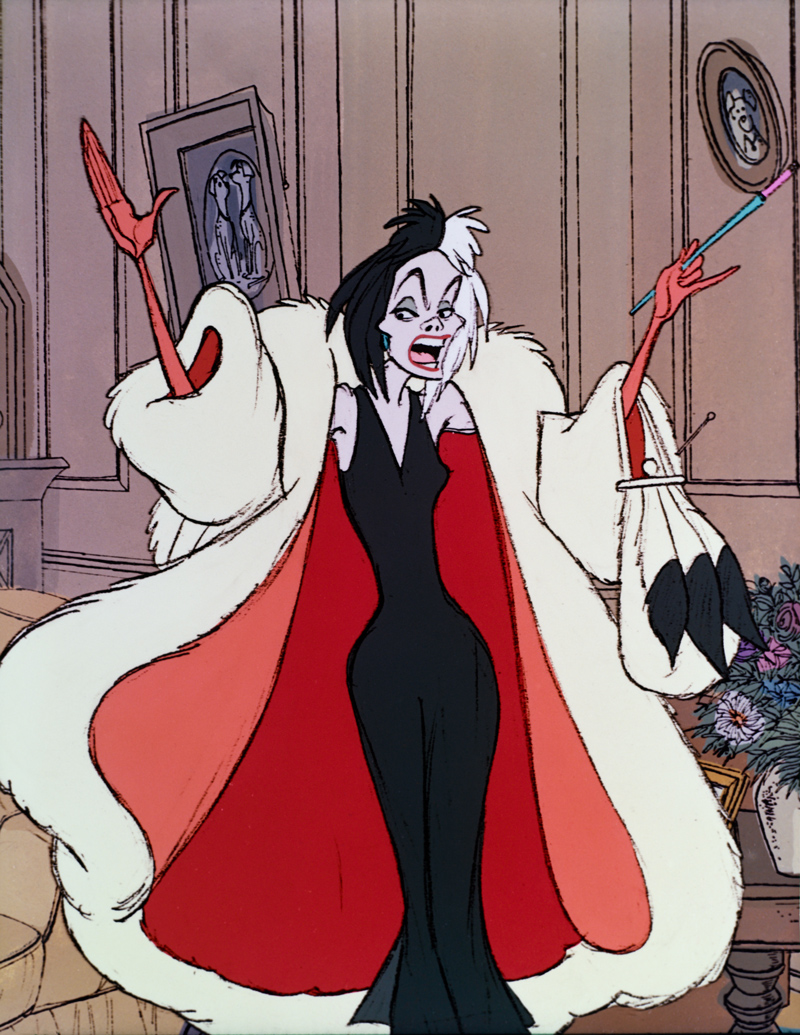
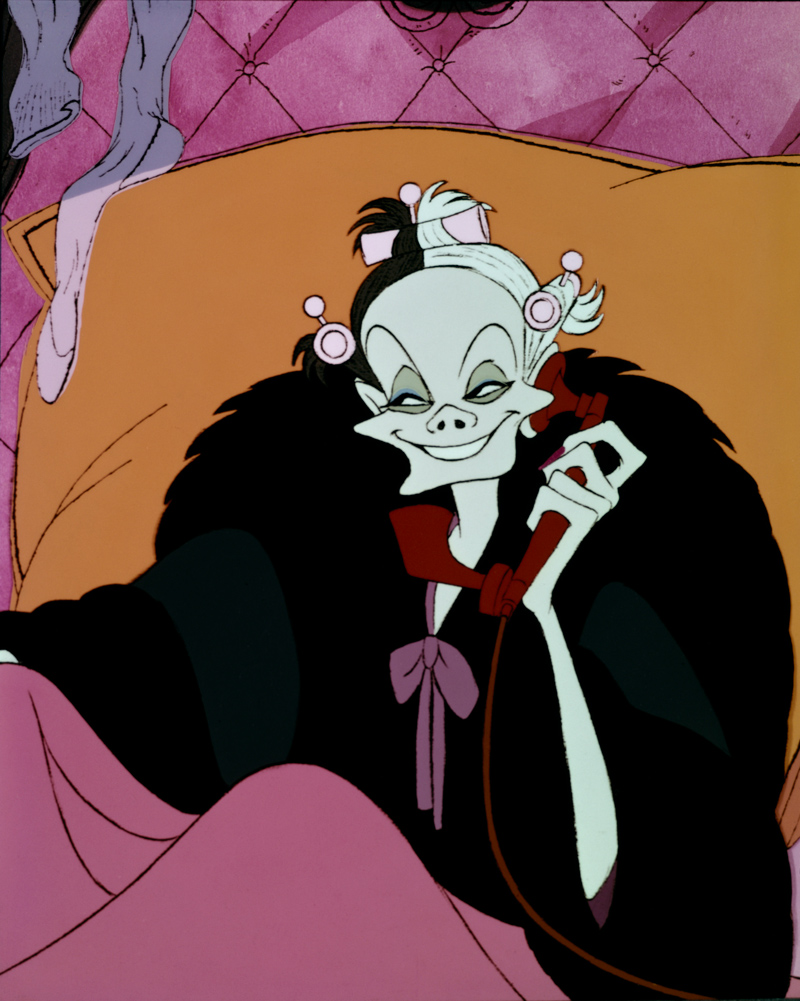
The animated classic One Hundred and One Dalmatians (1961), which celebrates its 65th anniversary this year, was Cruella de Vil’s first appearance on the big screen. Who knew that kidnapping a few (well, more than a few) dogs was what it took to become one of the most iconic villains in film history? While the feature was marketed as a comedy, Cruella kicks things into high dramatic gear, with memorable interactions with the small cast of humans that escalates into an explosive car chase.
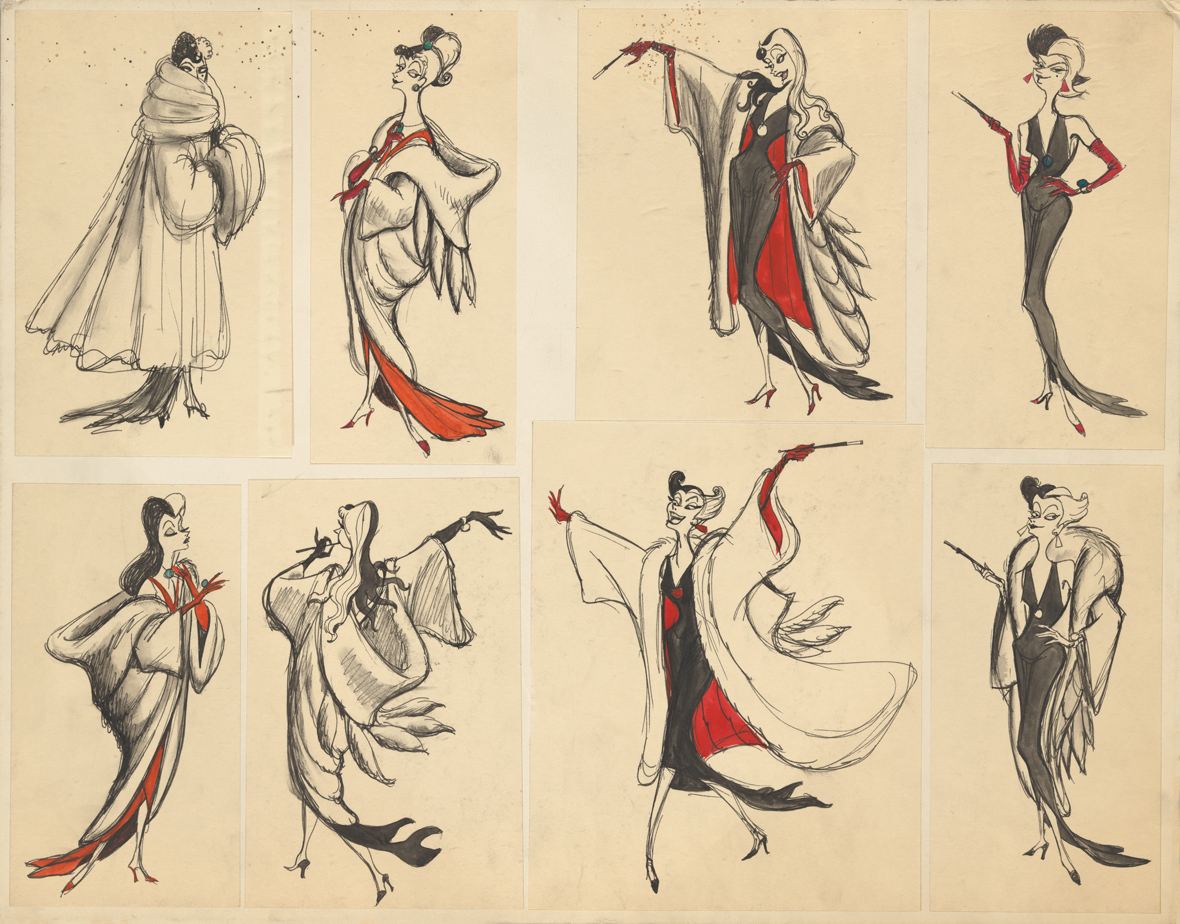
Interestingly, Walt Disney originally wanted actress Lisa Davis to give voice to this villain—but she felt that her voice sounded “very young and fresh,” so she would up cast as Anita. It was Betty Lou Gerson who brought sinister life to the diva and stole the show; her wickedly divine voice even inspired animator and Disney Legend Marc Davis in creating one of his most iconic characters of all time. Recalled Davis, “A voice like Betty Lou’s gives you something to do. You get a performance going there, and if you don’t take advantage of it, you’re off your rocker.” Davis, one of Walt’s “Nine Old Men,” would animate nearly all the most iconic Cruella scenes, and it would be the last animated character that he oversaw at the studio before moving over to WED Enterprises (now Walt Disney Imagineering).
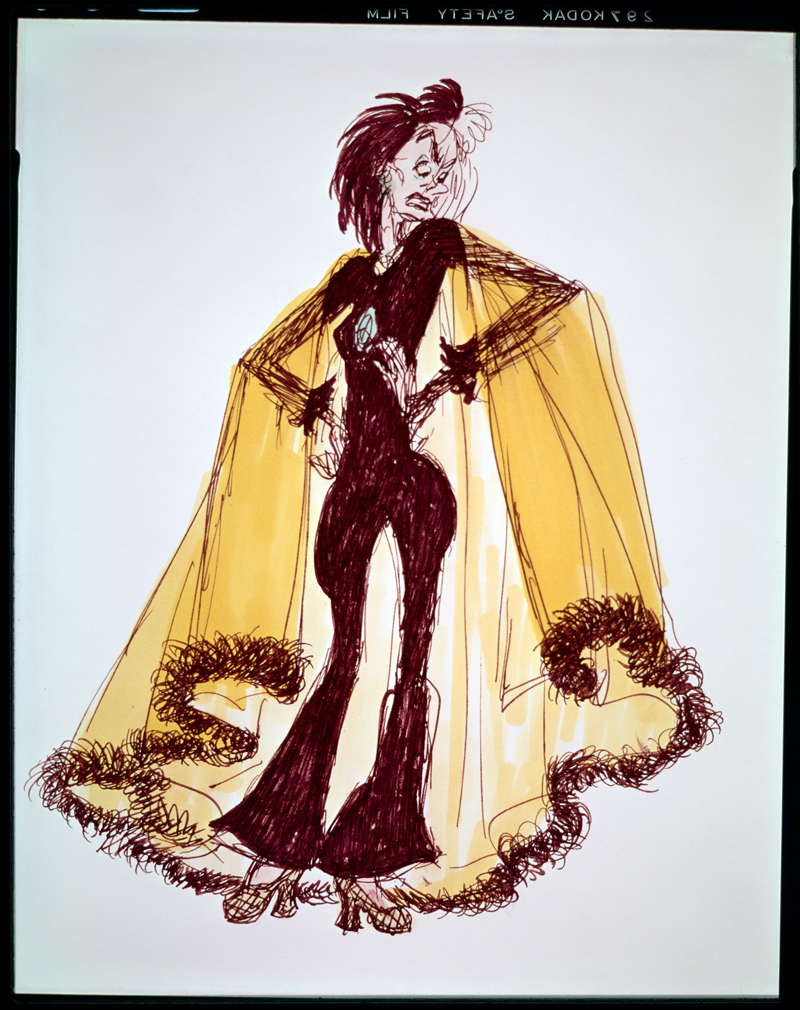
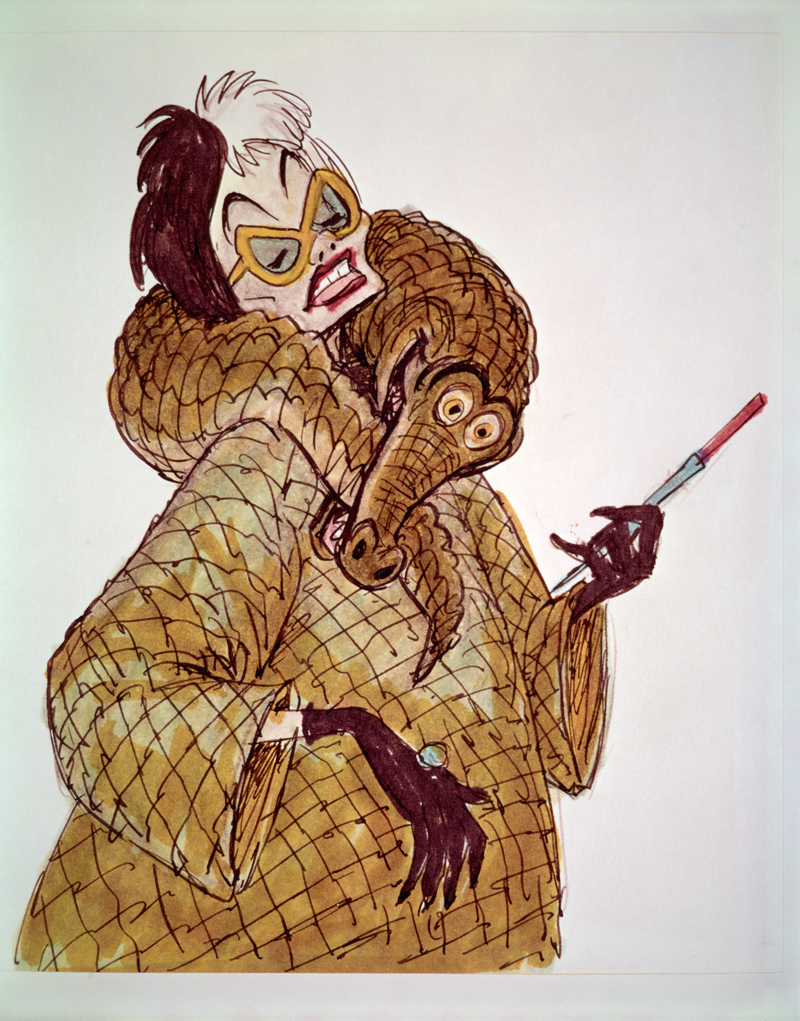
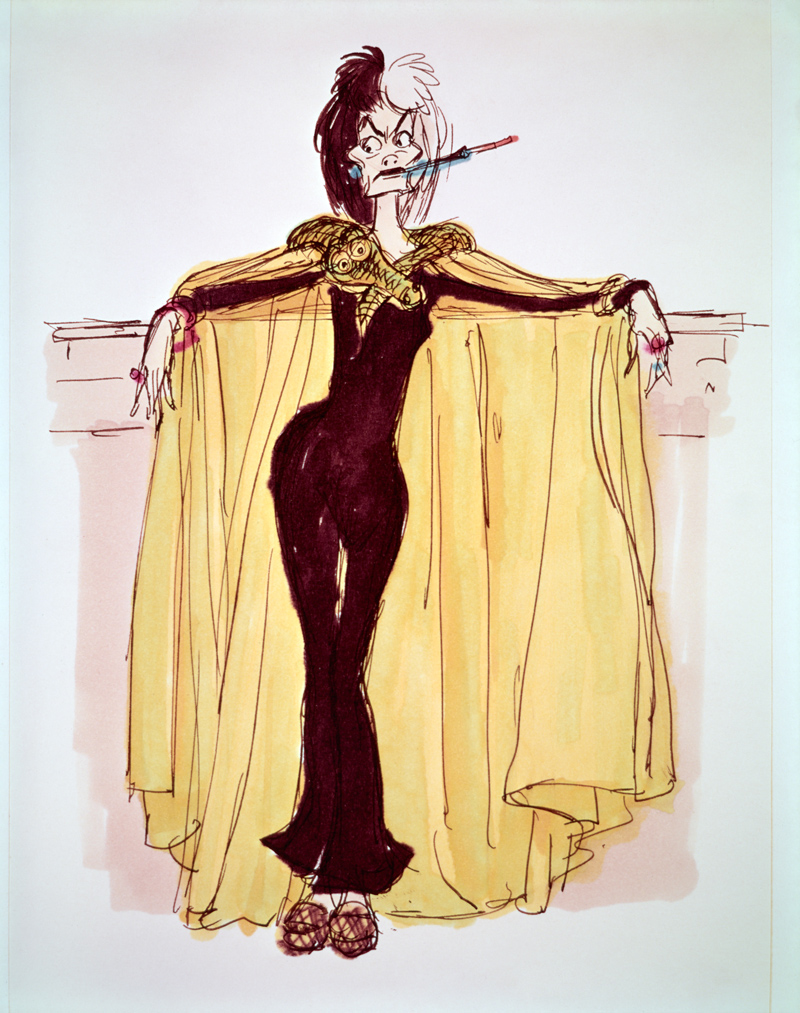
Cruella de Vil clearly did not leave the minds of Disney animators, as they also considered her for the antagonist in The Rescuers (1977) before ultimately deciding that they wanted to create a new villain, Madame Medusa, for this original story. (And Medusa got some of her own memorable, alligator-infused fashions, to boot.)
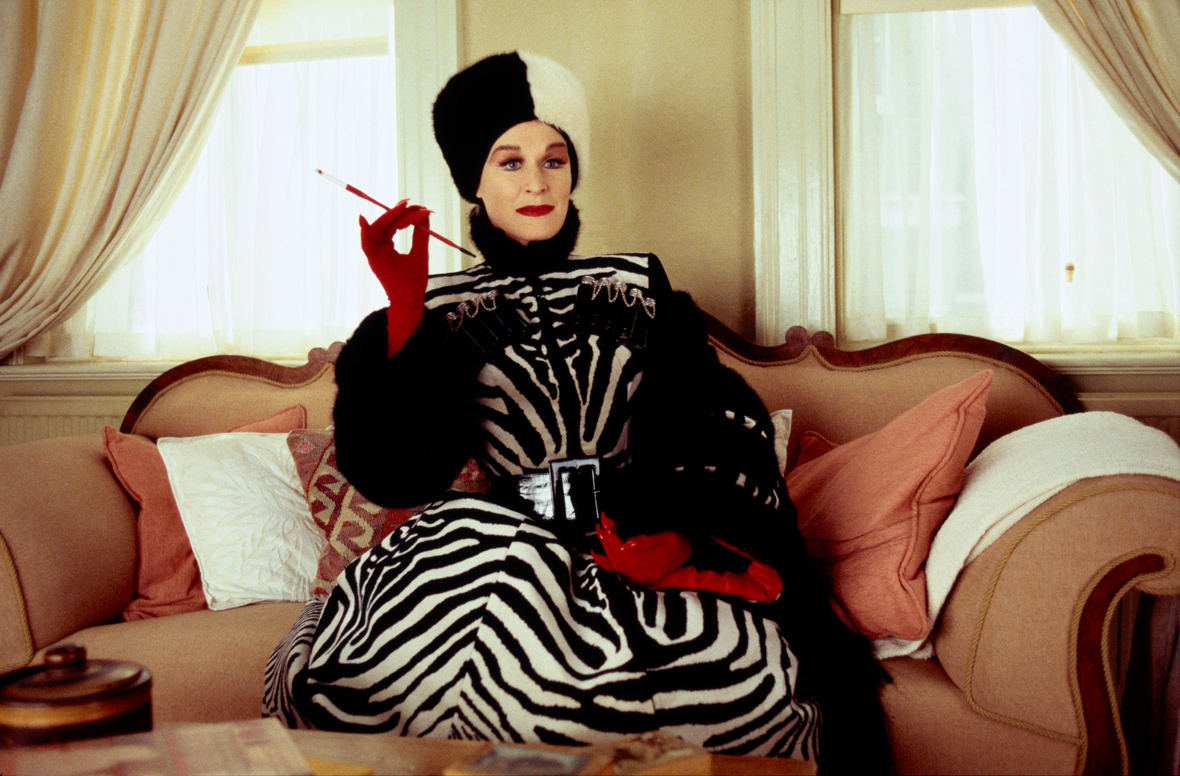
Our fascination with Cruella only continued as the live action adaptation, 101 Dalmatians (1996) (celebrating its 30th this year!) and 102 Dalmatians (2000) sought to translate Disney's doggy-dog world into reality. The incredible Glenn Close had the tall order of embodying the domineering diva—luckily, she was aided by Academy AwardⓇ-winning costume designer Anthony Powell, who used Cruella’s fashion to let the audience in on her character. Portraying her as being image- and animal-obsessed helped indicate that Cruella was a real threat to the film’s canine protagonists; each of Close’s outfits included an animal motif (such as fur, feathers, or snakeskin), and Powell prioritized a “striking and exaggerated” silhouette to make Cruella feel more forceful.
Because the Cruella we know originated from an animated feature, it was important to the film’s crew that her real-life counterpart stood out—without seeming overly cartoonish. This was accomplished by establishing logic behind her choice of clothing, like wearing gloves with claw-like nail extensions to obscure soft, pink hands that could be seen as vulnerability. All told, Close chose to act evil rather than just relying on her looks, and let Cruella’s formative fashion house image-obsessiveness guide her portrayal.
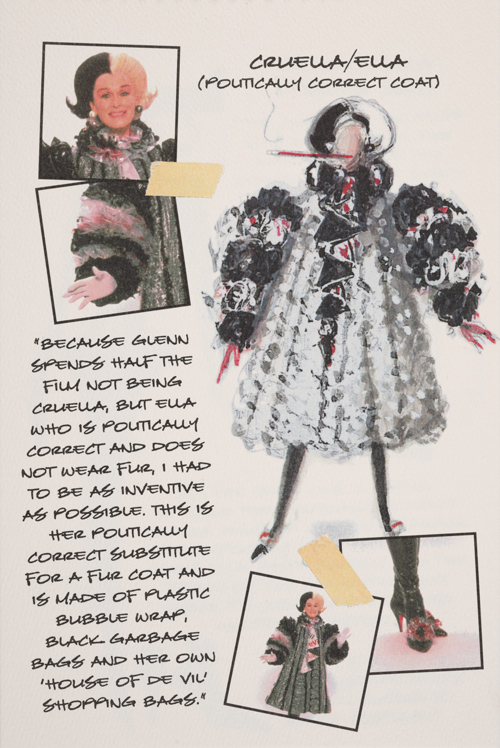
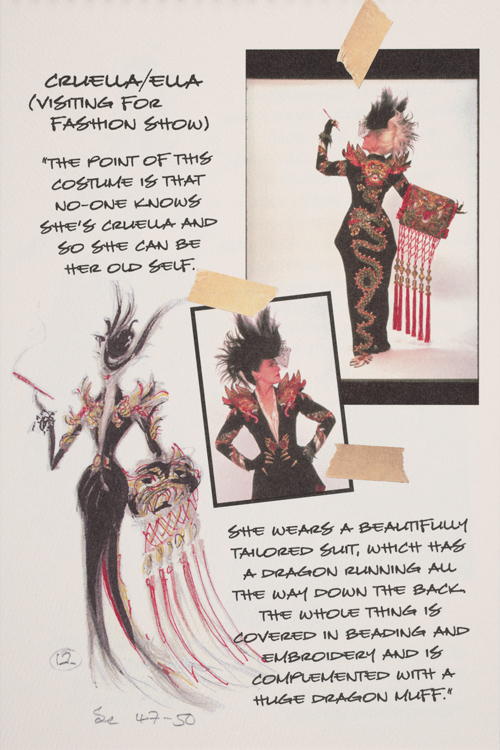
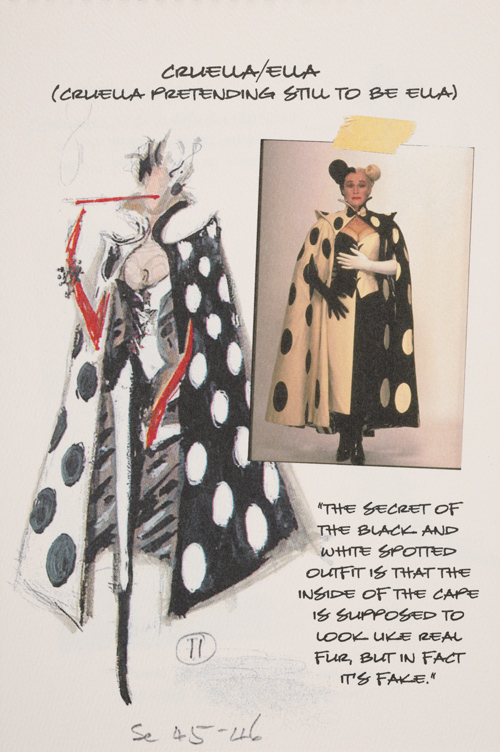
“Cruella walks a very thin line between being truly frightening and also entertaining,” said Close. “But I think, in the tradition of all great fairy tales, that bad is bad—and you have to commit to that. For good to triumph over evil in 101 Dalmatians, it helps to have a truly evil antagonist.”
Could this de Vil perhaps have been the lesser of two evils? That’s what the live-action feature film Cruella (2021) sought to answer by exploring the rags-to-riches rise of Estella (Oscar® winner Emma Stone) through high fashion... and her eventual transformation into the iconic Cruella. Being set in 1970s London—where punk fashion took the streets by storm, and luxury designers dominated the runway—allowed the production crew to borrow from real-life influences to define the characters. Recycled clothing and an edgy style are Estella’s forte (can we get this de Vil on Depop?), and her alter-ego Cruella’s style borrowed much from designers like Alexander McQueen. Her nemesis, the sophisticatedly scary Baroness (Oscar winner Emma Thompson), heads a fashion house and dons outfits evoking old-glamour Dior—structured taffetas and silks that contrast with Cruella’s preference for monochromes, leathers, and metals.
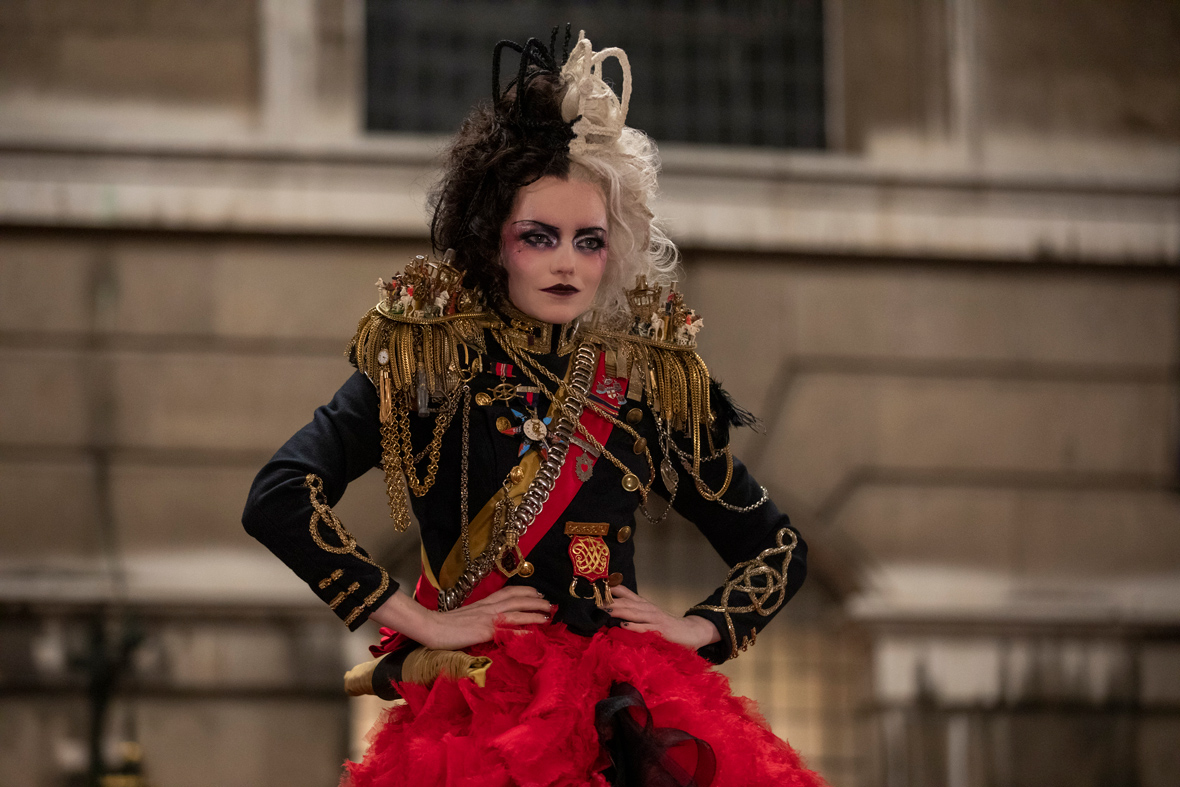
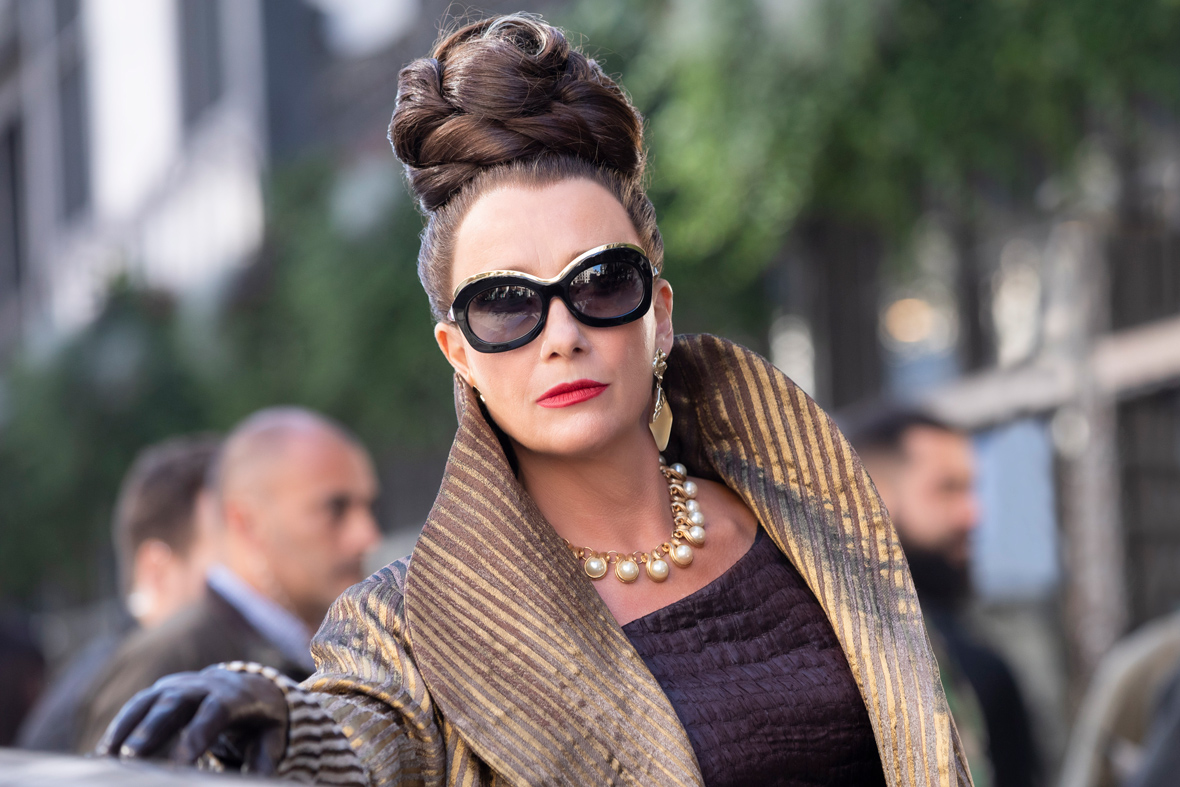
Here, explicitly, costume design was the language used to tell the story of Estella’s transformation and contention with the Baroness, due in no small part to three-time Academy Award-winning costume designer Jenny Beavan (and yes, she won one for Cruella!). We’re introduced to our protagonist in her elementary years, where her eye for fashion goes unappreciated... but it’s ultimately very useful for con jobs around London as she grows into adulthood. Stone shows us how Estella literally sews her way to the top, landing a position with the Baroness as a designer before revelations lead to a quest for jewelry, revenge, and answers. The Baroness’ choice of dress—imposing and opulent—signals the disparity between the two women, especially as Estella represents the new, up-and-coming fashion movements from the streets.
Dressing the two, and the film’s side characters (including cronies-to-be Jasper and Horace, played by Joel Fry and Paul Walter Hauser respectively), was no easy feat. The scoreboard stands at 47 costume changes for Stone, 33 for Thompson, and 30 each for Fry and Hauser. And don’t forget the hundreds of costumes for extras throughout—including setting the scene for the Baroness’ Marie Antoinette ball at the start of the film.
In a way, the film also contextualized Cruella’s significance as an ambitious and savvy woman at the top of her game. Dog-napping aside, you have to admit that she is straightforward, goal-oriented, and crafty! Centering Cruella on the decades-long dynamic between two female designers was an inherent goal to help highlight their accomplishments and perseverance.
“Our two leads are women who are working women, and they’re adversaries in their work,” said Thompson. “You don’t see that very often, if at all.” One could reason that the Baroness’s cutthroat approach was simply what it took to excel in the field... Or, she was just born a baddie.
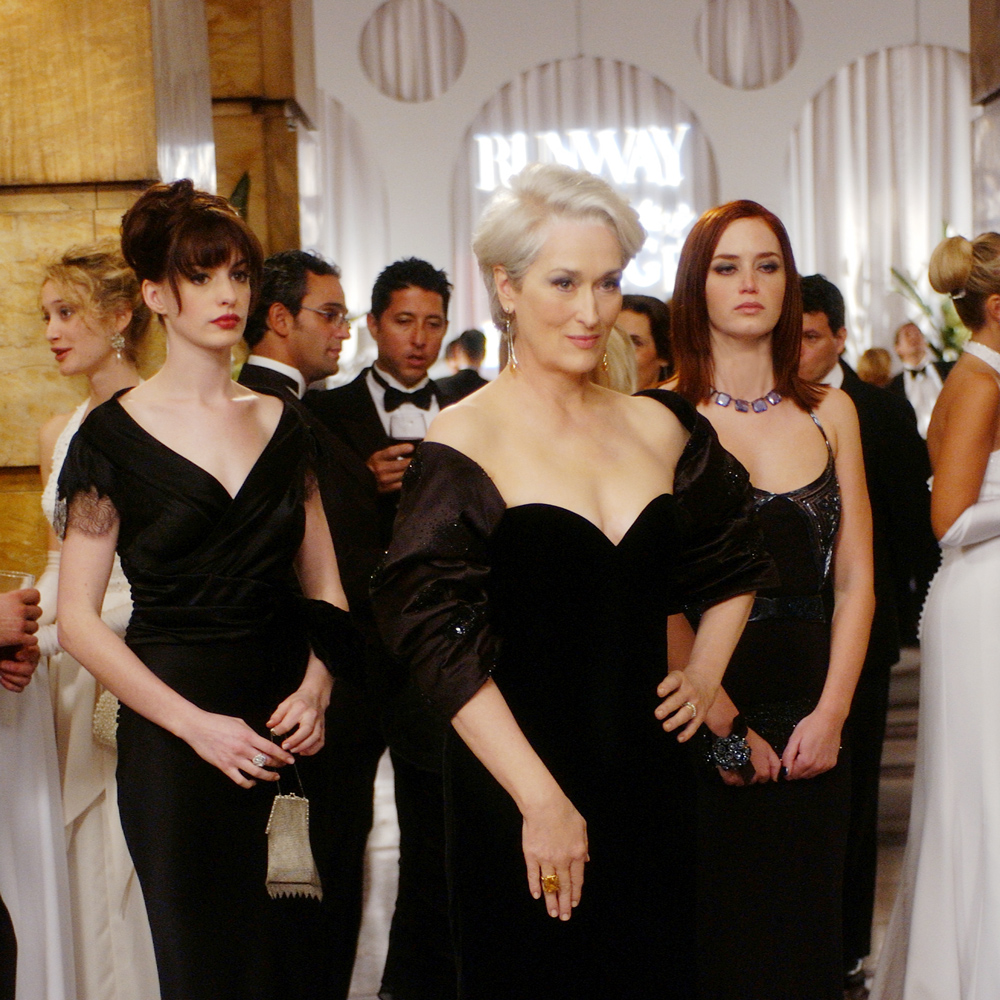
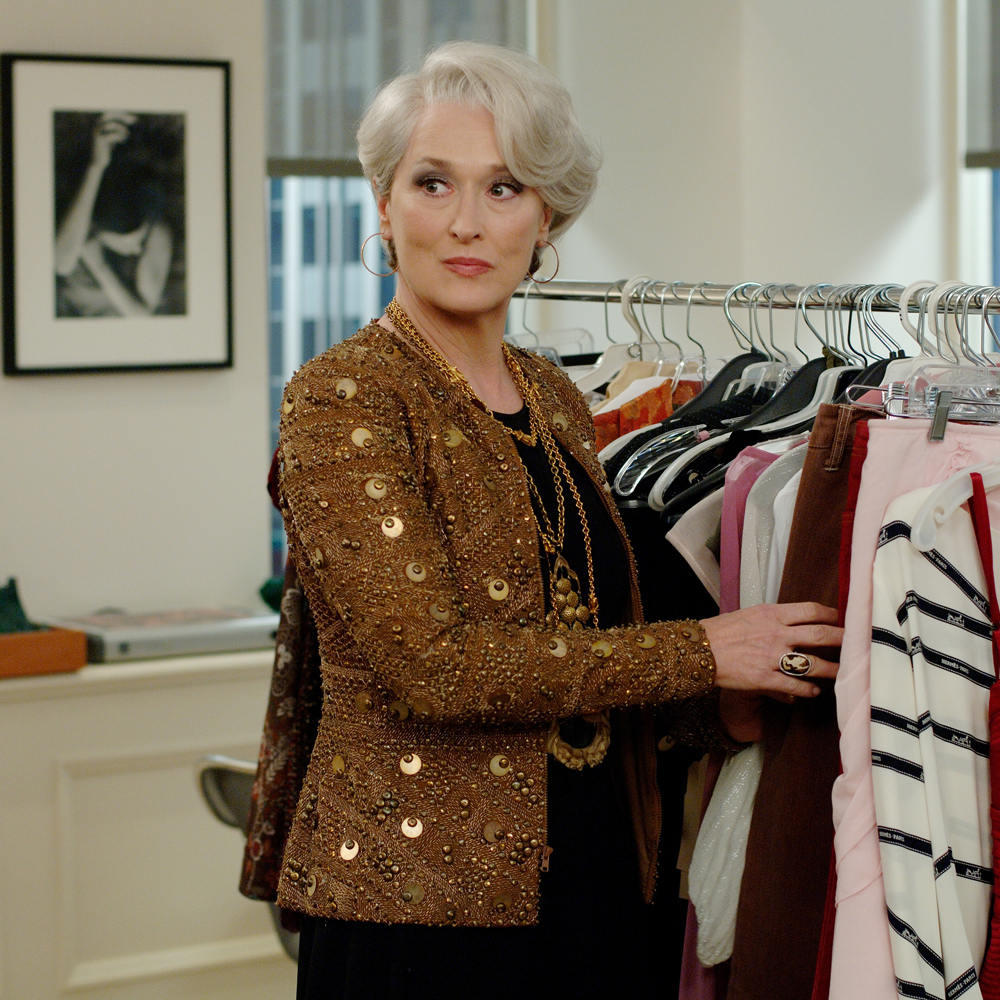
Images from 2006’s The Devil Wears Prada, now streaming on Disney+.
What happens, then, when an everywoman attempts to dance with the devil? 2006’s comedy-drama The Devil Wears Prada became a runway, runaway hit for its coming-of-age-like framing in the world of high fashion. Here, too, we see a powerful woman call the shots—but at a cost. For one, luxury fashion doesn’t come cheap! Luckily, EmmyⓇAward-winning costume designer Patricia Field helped secure designs from Valentino, Donna Karan, Bill Blass, Galliano, and, yes, Prada, for the cast portraying the everyday ups and downs at a fashion magazine. Chanel even provided its ’06 couture collection exclusively for the film.
Andy’s (Oscar winner and newly named Disney Legend Anne Hathaway) metamorphosis from a fashion fumbler to a flaunter tracks her growth at Runway magazine, especially as she adapts to the demands from head editor Miranda Priestly (Oscar winner Meryl Streep). Miranda’s oversight cannot be overstated; designer silhouettes aside, production designer Jess Gonchor oriented the office to support glass and exact angles, allowing Streep’s character to see everyone’s comings, goings, and mistakes. Miranda’s attention to detail undoubtedly allows the magazine to remain a pillar of taste-making, even if it weighs on her (and Andy’s) personal life.
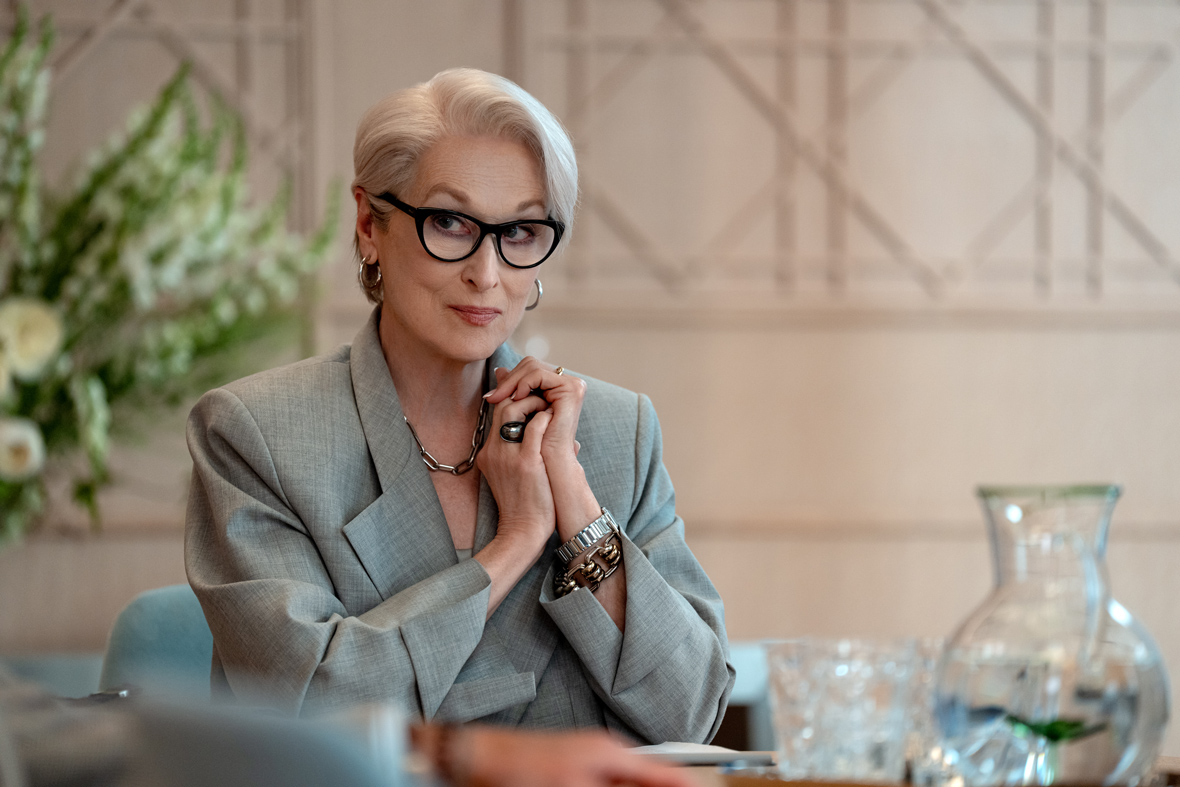
This time ‘round, Rogers wanted Miranda go-to silhouette to serve as a uniform. “We looked to people like Karl Lagerfeld, who stuck to a uniform that just worked. In the first movie, we had cropped jackets and pencil skirts, so that was our roadmap for the sequel,” says Rogers. Streep collaborated with Rogers heavily on many of her looks—and all told, Miranda has a whopping 28 outfit changes in the sequel...
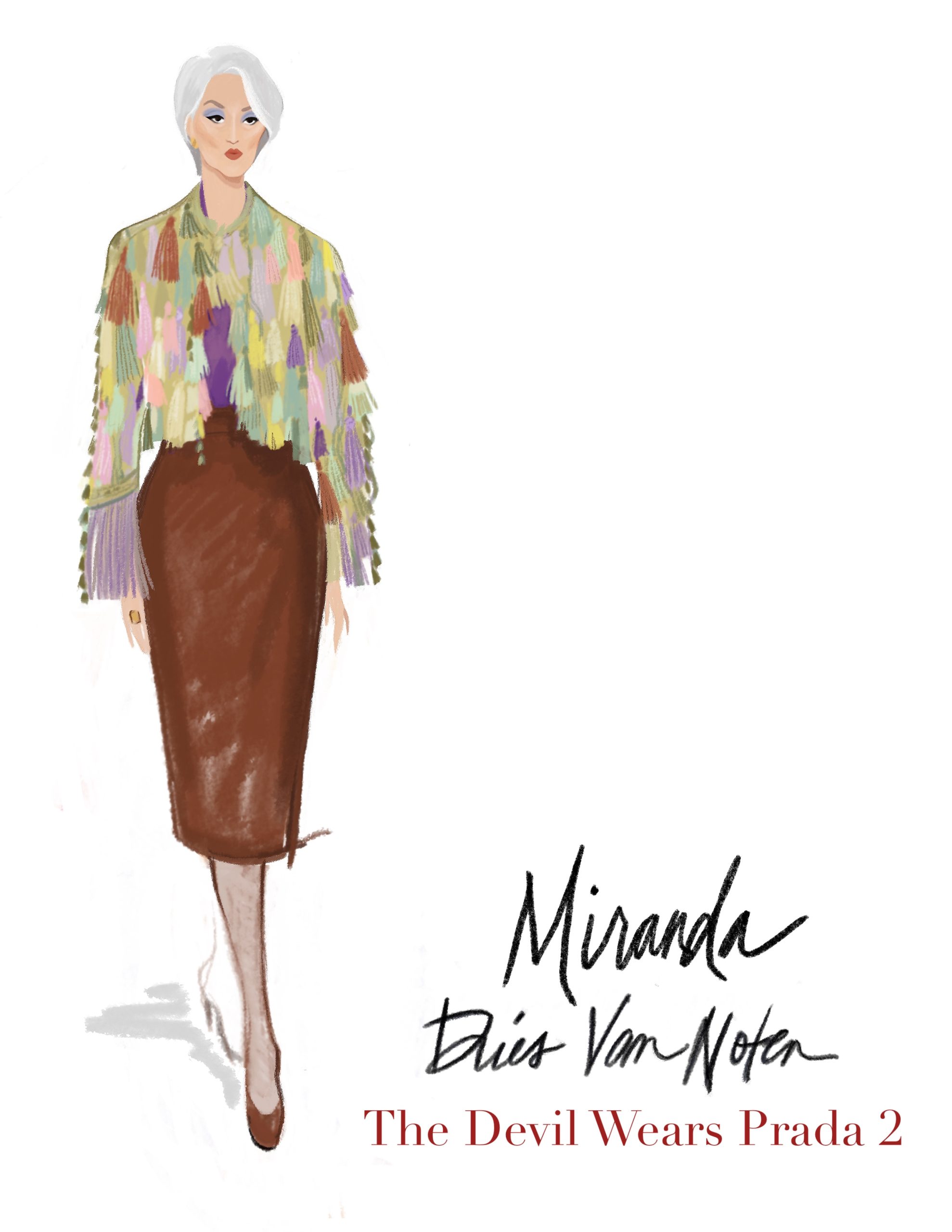
“There are lots of famous women who are successful on the level of Miranda Priestly, and it is very easy to criticize them because they put their work first,” said director David Frankel. “Men are rarely criticized for that.”
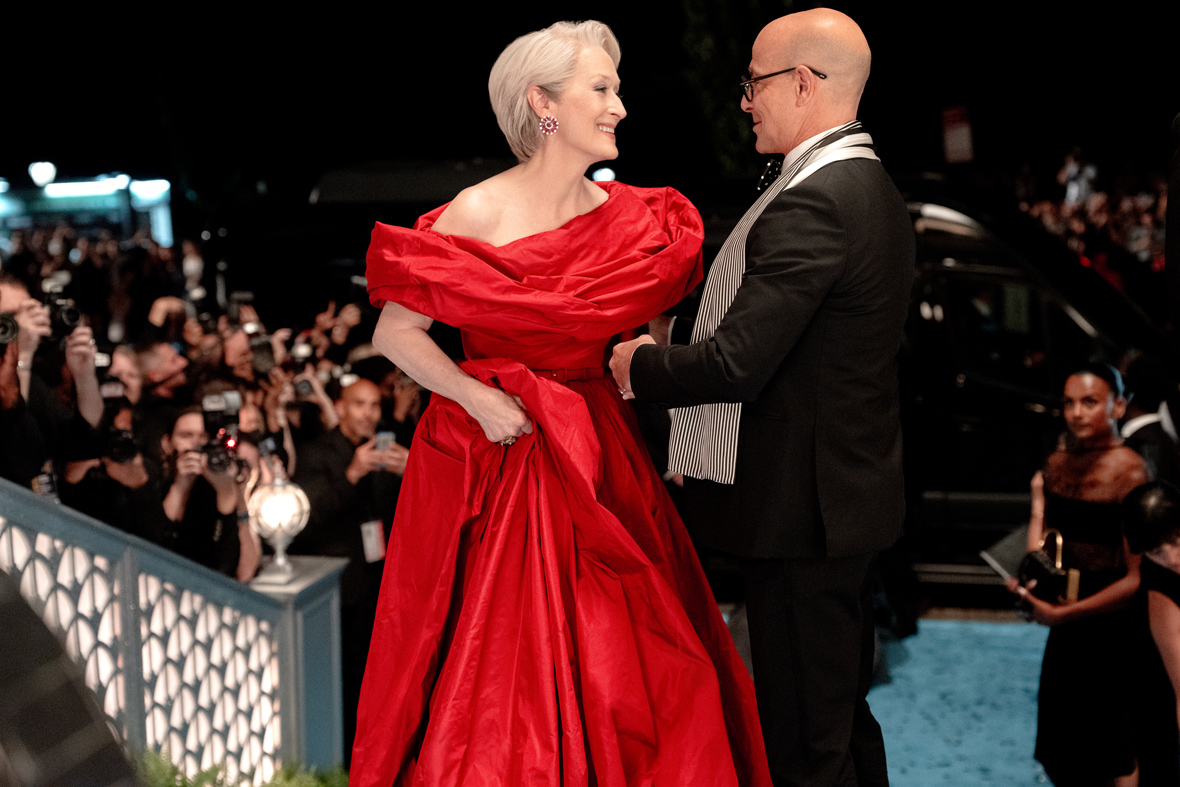
Love them or love to hate them, Miranda Priestly and Cruella de Vil (and the Baroness, for good measure) represent bold female leads who take no prisoners when it comes to achieving their dreams. It might take a few flicks through some fashion flicks like these to realize that dress is more than coverage—it speaks to stories, ambition, and struggles unique to your character. Keep your Prada’s close and your dalmatians (Glenn) close-r and be sure to celebrate these amazing films this year!
Sashay to The Devil Wears Prada 2, in theaters May 1!
One Hundred and One Dalmatians (1961), 101 Dalmatians (1996), Cruella (2021), and The Devil Wears Prada (2006) are now available to watch on Disney+!