

Devorah Burgess, Walt Disney Archives
When Moulin Rouge! burst onto screens in 2001, it didn’t just revive the movie musical; it detonated it in a shower of sequins, satin, and scandalous spectacle. The motion picture was nominated for eight Academy Awards®, winning in the categories of Art Direction and Costume Design. Twenty-five years later, its costume design remains one of the most influential and instantly recognizable achievements in modern cinema, thanks to the visionary collaboration between director Baz Luhrmann and production and costume designer Catherine Martin and co-designer Angus Strathie.
The story of Moulin Rouge! is inspired by the ancient Greek myth of Orpheus and Eurydice, in which a young poet-musician descends to the underworld in search of love. “It’s a myth about idealism and adulthood, and the recognition that life throws up things beyond our control: the death of loved ones, relationships that don’t last,” Luhrmann explained at the time of the film’s release. “According to the Orphean myth, this will either destroy you, or you’ll go into the underworld, face it and return having grown from the experience.” The Orphean hero of Moulin Rouge! is Christian (Ewan McGregor), whose love affair with the courtesan Satine (Nicole Kidman) ends in tragedy.
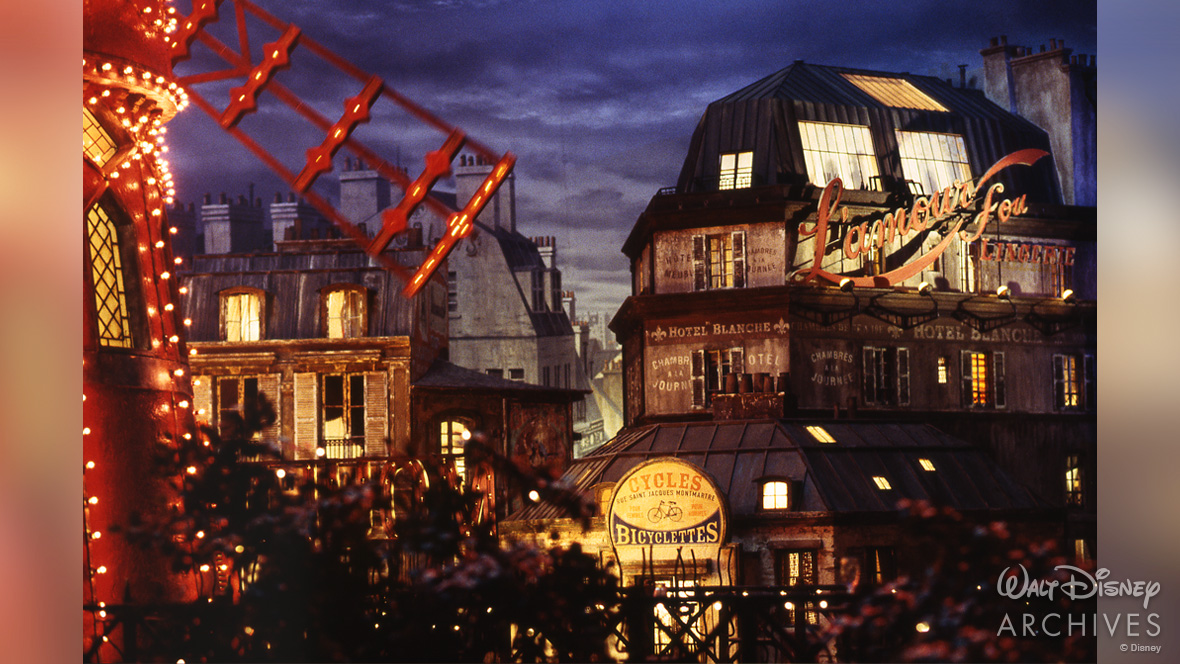
In Moulin Rouge!, the Orphean myth is central to what Luhrmann called a “Red Curtain” theatrical style: “We take a simple story based on a recognizable primary myth and set it in a heightened, created world that is at once exotic yet also recognizable.” To depict 19th-century Paris and the Moulin Rouge as it may have felt to its audience, Luhrmann, Martin, and cowriter Craig Pearce immersed themselves in the neighborhood, venues, and culture of their story. They researched everything from the can-can to Henri de Toulouse-Lautrec (an artist largely seen as a creator of the Post-Impressionism movement who chronicled Parisian nightlife in the late nineteenth century), to the writers and journalists who recorded their firsthand accounts of Moulin Rouge.
“Most cinematic naturalism puts the audience into a dream state so that they may observe reality, if you like, through a key hole. Whereas we employ a constant device that awakens the audience and reminds them that at all times they are watching a film, in which they are impelled to participate... In Moulin Rouge!, our contract with the audience, our device to awaken is the experience of music, or simply put, song. Yes, Moulin Rouge! is fundamentally a musical, perhaps an opera, but finally a story told through song.” – Baz Luhrmann, director, producer, co-writer, Moulin Rouge! (2001)
Catherine Martin’s process began with meticulous research. Drawing on their time in Paris, the creative team initially reconstructed the Belle Époque period with precision before deliberately reshaping it. “We always start pedantically, recreate precisely, then adapt and change to serve the story,” Martin explained. The goal was to manipulate historical elements so they resonated with modern audiences—creating a Paris where bursting into song felt both plausible and inevitable. Initially, Martin found the project daunting; the idea of designing for a “can-can movie” struck her as potentially “hideous and revolting.” But that very excess became the guiding principle: the costumes would embrace the Moulin Rouge’s reputation for scandal and spectacle while recalibrating it for today’s audiences.
Rather than adhering strictly to period accuracy, Martin and Strathie leaned into glamour. For Nicole Kidman’s character, Satine, authenticity was selectively sacrificed in favor of cinematic allure. Historically accurate undergarments, such as woolen body stockings, were discarded in favor of silhouettes inspired by classic Hollywood screen legends Marlene Dietrich, Greta Garbo, and Joan Crawford. The result was a look that felt both timeless and intoxicatingly modern.
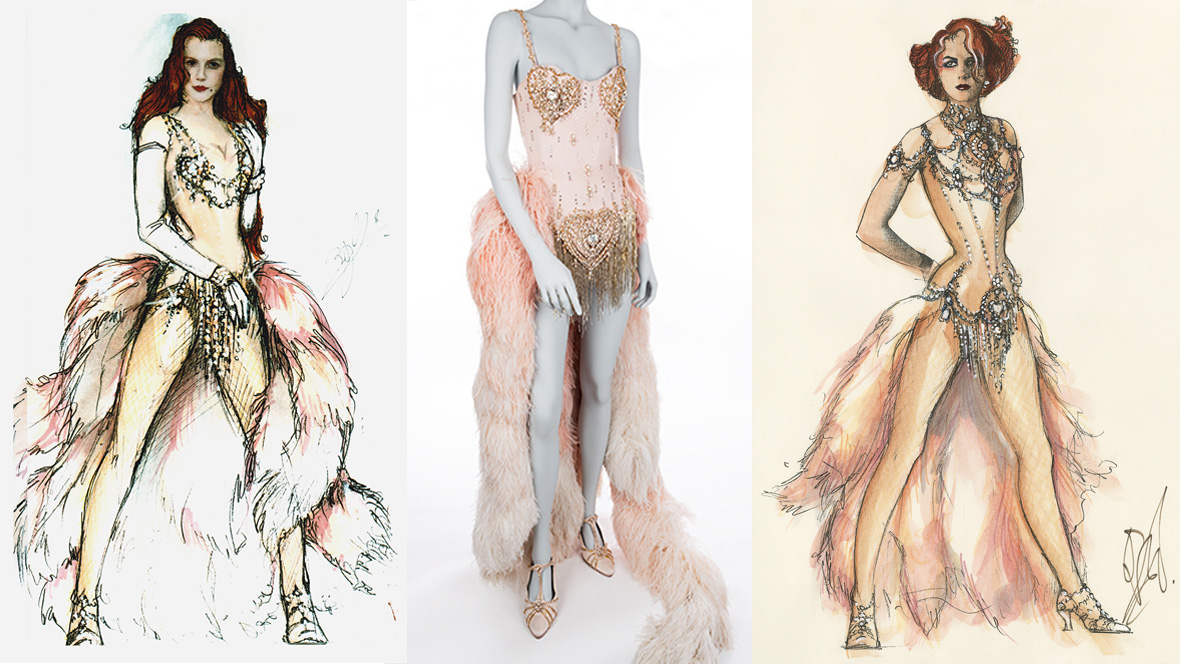
Set in a stylized 1899 Paris, the film’s costumes draw from Belle Époque era staples—corsets, bustles, and top hats—while transforming them into something boldly anachronistic. The designs function as a visual counterpart to the film’s jukebox soundtrack, where contemporary pop songs coexist with the historical setting. In this world, modern attitude and period aesthetics collide seamlessly. Satine’s diamond-encrusted corset and top hat embody pure theatrical excess, while her flowing red gown in the “Elephant Love Medley” demonstrates the power of restraint within the film’s otherwise lavish palette. Across the ensemble, feathers, lace, and crystals create the sense that every character is perpetually performing.
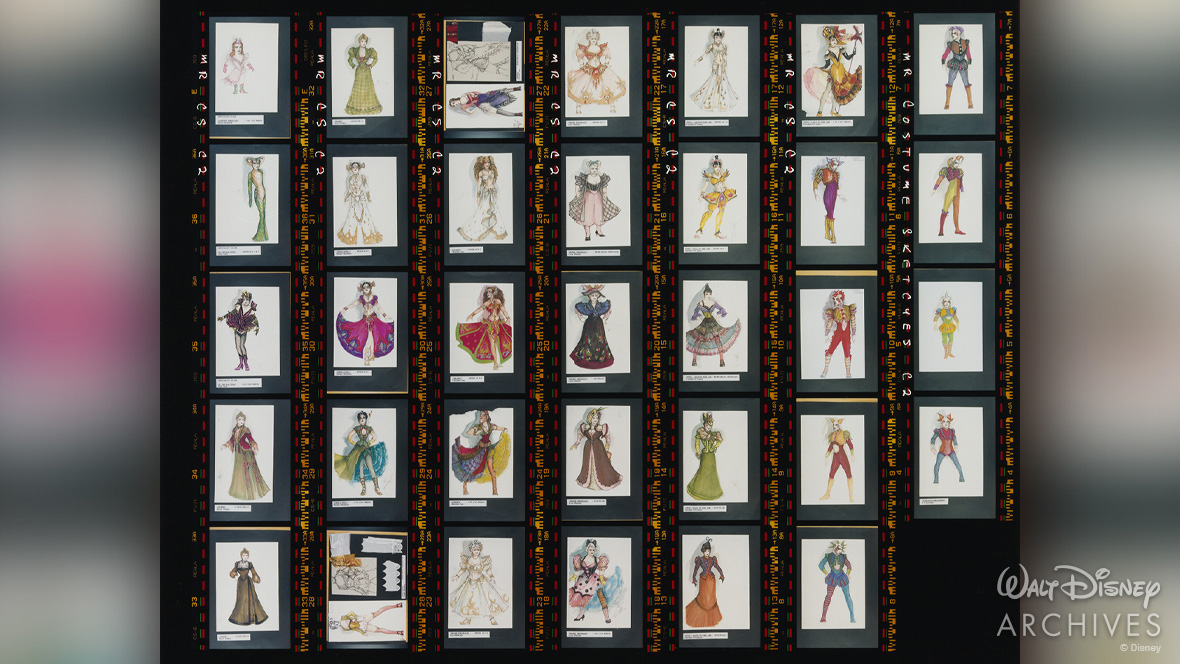
For the can-can dancers, Martin and Strathie amplified the dance’s original shock value. The costumes played with archetypes, turning each performer into a stylized fantasy. Layered petticoats and undergarments, sometimes weighing up to 30 pounds, were engineered to reveal just enough while maintaining the illusion of propriety. Even the mechanics of the garments—supported by hidden braces—were designed to withstand the film’s demanding choreography.
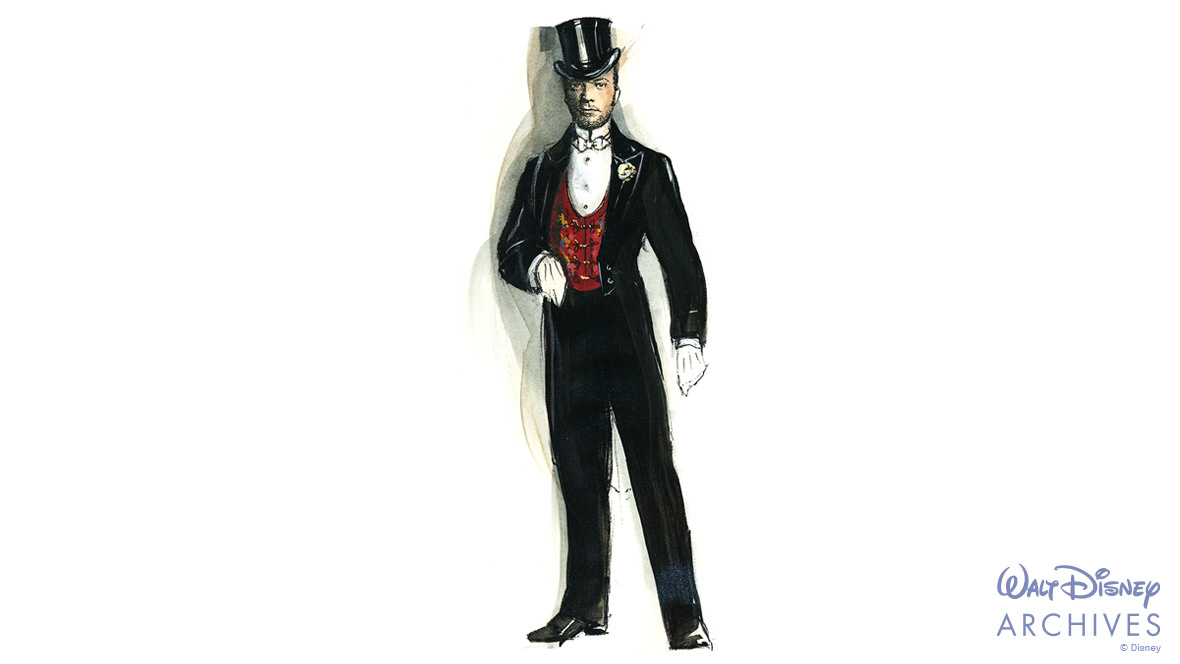
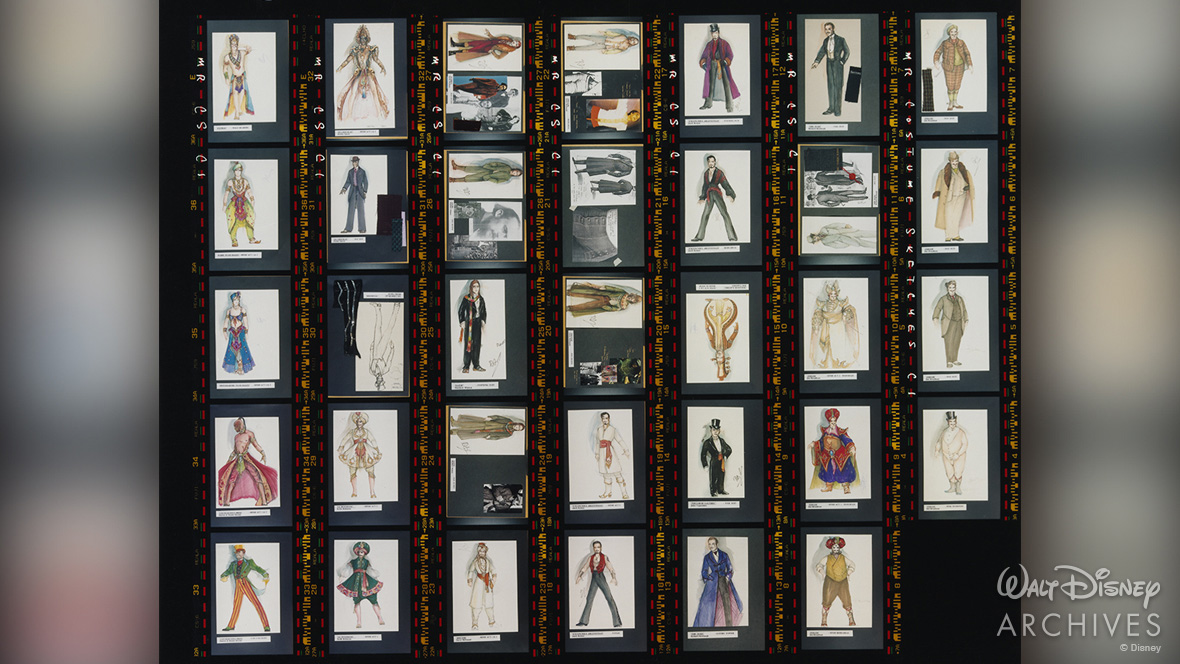
The other leading role costumes received equal attention. From the meticulously tailored suits worn by the bohemian hero Christian and the aristocratic villain Duke of Monroth (which took a month to hand-tailor) to the elaborate costume’s created for actor Jim Broadbent’s Harold Zidler, every detail contributed to the film’s immersive world.
Behind the spectacle lay extraordinary craftsmanship. More than 400 costumes were constructed for principals, dancers, and extras at Fox Studios Australia, with intricate detailing completed in India. Each garment was engineered not only for visual impact but also for durability, capable of surviving intense choreography and rapid costume changes.
More than two decades later, Moulin Rouge! continues to shape fashion and visual culture. The film’s lasting impact lies in its journey to tell the story of the transition from youthful idealism to the spiritual growth one seeks in adulthood—and one’s evolving relationship to truth, beauty, freedom, and, above all things, love. Its costumes sought to capture the emotions of romance, desire, and spectacle through a heightened, almost mythic lens. Each rhinestone, corset lace, and flash of crimson fabric contributed to a lavish cinematic language—one in which costume is not merely decoration, but the beating heart of storytelling.